


It took me a while to decide where to start my series of posts on where the Mets are, and where do they go from here. There are a lot of good things, but a lot of bad things too and a lot to digest from David Stearns’s end-of-season press conference on Monday.
I decided it really didn’t matter where I began. There are so many topics, and so many things that are connected and intertwined that the beginning can start almost anywhere. So, while things quiet down for the Mets and the 17 other teams that are not at the October dance, I’ll begin with a discussion around the Mets situation at second base.
Now, I believe a lot of what the Mets do at second and at first for that matter hinges on what Bo Bichette decides with his opt-out (which I will discuss on its own in the next chapter). If he opts out, the Mets need to address three problems on their infield. If he stays, they have two.
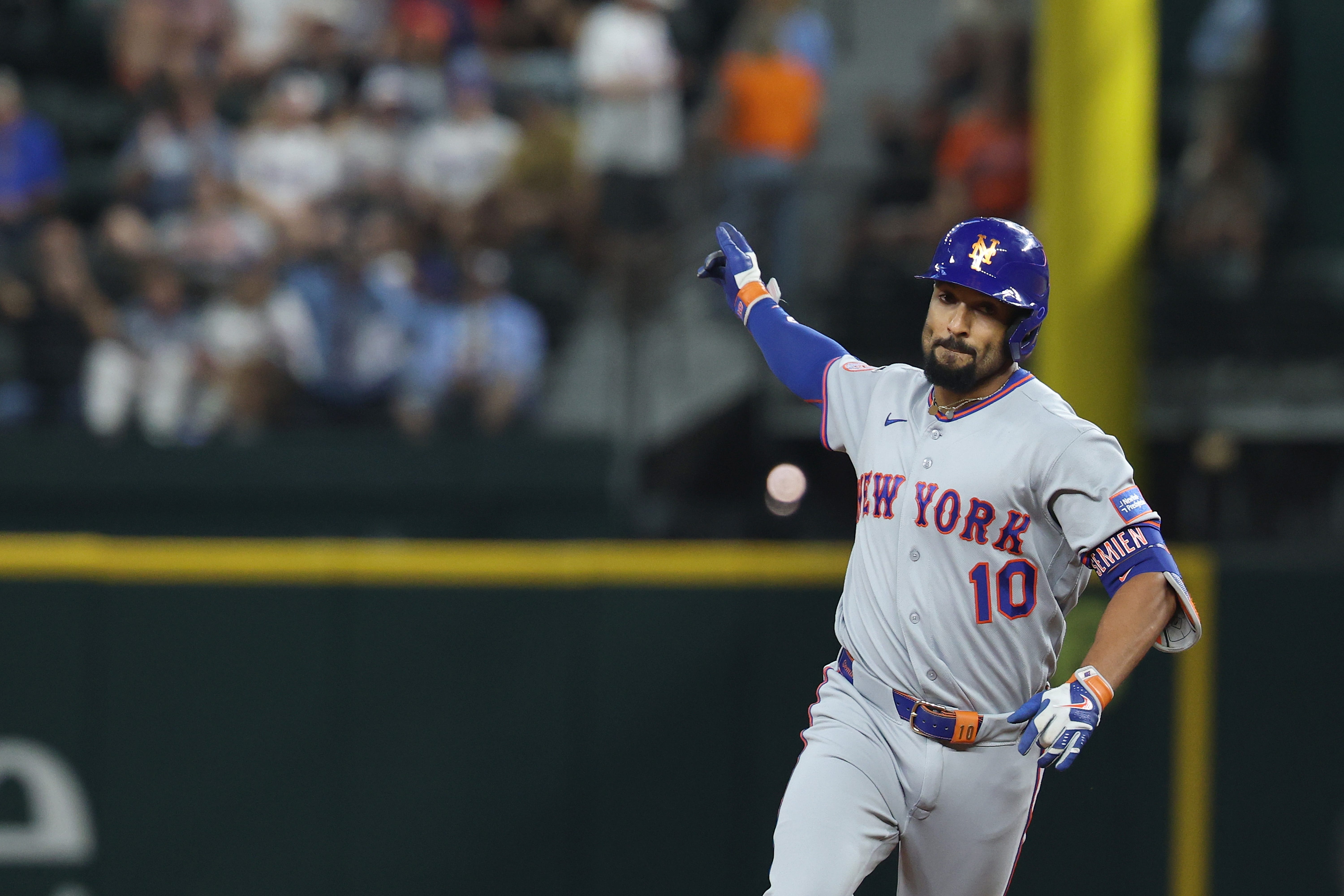
Needless to say, Marcus Semien was generally atrocious for the Mets this season. To be fair, we all probably didn’t expect much from Semien offensively, but expected him to at least approach the Gold Glove defense he gave the Rangers in 2025. None of us expected Semien to have -9 outs above average and a -8 fielding run value, both of which were the second-worst among all qualified second basemen in the game in 2026. His -2 defensive runs saved was the fifth-worst in the game.
When that poor defense was combined with his .620 OPS, Semien became unplayable, although he continued to get regular playing time despite his poor performance. The team’s -0.7 fWAR at second base was by far the lowest mark in all of baseball, and Semien, simply put, was largely responsible for that major gap on the field.
The problem, of course, is they produced -0.8 fWAR at first base, which was also the worst in the sport. But we will talk about first base another day.
As for Semien, Stearns was clear that he is not committing to Semien as the full-time second baseman in 2027. He’s entering his age-37 season and has two years left on his seven-year, $175 million contract he signed with the Rangers before the 2022 season. He is now a less-is-more player at best for this team and could conceivably be a DFA candidate after the 2027 season if he doesn’t provide some value to the club next season. But he doesn’t profile as a right-handed designated hitter option, his defense at this point in his career doesn’t warrant being a late-game replacement, and he hasn’t hit enough for a long time to be a starting player, either. So, it’s hard to see how this version of Semien fits on the major league roster. But, he’s here, at least for now, and Stearns basically said Semien will be among the options at second base heading into camp.
So, in addition to Semien, what can the Mets do at second base?
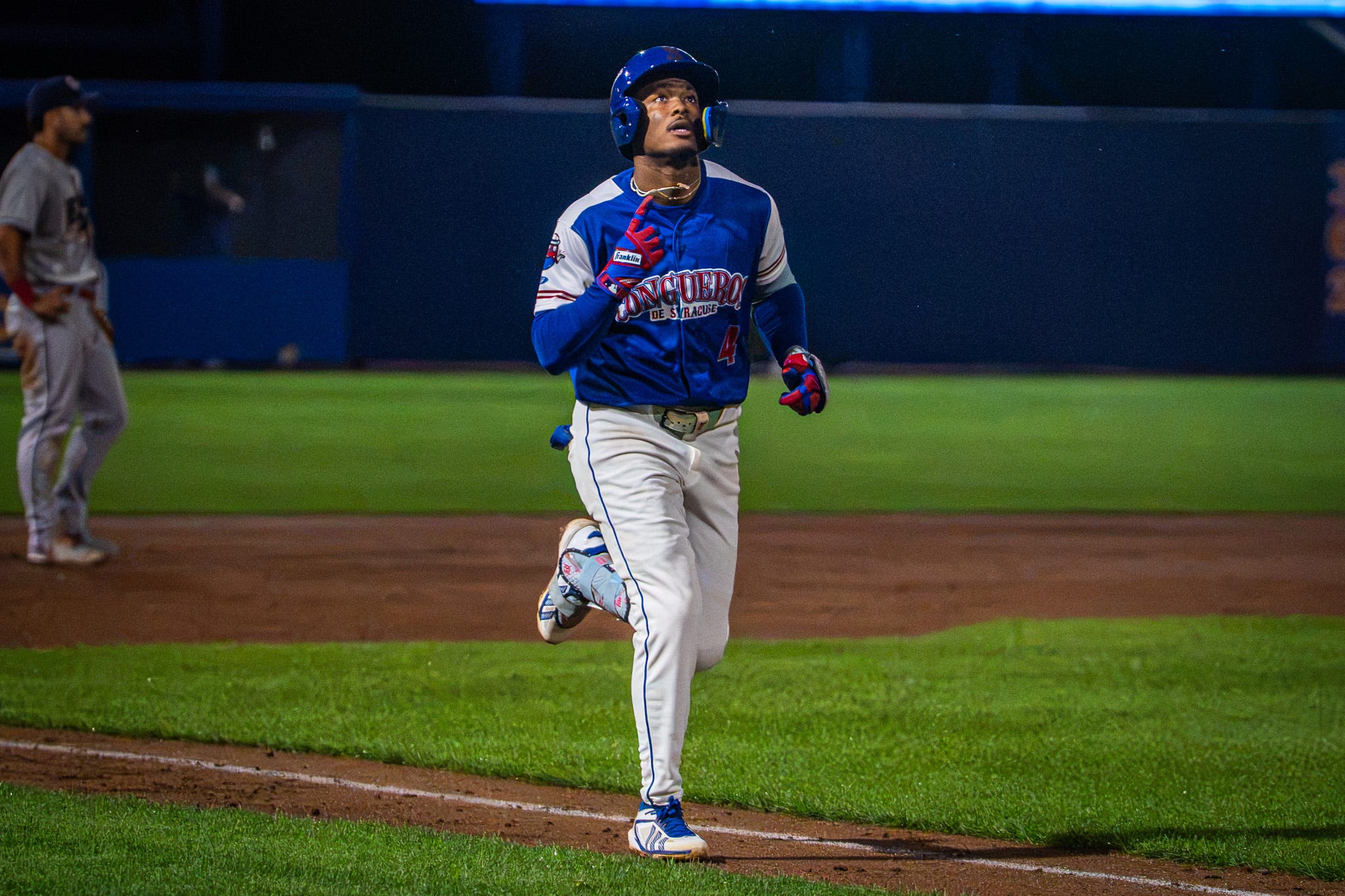
For starters, it looks like Brett Baty, with his timely late-season resurgence, has earned his keep on the roster, so he could factor in at second base, especially if Bichette opts into his contract (which we will assume for the sake of this argument right now). The Mets also have numerous options at the top of their minor league system now, which Stearns alluded to in his September 28 press conference, presumably referring to Jefferson Rojas and perhaps Mitch Voit. There’s also Sammy Stafura, but he might be a little further away than either Rojas or Voit, with Rojas being the most obvious and immediate candidate to have a shot in early 2027.
But if Rojas specifically were to make the team, he can’t be in a platoon, can’t be in a part-time role, can’t be jerked around. He is their top prospect and has to play every day, just like Carson Benge and AJ Ewing did in 2026. If Rojas is the best option at second base, that means neither Semien nor Baty should be there on Opening Day. It’s as simple as that.
It’s hard to envision the Mets going external at second base considering the options the Mets have here already with respect to the attention they need to have on other big needs. The free agent market for second basemen is actually reasonably strong at the top of the market, however, with Luis Arraez, Jazz Chisholm Jr. (doubt the Mets consider him) headlining upgrades defensively specifically, with Arraez once again demonstrating he is one of the best contact hitters in the game. But it’s pretty weak behind those two, and Arraez would be the best external option if they chose to go that route, which, once again, I doubt they do right now.
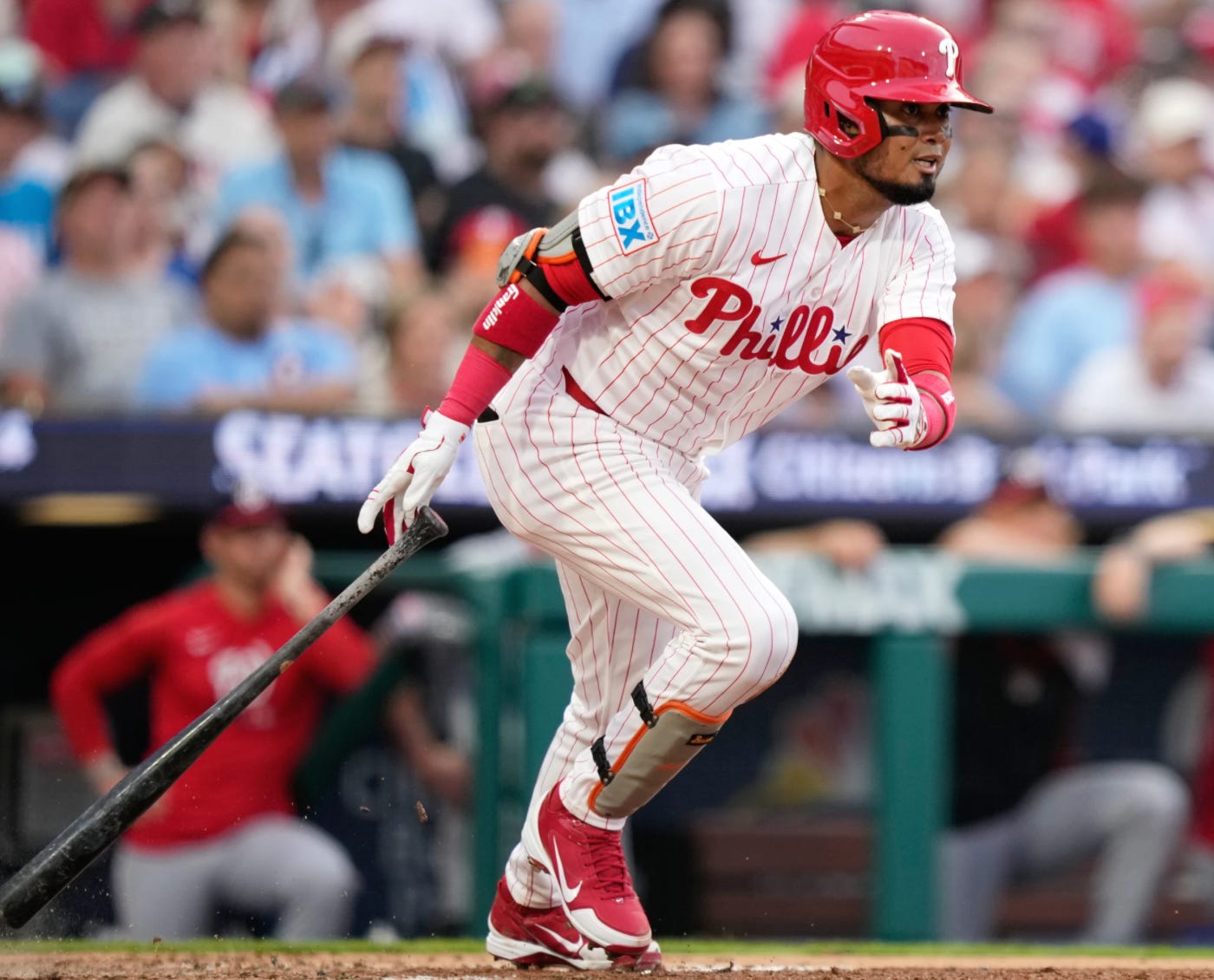
Arraez, 29, signed a one-year contract with the Giants before the 2026 season and was traded to the Phillies at the trade deadline. He finished just short of another batting title in 2026 hitting .310 with a .765 OPS, the latter of which was the sixth-best mark among all qualified second basemen in the game. His 110 wRC+ was seventh-best, and his 4.3 percent strikeout rate was the best mark in the game among not just second basemen, but all qualified players. He posted a fielding run value of 10, which was the fourth-best mark in the game among all qualified second basemen, and his 12 outs above average was tied for fifth.
The question, of course, is what kind of contract Arraez would be in the market for this winter. He will surely do better than a one-year deal, and the Mets have to be cognizant of what’s in the pipeline at second base with Rojas and Stafura specifically, especially since neither will be playing shortstop for the Mets anytime soon with Francisco Lindor there.
Oh, and they’re paying Semien $26 million in 2027 too, and both Chisholm and Arraez will likely get qualifying offers after the World Series.
It wouldn’t make a lot of sense for the Mets to trade for a second baseman when you consider they have top-shelf, close-to-big-league-ready prospects who could very well slot in as starters in six months. It just seems counterintuitive to trade for something they might have already traded for.
In other words, while Arraez and even Chisholm are unquestionable major league upgrades for the Mets at the position, it may be unwise to allocate their resources here and instead focus on graduating options internally to fill their need.
For me anyway, I’d much prefer the Mets go that route and offer opportunities to the Rojas’ of the world, and even give Baty an opportunity to play steadily at one position if Rojas isn’t ready at the beginning of the season.
After all, as Stearns once again basically said during his press conference, championships are born internally, and not on the external markets with second-generation contracts.
Now, call me skeptical, but what can the Mets really expect out of Baty?
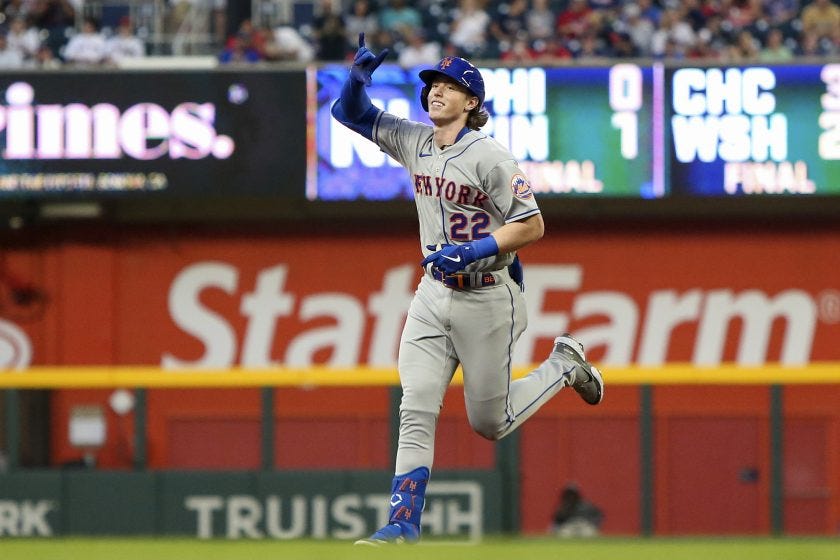
For the second consecutive year, Baty finished the 2026 season strong, although it would be unfair to characterize it as the same kind of finish he had in 2025, when he was excellent for the final three months of the season. He is undoubtedly one of this team’s biggest mysteries and has been since he arrived in the major leagues in 2023. He sometimes shows flashes of living up to his potential and promise, but most of the time he looks generally lost at the plate. Stearns did say they have seen an improved mindset from Baty recently, and that might be in line with his strong finish to the season. But really, for the first time, Stearns basically indicated a larger sample of consistency is now needed if Baty is going to be offered significant playing time going forward.
To be fair to Baty, the Mets might have overplayed the versatility card with him this past season. He has always looked the most comfortable when playing third base, but the Mets took that away from him when they signed Bichette last winter. If Bichette opts out, maybe they’ll take a look at Baty again strictly as a third baseman, but it always seems Baty is at his best when he knows what position he is going to play on a daily basis. I often wondered this past season how much the moving around and needing to work on competency at so many unnatural positions might have impacted his offense. Some stability would go a long way for Baty as he enters his fifth season with the club.
By the way, Baty will be arbitration eligible for the first time in 2027. So, he’s getting a raise from his $775,000 salary in 2026.
All told, while the Mets were terrible at second base in 2026, the solution might already be here in some form. It may be one of those positions that looks entirely different a year from now than it does on Opening Day, but that would probably be a good thing for this organization.
I was always a Semien fan and liked his performance in Oakland. Naturally the Mets got him as career was waning and he didn't do much. IN the last 2 months was he trying to hit fly balls all the time? Automatic outs. He never seemed to hit sharp grounders. We see why the Braves are perennial winners....athletic player at 2nd, and Harris & Acuna in OF. They just scout better talent.