


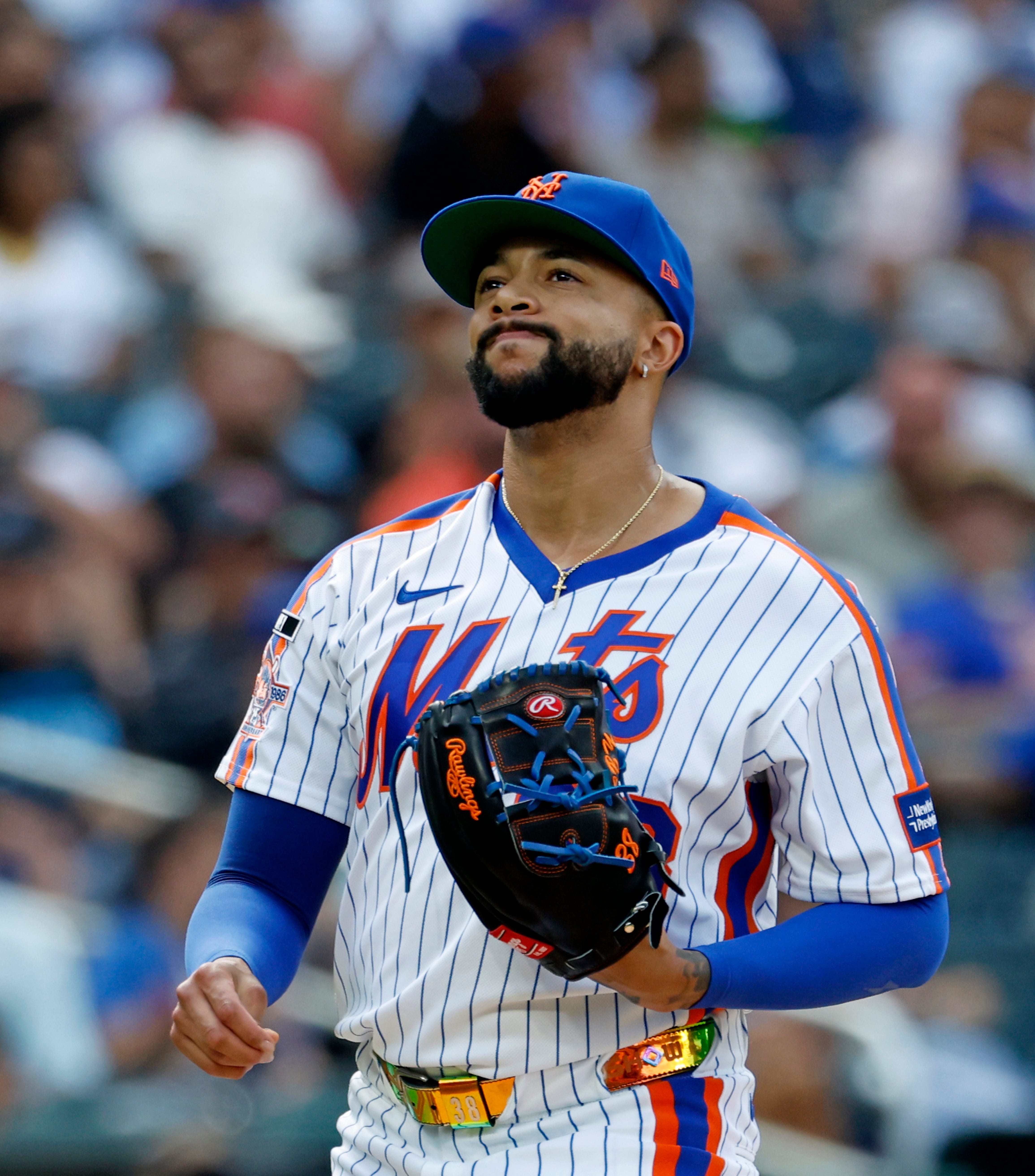
Before the 2026 season, the Mets signed Devin Williams to a three-year, $51 million contract. $5 million per year has been deferred until 2036, during which he will be paid $1.5 million per year through the 2045 season.
The Mets seemingly signed Williams with the intention of having him as insurance in the event Edwin Díaz signed elsewhere, which he did shortly after the Mets inked Williams to his three-year contract. But the Mets didn’t pivot to find another closer, which left Díaz the closer and, suffice it to say, Williams, who had a similarly perplexing first year in New York with the Yankees in 2025, struggled to find consistency end-to-end with the Mets in 2026.
Now, the metrics of course would have you believe Williams pitched with a lot of bad luck. That’s probably true to an extent— his FIP was 3.05 in 2026 compared to his 4.43 ERA. That suggests the defense behind him was poor, and we all know how many issues the Mets had defensively at shortstop, second, and first base throughout the year, no matter who was playing on any given day. His chase rate, swing-and-miss rate, strikeout rate, and hard-hit rate were all elite in 2026 too.
While in Milwaukee, Williams’s FIP was consistently higher than that of his ERA, which was incredibly low for his first five full seasons there. Yes, their defense is perennially better than either the Yankees or the Mets, and it’s therefore fair to conclude Williams, who unquestionably has an elite change-up, benefits more from a stronger defense as he is less reliant upon missing bats than other closers around the game.
The problem for Williams is that the bad luck argument can only go so far, as that was the same conversation, or at least partly anyway, Yankees people were having about his equally disappointing season with them in 2025. After all, I don’t think Williams wants to go down as the unluckiest closer in New York sports history. And good defense can’t help his walk rate, which has averaged above four per nine innings over the last two seasons and was closer to five than it was four with the Mets in 2026. Couple that with a lower strikeout rate— albeit excellent at 11.5-ish over the last two seasons— and it just adds to his inability to perform as a closer.
These are the quantifiable issues with Williams as a closer, which, again, were generally problems for him with the Yankees as well. Having missed a month or so with a shoulder problem late in the year further devalued Williams, although it did give the Mets a chance to look at Kodai Senga as their closer in his absence, for better or for worse.
But there’s always the possibility, as David Stearns spoke about during his end-of-year press conference, that Williams’s adjustment to playing in New York has been a challenge, which quite possibly has impacted his overall performance.
Now, I am not going to get into the validity of that. Only Williams knows the truth on the matter, but he chose to stay in New York after his first year with the Yankees, effectively making this a four-year trip to the Big Apple. So like it or not, and whether he performs or not, or whether he can ultimately deal with pitching in New York or not, he’s here and he’s going to be here for another two years.
But that doesn’t mean the Mets should simply accept the status quo with Williams. If anything has been demonstrated over the last two years, it’s that he might be more valuable as a setup man and a contrasting figure to a more traditional closer figure in the ninth inning.
Again, the Mets clearly intended to have Williams set up Díaz before Díaz bolted for the Dodgers, so it’s not as if this is a novel idea for the club.
The need is probably more apparent now than it was a year ago to at least find an insurance policy to Williams, which might be why the Mets were taking a hard look at Senga in that role.
Now, that does not at all mean Senga will be a short reliever. I don’t really think he showed a lot to inspire confidence he can do it, especially since he remains steadfast in his desire to be a starting pitcher. That’s not to say his heart isn’t in a bullpen role or he can’t eventually become a meaningful part of a Major League bullpen, but while he showed glimpses, the Mets probably still need to go out to the external markets to solve this problem.
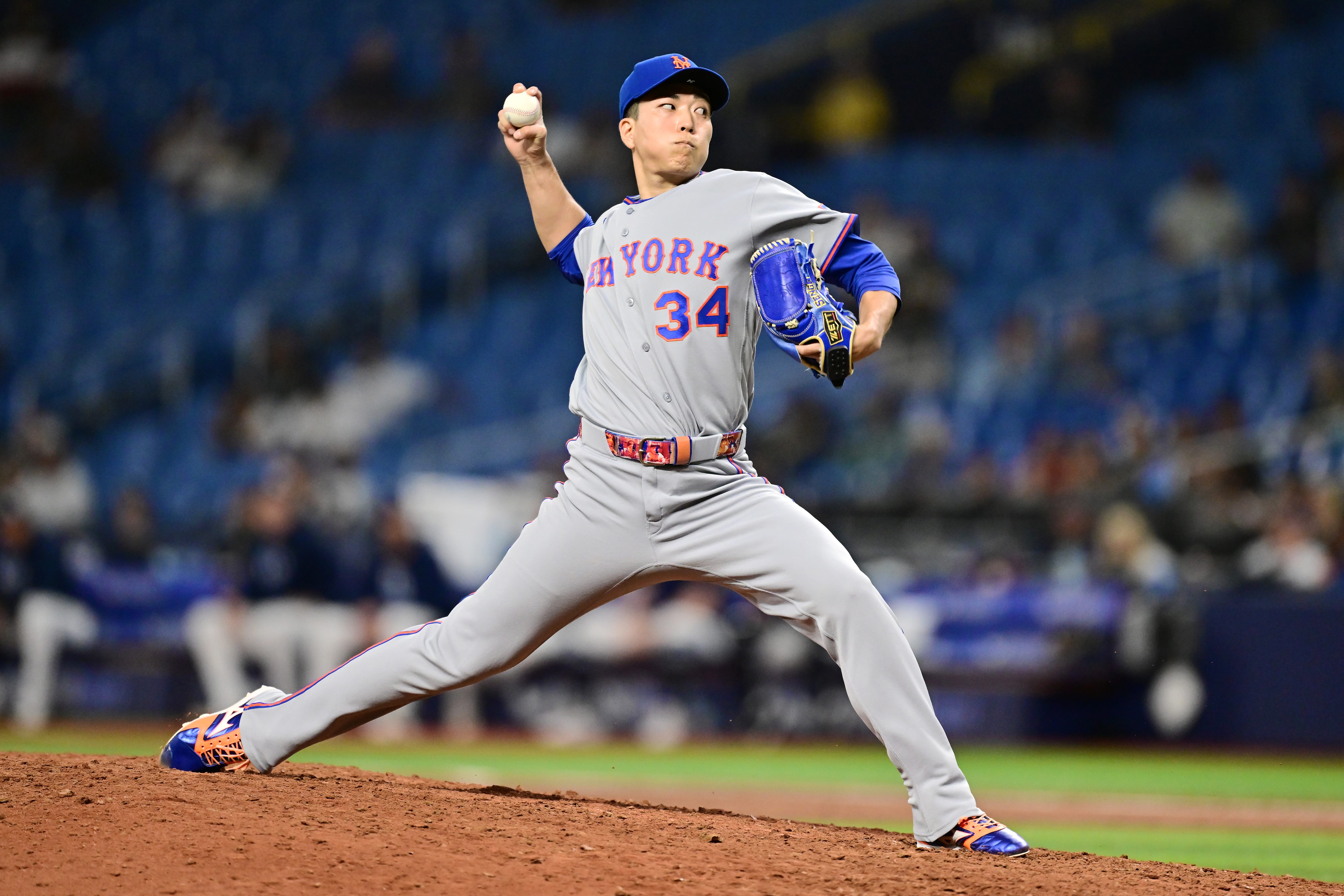
I don’t ultimately know where that would leave Senga, who just isn’t a Major League starting pitcher at this point either, and an awfully expensive middle reliever if he is on the roster out of Spring Training (don’t forget Sean Manaea, who might be in a similar boat).
Back to Williams— what can the Mets do?
If the Mets decide Williams is not going to be their closer next year, the alternative might not be in the organization, which means they’re going to have to go to the external markets for an answer to this problem.
Among the free agent relievers who profile as closers are David Bednar, who has been the Yankees’ full-time closer over the last year and has recorded 45 saves with them since he was acquired in late 2025. There are clearly no issues for Bednar, who will turn 32 on Saturday, pitching in New York, as he has a 2.39 ERA in 86 appearances with the Yankees over the last 1 1/2 years. His fastball has averaged 96.1 mph this season, which is in the 77th percentile. He has an elite chase rate at 38.4 percent thanks to a devastating splitter. So, he’s unquestionably a strong fit to strengthen the ninth inning.
There’s Pete Fairbanks, who signed with the Marlins before the 2026 season, but did not exactly thrive outside of the Rays system of excellence players perform under there. Walks were a big problem for Fairbanks, who had a 6.31 ERA in 46 appearances for Miami in 2026. But Fairbanks, who will turn 33 in December, still throws hard and gets a lot of swing and miss. He could be an interesting flyer guy, but I am not sure the Mets will want to assume a risk on Fairbanks in this roster spot at this time.
Raisel Iglesias, the scraggly veteran closer for the Braves, is still very effective and will be a free agent after this season as well. He had 34 saves and a 2.55 ERA in 59 appearances for Atlanta in 2026. I’d bet on Iglesias returning to Atlanta, but if he doesn’t, then this is someone for the Mets to consider as well.
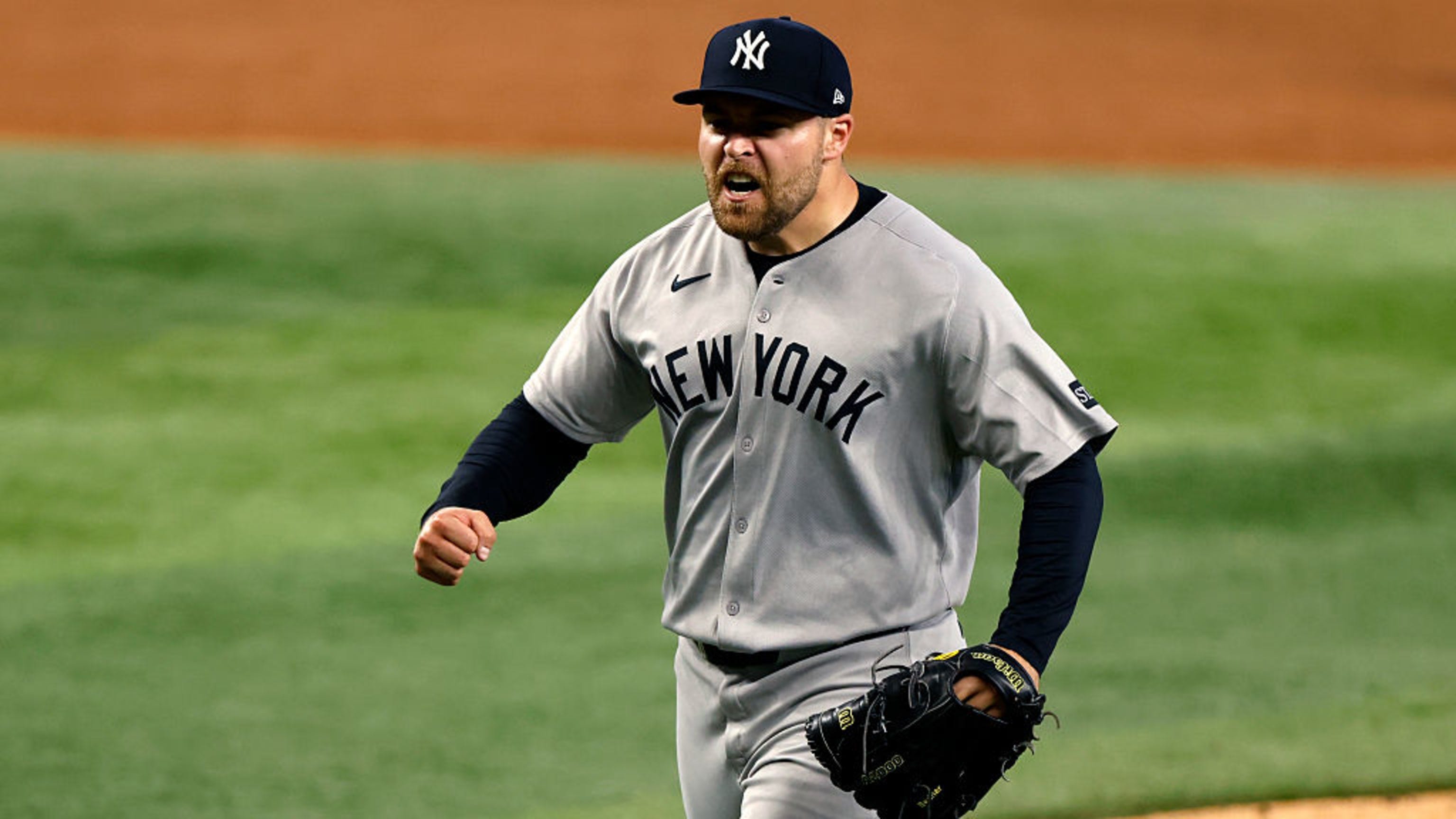
Kenley Jansen saved 22 games for the Tigers in 50 appearances in 2026, to the tune of a 3.20 ERA. He still doesn’t walk a lot of batters, and his strikeout rate was actually up from his age-37 season with the Angels in 2025, although still below his career average (as expected, given he’s 38). The Tigers hold a $12 million club option on Jansen, so it remains to be seen if he becomes a free agent.
Andrés Muñoz is coming off a down year with the Mariners as their closer, but he still saved 28 games in 61 appearances. He had a 1.73 ERA with 38 saves in 2025, but his ERA ballooned to 4.24 in 2026. He became more hittable thanks to reduced slider effectiveness, but Muñoz throws hard, he gets a lot of chase and swing-and-miss, and induces a lot of groundballs. He could be an interesting option if the Mariners decline his $8 million option. I’d be surprised personally if that happened given his track record and team-friendly option, even after a down year. But the Mariners need to make changes, and we all know their GM, Jerry DiPoto, loves to move pieces around.
There are others, not to mention the possibility of a trade. Given the strong performances late in the year from Jonathan Pintaro, Daniel Duarte, Nate Lavender, Dedniel Núñez, and with Reed Garrett returning along with hope that Jefry Yan and Dylan Ross might be able to emerge as effective relievers eventually, the bullpen seems like a less urgent need this winter than it has in the past, which could bode well for the chances the Mets make finding a closer a point of emphasis, since they don’t have to budget as much for this area of the roster.
That is, of course, assuming they still believe they need to make a change in the ninth inning.