


What’s Up with the Mets? 💭
Former Mets coach and advisor Guy Conti passed away at the age of 84 (NY Post)
What to do with Francisco Álvarez? ✍🏻
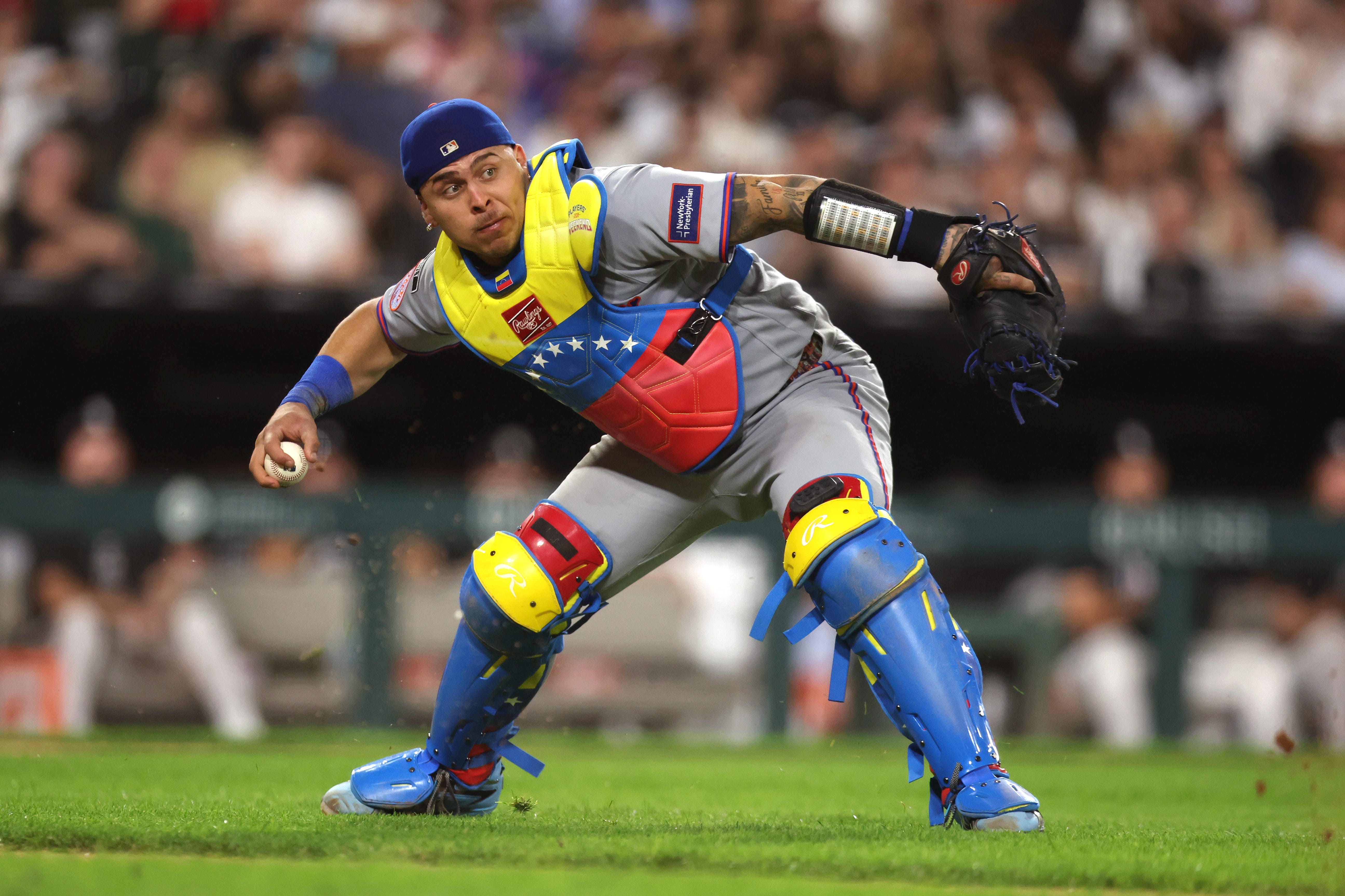
Among the many problems the Mets had— on either side of the ball— was behind the plate in 2026.
No, I am not referring to Luis Torrens, who has emerged as arguably the best backup catcher in baseball right now.
I am referring to Francisco Álvarez, who by the end of the season was a general liability for the Mets both behind the plate and inside the batter’s box.
Now, before we get into the weeds on this, it’s worth mentioning Álvarez once again had to deal with another injury-riddled year and specifically to his knee as he underwent mid-season surgery to repair a torn meniscus. He did come back sooner than expected but was still absent for about a month between mid-May and early June.
Even so, whenever a catcher’s legs are affected by an injury, it’s going to affect their performance. Slap a surgical procedure into that, and it doesn’t matter who the player is— there’s no way he was 100 percent when he came back, might not have been 100 percent for a while after he came back, and unquestionably was building leg and game strength back while he was playing when he came back.
To be fair to Álvarez, he was generally fine at the plate throughout the month of June to the tune of a .265/.306/.515 line. And he was better than generally fine at the plate from June 9— the date he returned from the injured list— through August 10, a span of 45 games played during which he hit .268/.364/.477, or an .841 OPS.
But then it all began to crater for Álvarez. He began to chase way too much, he began to miss hittable pitches in the zone, and he was largely unplayable down the stretch because of that coupled with his poor defense, which we will get into next. From August 11 onward, a span of 31 games played, Álvarez hit just .176/.224/.296 with only seven walks against 48 strikeouts over his final 116 plate appearances, a whopping 41.3 percent. He posted 43 wRC+ and -0.4 fWAR after August 10, both of which were the fourth-worst mark among all catchers with at least 100 plate appearances.
The total body of work was problematic for Álvarez in 2026. He finished with a sub-.400 slugging percentage, a far too low on-base percentage, a below league-average OPS, and a career-high 129 strikeouts. His final line was .233/.311/.399 with 14 doubles, 16 home runs, and 43 RBI with a 99 OPS+ and 104 wRC+. His 99 OPS+ was one point below league average for all positions, and his 104 wRC+ was four points above league average.
How does all of that mediocre offense stack up against the rest of the catchers around the league?
Major League catchers averaged a .230/.304/.382 line with 91 wRC+. So by that measurement, Álvarez finished as an above-average catcher in this league. But, if he hadn’t cratered in mid-August, he might’ve finished as a well above-average catcher in this league, at the plate anyway.
Now, there are parts of Álvarez’s defense which improved from 2025, such as his pitch framing and his pop time. The metrics would suggest he was at least respectable in those areas, as he was in the 67th percentile in both. But, his blocking was flat-out atrocious and we all saw it. He sometimes stabbed at balls in the dirt, didn’t appear to be very mobile, and that equated to the first percentile in that category for Álvarez, which only led to extra bases for the opposition and run-creating opportunities against the Mets as well.
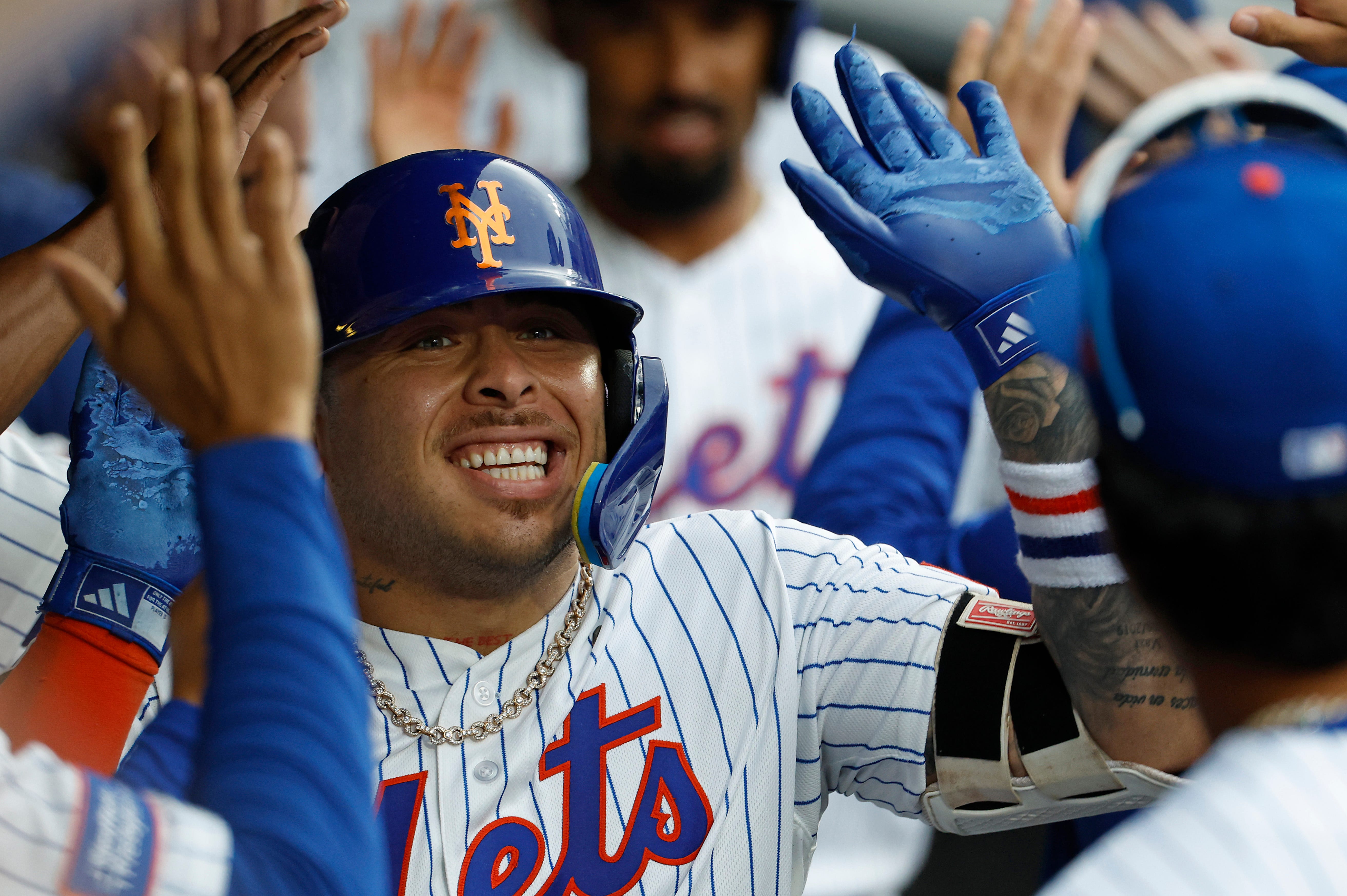
One could argue the knee injury played a role in his poor blocking, but Álvarez has historically been a poor blocker over the course of his career— he was in the 11th percentile in 2025, second percentile in 2024, and 43rd percentile in 2023.
So, that’s not it.
Right now, Álvarez can only be viewed as an offense-first catcher only, and again, his offense is concerning at best even if he’s still young. That doesn’t mean that as he gets older, his defense won’t improve. But there’s no way to predict if that will ever happen, and the Mets have to be primarily concerned about what he is today with respect to where the team is with this version of Álvarez. To be fair, Álvarez’s defense has been a detriment, and it can only be concluded— without even considering the catcher’s ERA - it has adversely affected their pitching overall.
By the way, if you’re someone who considers the ERA for pitchers with specific catchers behind the plate, Mets pitching had a 3.74 ERA when Torrens was catching, a 4.54 ERA when Álvarez was catching. The team allowed 91 more runs in only two more games with Álvarez (88) than Torrens (86).
In totality, it was his defense which made him unplayable at the end. After August 10, his offense was absent to the point that his defense was no longer tolerable— Torrens emerged as the better player for this team and pitching staff in particular. He sank to being the 27th worst player in the game after that date (min. 100 PA).
The question for the Mets going forward revolves around patience. How much more time can or should the Mets give Álvarez to become a competent catcher? They can unquestionably deal with the highs and lows of his offense— again, as frustrating as his offense was at the end of the season, his marks were above average for the year among all catchers in the game. He has to become more disciplined, his approach needs to be more consistent, and he does need to hit for more power overall, but all of that might be a baseball maturity issue more than anything else.
But they can’t deal with these offensive extremes if he is unplayable behind the plate. And we seem to have this conversation about Álvarez’s defense specifically every winter, and he will be entering his fifth full season in the big leagues in 2027, and is eligible for arbitration for the first time as well.
Now, just to get this out of the way, the Mets will tender Álvarez a contract this fall. They aren’t going to non-tender him and let him walk— they don’t have a full-time alternative on their roster. Yes, Torrens is great, but he is only great in this role. He should not be this team’s full-time catcher. That’s not what he is here to be.
But that shouldn’t stop the Mets from exploring alternatives, at least until that is exhausted. And I say that because the market for free agent catchers doesn’t really offer anything that would make the Mets that much better.
Unless the Mets can trade for an upgrade— which is the marketplace they’re going to have to look— it’s going to be hard to solve this problem this winter.
I would’ve said Liam Hicks might’ve been an ideal trade candidate this winter, but the Marlins moved him to the Rays this past season, and I see no reason why the Rays would off-load him given his current production with respect to controllability.
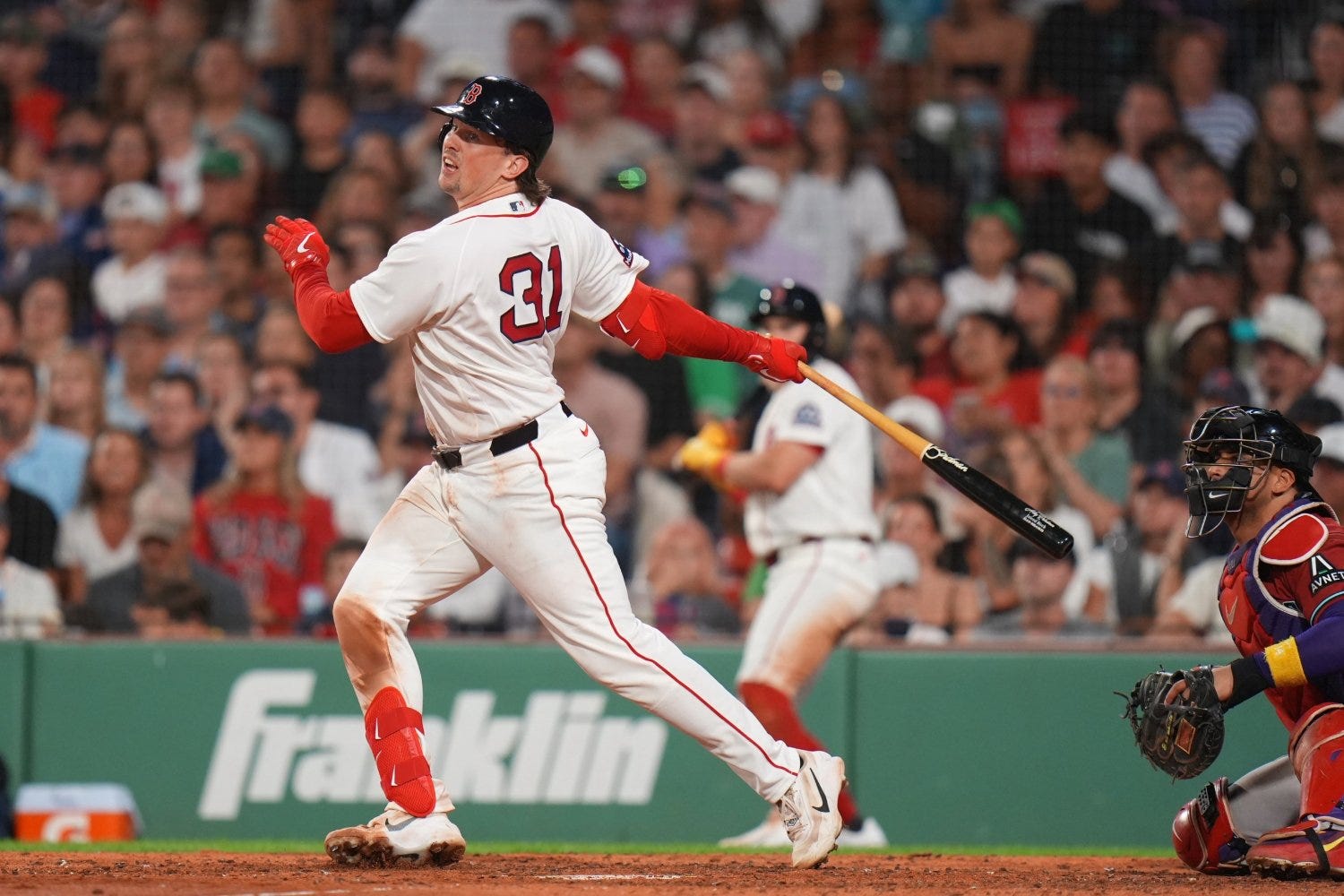
Adley Rutschman would combine youth with a balance of plus defense and above-average offense. Baltimore just moved him to Boston at the trade deadline, and he still has one more year of control before being eligible for free agency. It’s not clear if Boston would even consider unloading him as a rental, but they gave up a big package of minor leaguers to get him, and they probably won’t sniff that value in a return if they decided to move him this winter, regardless of how good he is.
There’s Hunter Goodman in Colorado, who, like Álvarez, is an offense-first catcher, and while he has 30–40 home run power, he’s a low on-base, high-strikeout guy. One might immediately conclude Goodman is a Coors Field product, but his home/road splits are surprisingly even, and he has hit more home runs in his career away from Coors than he has at home, albeit four more. He is under team control through 2030 and is already a two-time All-Star and Silver Slugger Award winner, so given the state of the Rockies and their latest attempt to rebuild, it wouldn’t make a lot of sense for them to move Goodman unless they’re blown away with an offer.
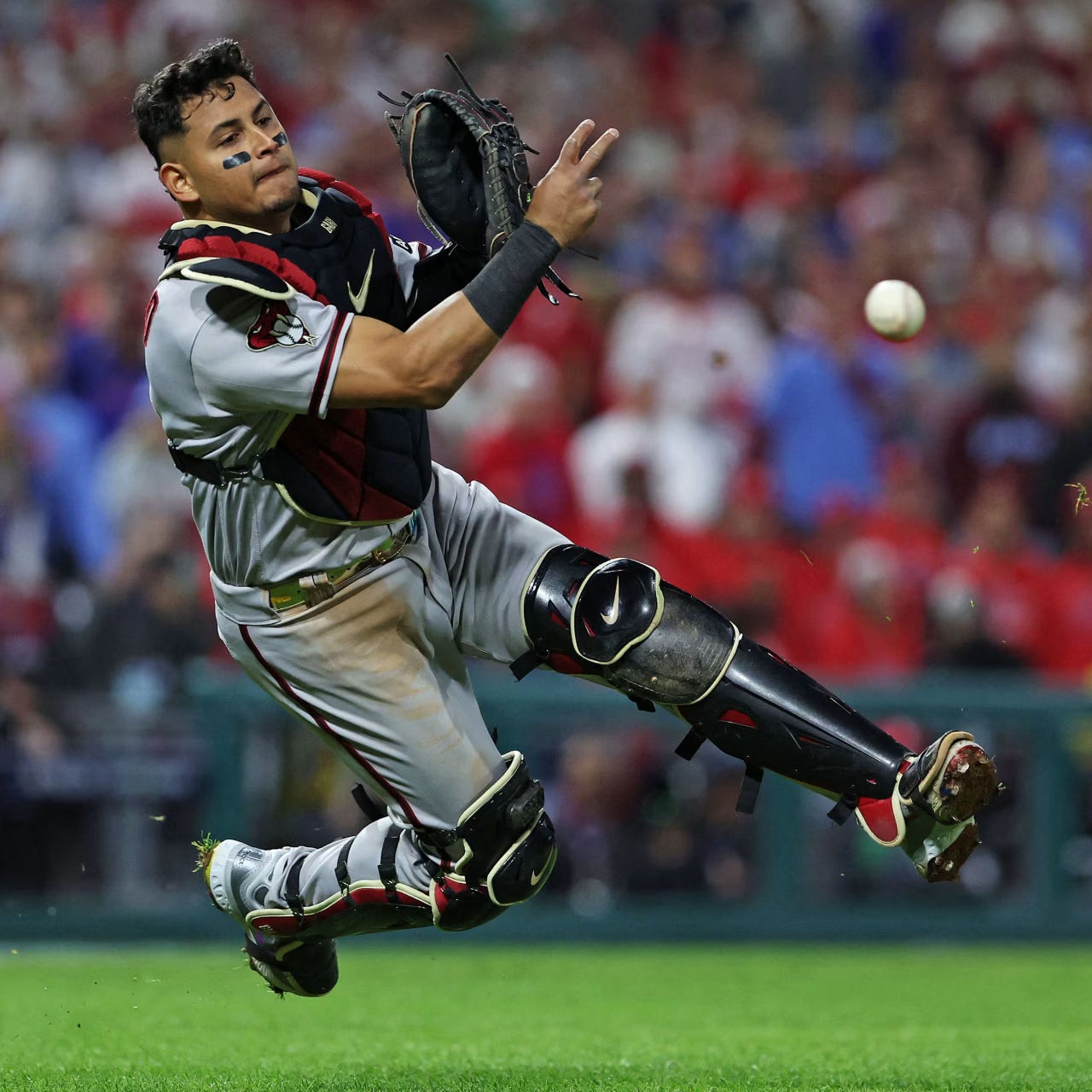
Arizona’s Gabriel Moreno profiled as the best catcher in the league in 2026, but it’s almost impossible to see the Diamondbacks even entertaining a move for him even as he is very likely to get more expensive through arbitration. He posted a 5.4 fWAR, led the league in hitting with a .311 batting average, posted a 143 OPS+, and will presumably win a second Gold Glove behind the plate in 2026. It would be nice for sure if the Mets could put together a comfortable package for this kind of catcher, but unless they’d be willing to give up two top-five prospects for an elite player at a premium position, Moreno will be nothing more than a pipe dream.
As you can see, there’s no easy path forward for the Mets to upgrade over Álvarez. They may need to stay patient for another season with him, hope he stays healthy, and at least make him competent so he can be a playable catcher end-to-end in 2027.
If he isn’t and they’re contending, perhaps they can entertain a trade next summer.
Francisco Alvarez NEEDS to be dealt now. Finding a quality catcher, even a slightly above average catcher is unbelievably hard these days. The Mets can score big on this by getting a real DH this season through a trade. Alvarez to the pirates for O’Neil Cruz. Sign a competent backup. Pirates need a catcher in the worst way. They would deal
I don’t count on any other team taking a flyer on Alvarez, much as we’d like them to. I think Alvarez will once again be a Met next year until a real opportunity that’s not terribly expensive presents itself in a trade/FA.,