


What’s Up with the Mets? 🌴
Francisco Lindor returned to Mets camp following surgery to remove the hamate bone in his left hand - he remains optimistic about being ready for Opening Day and will resume throwing within a couple of days
Juan Soto and Luis Robert Jr. highlighted the position player arrivals to camp on Sunday ahead of Monday’s first full squad workout at Clover Park in Port St. Lucie
Soto told reporters his relationship with Lindor is great and they talk all the time in games, and dodged questions about the reported clubhouse issues in 2025, and said, “the past is the past” (watch)
Lindor said everyone in the clubhouse cared about one another last year even if they all weren’t best friends (watch)
As of right now, RHP Devin Williams will be the club’s closer, Carlos Mendoza said on Sunday
Roster Moves 📰
Claimed C Ben Rortvedt off waivers from the Dodgers
Transferred RHP Dedniel Núñez to the 60-day injured list

🌴 SPRING TRAINING IS HERE! 🌴
Mets pitchers and catchers and position players are now officially in camp. The full squad’s first official workout is today in Port St. Lucie.
What I’m Reading 🗞️
It’s time to put David Stearns’ Mets overhaul to the test (Daily News)
Marcus Semien brings a Gold Glove and quiet leadership to the Mets (NorthJersey.com)
Just Mets Podcast 🎙️
SUBSCRIBE: YouTube | Apple Podcasts | Spotify
Is the Mets roster better equipped to deal with its identified shortcomings this time? ✍️
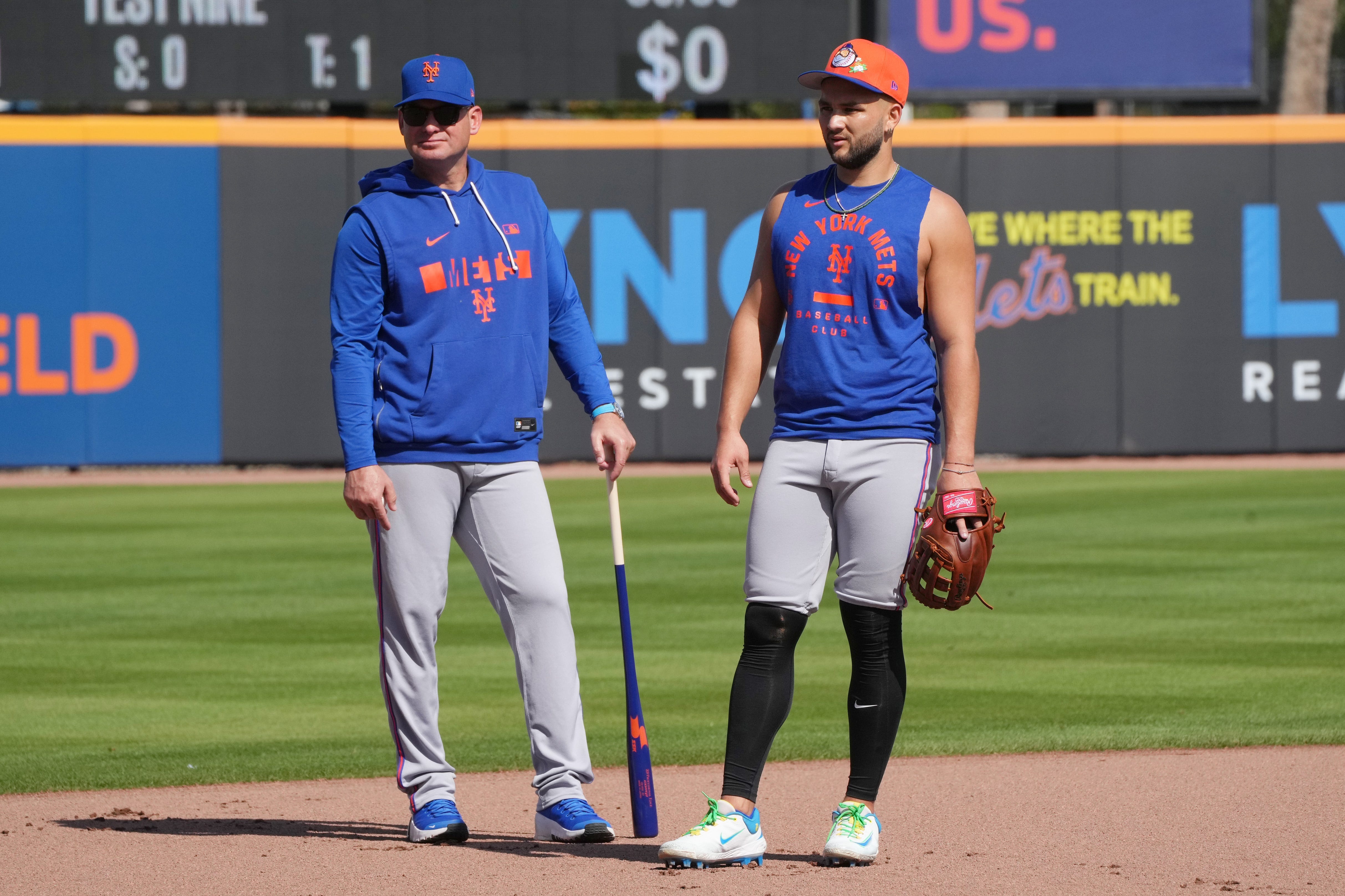
There might not be a team with such a wide range of possible outcomes as the Mets heading into the 2026 season.
They’ve made so many changes to the roster that they’ve eased some questions while raising others. It’s a team filled with a lot of IFs, a lot of maybe’s, and if those IF’s and maybe’s break right, or 80 percent of them anyway, the Mets will probably have a strong season.
To be fair, most teams need 80 percent of their IFs and maybes to break right, including the Dodgers who look invincible year after year, yet they were on the brink of losing the World Series to the Blue Jays in seven games in 2025 (until they rallied, and of course, didn’t lose). But, they had a lot go wrong, including having to deal with a fragmented bullpen, some underperformance from expensive stars, and a lot of injuries. A LOT.
But again, none of that is different for any other team.
The difference is that variance. The Dodgers don’t have a wide range of outcomes for their roster. And even as many have criticized the Yankees for “running it back” for 2026 in large measure, they don’t have a high degree of variance, either, probably because they know what they have with the roster they’re running back.
But then there are the Mets, trying to use crazy glue to quickly put together a winning formula after stripping the roster of so many stars immediately following the bleed-out that was the 2025 season.
The Mets have done this before. They went on a supermarket sweep for stars before the 2022 season, and it actually worked when that roster won 101 games despite not advancing beyond the Wild Card round that year. But, it didn’t work when they had to revamp the roster for 2023 and 2025. Nor did it work in 1993, 2002, 2003, 2009, 2017, 2018, or 2021.
So, history isn’t exactly on the Mets’ side, despite the quality they’ve seemingly brought in.
Now, what is it about this roster revamp that has me confident it might just work out well?
For starters, as I’ve said before, the Mets more closely resemble the modern playoff contender. They’re much stronger defensively up the middle. The lineup is more capable now of mitigating team-wide batting slumps by giving them a core competency for making contact. Sure, there could be a power drain, and an even greater short-term power drain with Francisco Lindor’s hamate bone surgery. But the lineup is less all-or-nothing and, on paper anyway, a more well-rounded threat at least through the first six or seven spots among their everyday players.
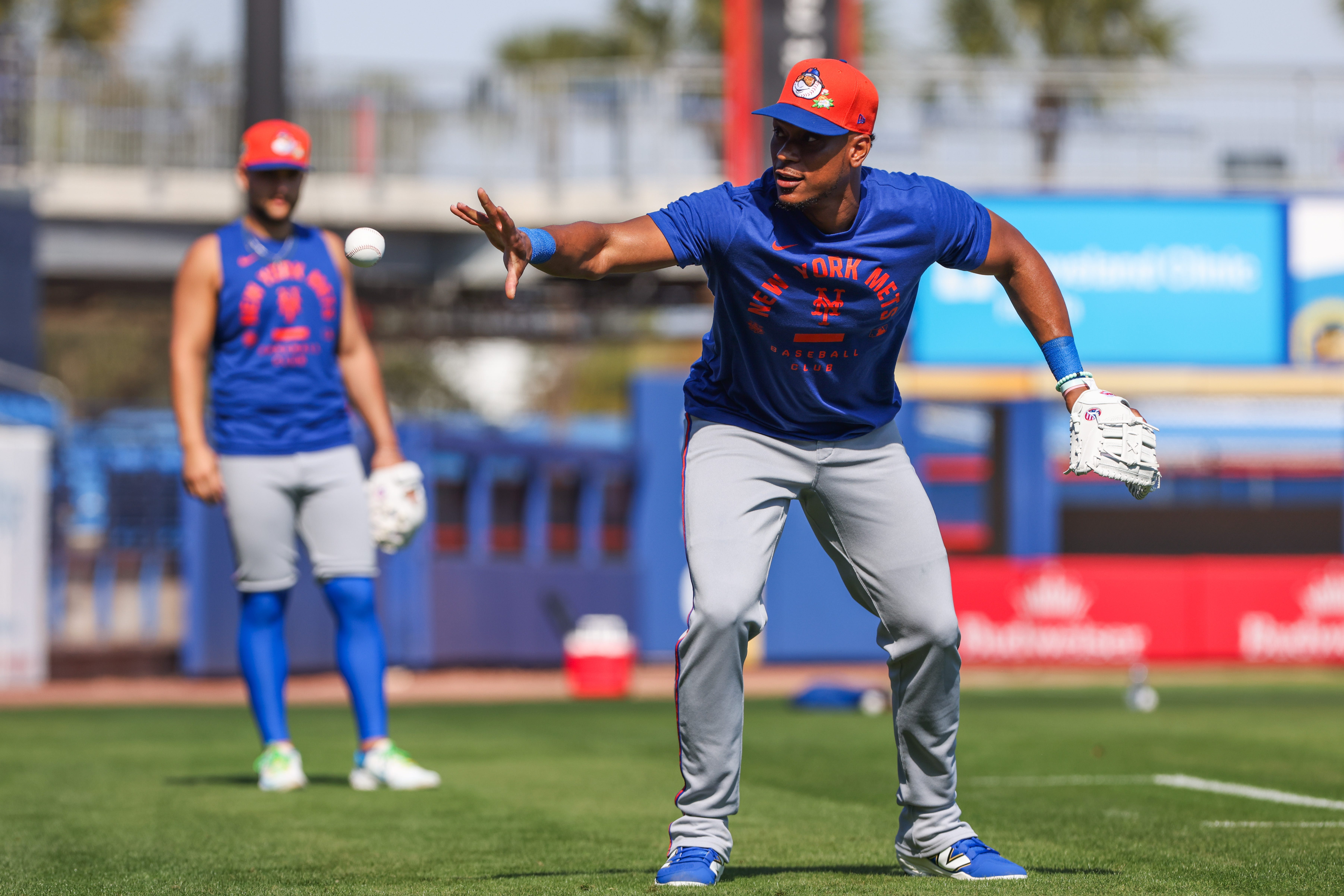
That doesn’t mean there aren’t holes, questions, and concerns. We don’t know what the Mets will get from Luis Robert Jr. offensively. We don’t know if what Brett Baty did in the second half of the 2025 season is sustainable. We don’t know what version of Francisco Álvarez the Mets will have, either. And if those guys struggle, that will only put more focus on what Marcus Semien does offensively, someone whose offense has diminished as he’s aged into his mid-30s. We also don’t know how Bo Bichette will fare at third base or Jorge Polanco at first, although I am quite a bit less concerned about Bichette at third than I am Polanco at first.
But the Mets have so much offensively with Lindor, Juan Soto, Bo Bichette, and Jorge Polanco, inclusive of power, on-base, power, contact, speed, and overall athleticism, that they don’t need superstar-caliber seasons from the aforementioned question marks. They don’t even need all of them to be better than league average offensively since they’re all plus-defenders and can provide value in preventing runs.
And that plus-defense will only help promote a likely bounce back of at least one of Kodai Senga or Sean Manaea. Combine that with Freddy Peralta’s ace-like presence, the continued emergence from Nolan McLean and perhaps from Jonah Tong and Christian Scott later, and a more balanced season from David Peterson, and the Mets might be better positioned for success than they were for the better part of the last 90 games of the 2025 season.
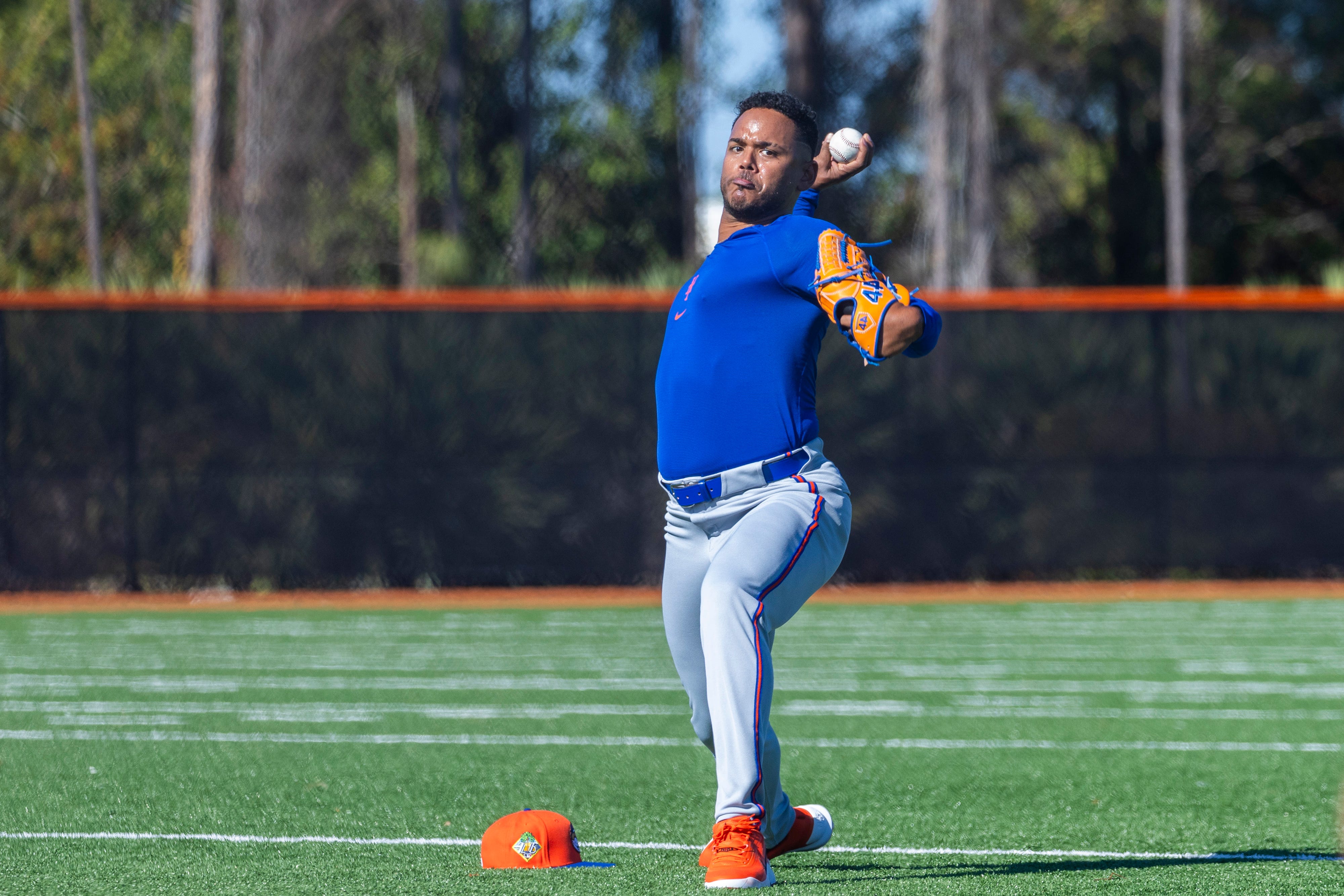
And again, the Mets don’t need all of those pitchers to be All-Stars, although that would obviously be nice. Yes, they need Peralta to be Peralta, they need McLean to continue to grow into that top-of-the-rotation arm he is clearly capable of being. They just need from the rest of them to be somewhere in between what many of them were in the second half of 2025 and what they were before. And of course, they need far more innings from this rotation than they got last year, and to make sure they have five Major League starting pitchers available in any given five-game stretch, which wasn’t the case last June and led to the season falling completely off the rails.
Now, I don’t think all of the problem solvers are in the organization yet. I do think the Mets are going to need help at the trade deadline, especially with their pitching staff, which has more IFs and maybes than any other part of the roster. And as we know, parts of the pitching will get hurt or underperform, but the Mets seem to be better positioned to at least tread water this time, unlike last year when it all went wrong at the same time, and those who did get healthy (Manaea, Frankie Montas) and did acquire (Ryan Helsley) just made it all worse.
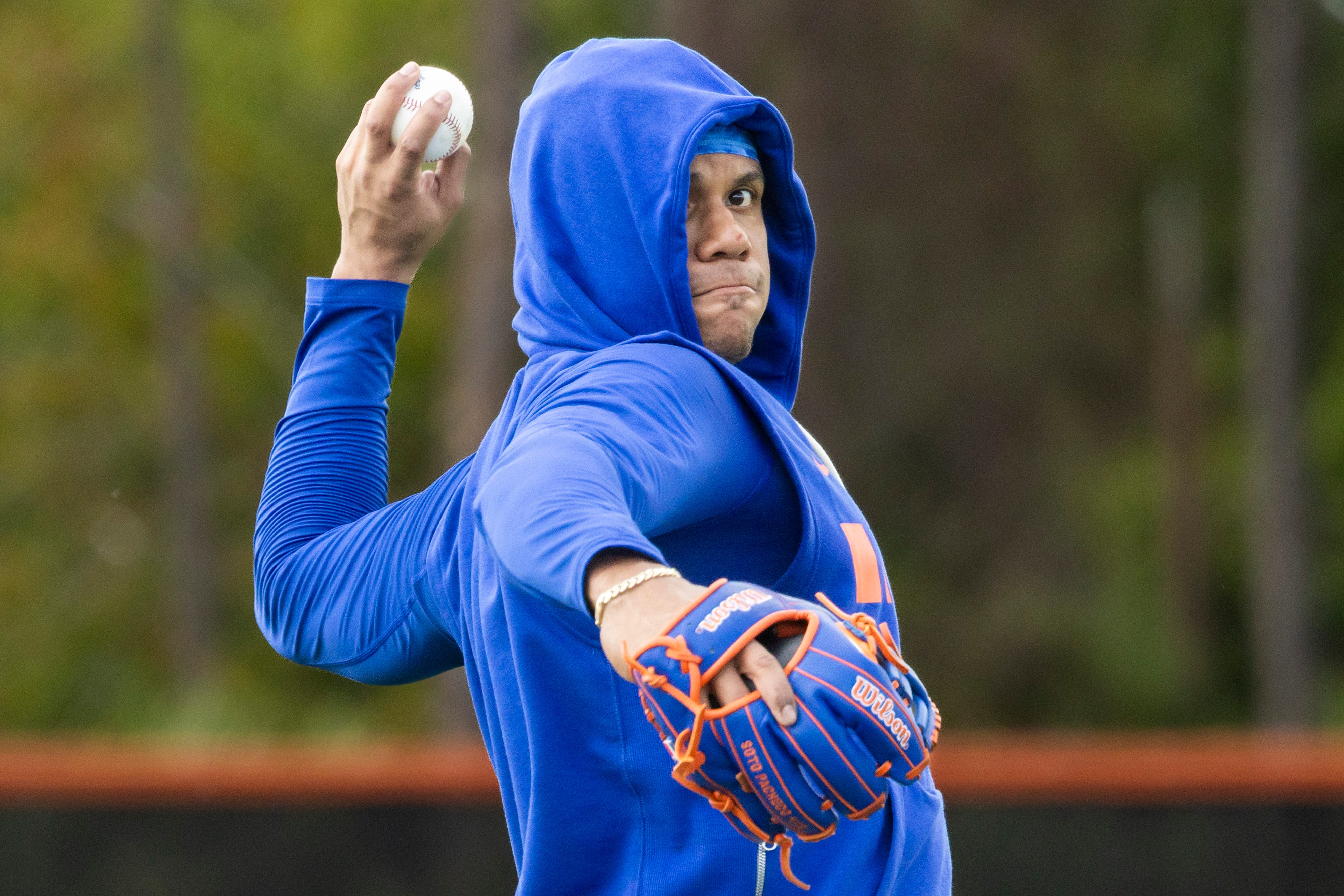
But that’s how it is for everyone. It’s just difficult to project how it’s all going to start, progress, and finish for the Mets because much of this team has never played together before, and there are enough lingering questions from the incumbent players who the Mets didn’t cut bait with.
Hence the wide-ranging variance.
That’s what I think will be Carlos Mendoza’s biggest challenge heading into the season. Yes, he says he’s learned some lessons from last year, whether that’s managing the room, in-game strategy, communication, or whatever it is he has identified as areas for development. But he’s tasked with fixing his own mistakes on top of getting a roster that’s largely unfamiliar with one another to gel and deal with a lot of players in new positions.
It’s not going to be easy, and it may take time for it to come together in 2026. But perhaps the way this roster is constructed is indeed better equipped to deal with its identifiable shortcomings than it was a year ago.
We shall see.
Around the League 🚩
The Astros signed OF Cavan Biggio to a minor league contract and invited him to big league camp
The Rangers signed OF Mark Canha to a minor league contract and invited him to big league camp
Braves OF Jurickson Profar underwent sports hernia surgery in November, but is now unrestricted in Spring Training (MLB.com)
It was “kind of wild” to Bryce Harper when Phillies GM Dave Dombrowski wondered out loud at the beginning of the off-season if the player would ever be elite again (MLB.com)
I'm less worried about Polanco adjusting to 1B than Bichette to third for two reasons; First, he already started learning the position last season, so it's not completely foreign to him and second, if he can't cut it over there, he can transition to the DH spot in the batting order. Truth be told, I felt he should be their primary DH to help keep him in the lineup, as he's battled knee injuries the past few years, but after watching video of Bichette taking grounders at 3B, made me skeptical of him making the adjustment. I know it's early, but he looked very uncomfortable over there --very stiff, and he's doing the glove tap thing that both David Wright and JD Davis had to overcome.
Since the word "variance" was used a good bit it drove me to read some and the simplest definition I found was: "Variance refers to the degree of unpredictability in results compared to expected outcomes." Language goes through changes of fashion like a lot of things, so I find it useful to think about how a sportswriter might've put it 30 years ago. In which case the imaginary writer would've simply said that the Mets have more players than most whose performance is hard to predict. Fortunately, Soto's performance is not hard to predict!