


What’s up with the Mets? 🍎
The Mets had reportedly estimated their payroll for 2026 in the $310 - $320 million range, but Mets owner Steve Cohen disputed that report and said he doesn’t expect it to be lower than it was in 2025 (NY Post | X)
The Mets and Reds are engaged in trade discussions with the White Sox for Luis Robert Jr. (USA Today)
The Mets had been gathering information on 1B Willson Contreras before the Cardinals moved him to the Red Sox on Sunday (St. Louis Post Dispatch)
Roster Moves 📰
Outrighted LHP Brandon Waddell to Triple-A Syracuse
Rumor Mill 💨
The Blue Jays are interested in INF Alex Bregman (Athletic)
The Royals might need to shed some payroll if they want to add offense (Athletic)
Even after adding Brandon Lowe via a trade, the Pirates want to add more offense to their lineup (Pittsburgh Post Gazette)
The Athletics, Cardinals, Giants, Pirates, and Yankees are all on Ketel Marte’s no-trade list (Athletic)
There’s a chance the Mariners could bring back INF Eugenio Suárez (MLB Network Radio)
What I’m Reading 📖
The Mariners helped prepare Jorge Polanco for first base in 2025 (Athletic)
The Just Mets Podcast 🎙️
In the latest bonus episode of the show – exclusively on Patreon – Rich MacLeod is joined by Deesha Thosar (FOX Sports) to discuss the growing pressure on David Stearns and Steve Cohen this winter…
SUBSCRIBE TO THE PODCAST: YouTube | Apple Podcasts | Spotify
That annual payroll discussion ✍️
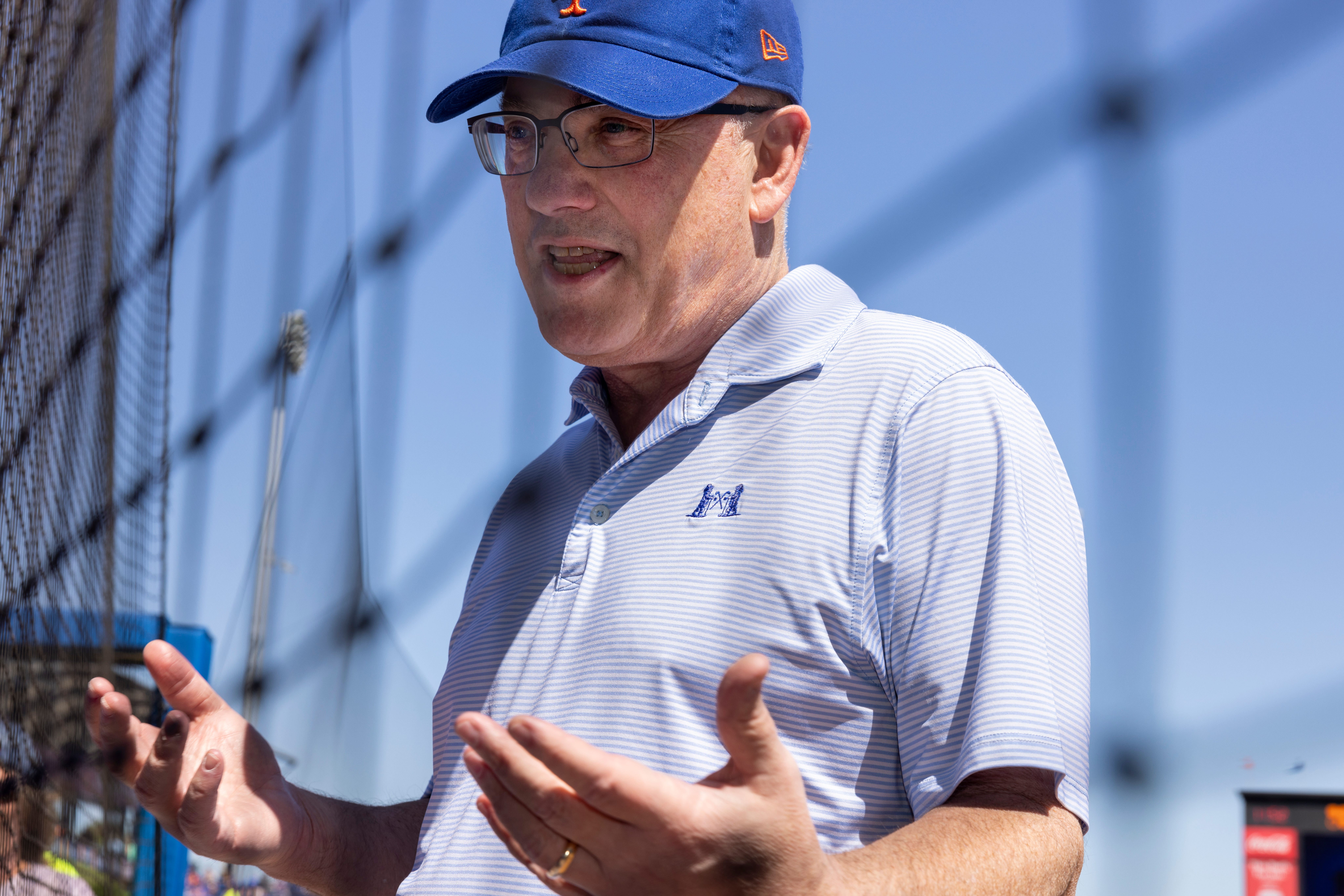
Well, it’s Christmas week. Happy Holidays to all. I know from a fan perspective, the last six months haven’t been easy in our community. The team went into the tank, they lost three star players, two of whom were homegrown, and nobody has said anything about what’s next except Steve Cohen, who took to X on Friday and said he doesn’t expect the payroll to be lower in 2026, and referred to anyone who misinterprets the club’s payroll situation as “idiots.”
So, I suppose it’s time we have that payroll conversation.
It seems like an annual tradition when it comes to the Mets, whether they’re spending like the drunken sailor Steve Cohen said he didn’t want to do at one point, or the Wilpons cutting the corners we all grew to enjoy for so many years before him (that’s sarcasm, by the way).
Just so everyone is clear - the Mets luxury tax (CBT) payroll as it stands right now is estimated between $300-315 million for 2026. That includes all currently rostered players on the 40-man, arbitration estimates to David Peterson, Tylor Megill, Francisco Álvarez, Luis Torrens, Huascar Brazobán, and Reed Garrett, money they sent to Texas with Brandon Nimmo, Frankie Montas’ sunk cost for 2026, estimates for 0-3 year players in the majors and minors, injured list replacement estimates, player benefits, and the pre-arbitration bonus pool allotment.
That does not include the deferred money owed to Bobby Bonilla ($1.1 million), Adam Ottavino ($500,000), and Bret Saberhagen ($250,000), which is paid every July 1. That does not count towards the CBT payroll, but does of course count towards their overall cash outlay every year until their deferred terms expire.
The Mets payroll for 2025 has been estimated anywhere between $340-$350 million by most accounts. Let’s just land in the middle there at $345 million. And, for their current payroll projection for 2026, let’s land in the middle there at $307 million just to keep it fair.
To get started, I don’t want to hear anyone say the Mets are being cheap, the Mets aren’t spending, or any of that nonsense. They have become an organization which is now routinely in the top three in spending on the major league roster. They also gave the biggest contract ever to Juan Soto a year ago, they have given the highest single-season salary to pitchers ever, twice.
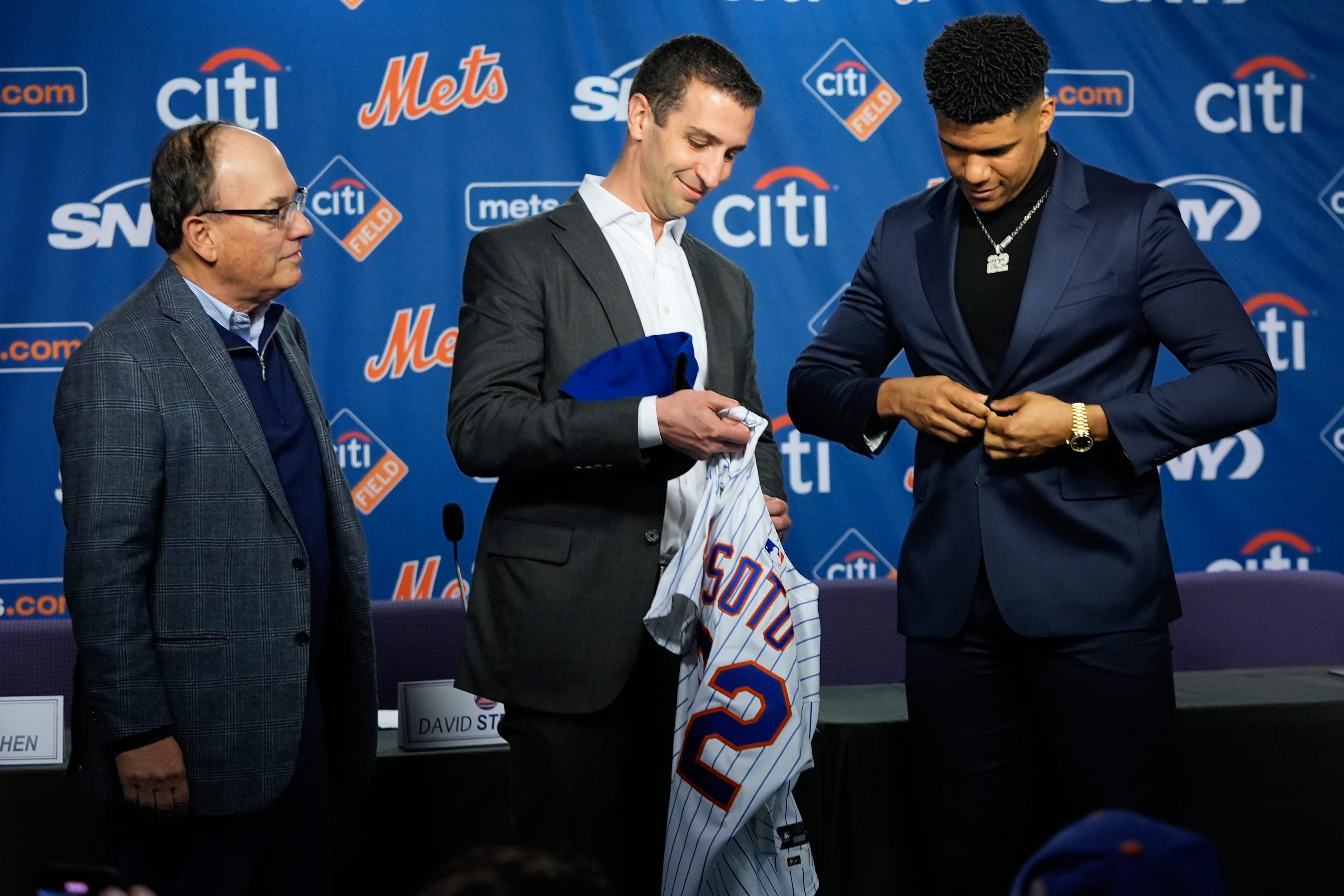
This owner has done everything the previous owner didn’t do for so many years from a spending perspective. They are already above the top luxury tax threshold for 2026, and they pay out the rear end every year in luxury tax penalties. As it stands right now, they have the second highest CBT payroll in the sport heading into 2026 behind only the Dodgers. It’s ridiculous to surmise ownership cares more about the casino being built outside Citi Field than the Mets as well. That casino is a drop in the bucket for this owner under the current circumstances of that deal. There’s also the organizational investments in technology, analytics, front office personnel, and all sorts of other things we don’t get to see which has modernized the Mets.
So, save it.
The problem with the Mets is the only conclusion anyone can draw is they’ve inappropriately spent their money - in large measure - in recent seasons. It doesn’t mean they shouldn’t have signed Juan Soto, but it probably means they’ve misappropriated their funds in the areas of the roster that have doomed them in 2023 and 2025 in particular.
In fact, there’s no probability about it. They’ve been one of the most volatile teams in the sport under Cohen’s ownership, going from 77 wins in 2021 (after spending much of that season in first place, mind you), to 101 wins in 2022, then back down to 75 wins in 2023, then up to 89 in 2024, then down to 83 in 2025. The collective luxury tax payrolls over the first five seasons are around $1.6 billion for two playoff teams, two losing teams, three really expensive and short-sighted flops during that five-year span with that same customer dissatisfaction.
That’s a lot of coin for not a whole lot of return on the investment from a wins perspective.
You can fairly criticize the owner and the front office(s) for a lot of things during that time, not the least of which is a ton of turnover and instability from the front office down to the dugout, but you can’t when it comes to spending money. They may be dysfunctional and incompetent, which is directly reflected in their record in many of these recent years, but they are not cheap.
The reason I am not mentioning their actual cash outlay for 2025, by the way, is because the CBT payroll is the only thing that really matters considering the tax implications for the Mets, the importance of average annual value, and that being the key reason why clubs - including the Mets - are deferring money in so many second-generation free agent deals these days, as that lowers a club’s present-day obligation on the tax (to a degree).
So, if we take the middle values, the Mets are $38 million away from reaching their 2025 CBT payroll, and that assumes the Mets don’t want to go above $345 million with their CBT payroll in 2026, which could be a poor assumption, or not. Nobody really knows. I’m not even sure Mr. Cohen knows on this date.
The question is, how are they going to be able to do that? Especially since they have yet to touch their starting rotation, which, no matter what David Stearns says about how bad the defense was in 2025, was the killer for the Mets this past season.
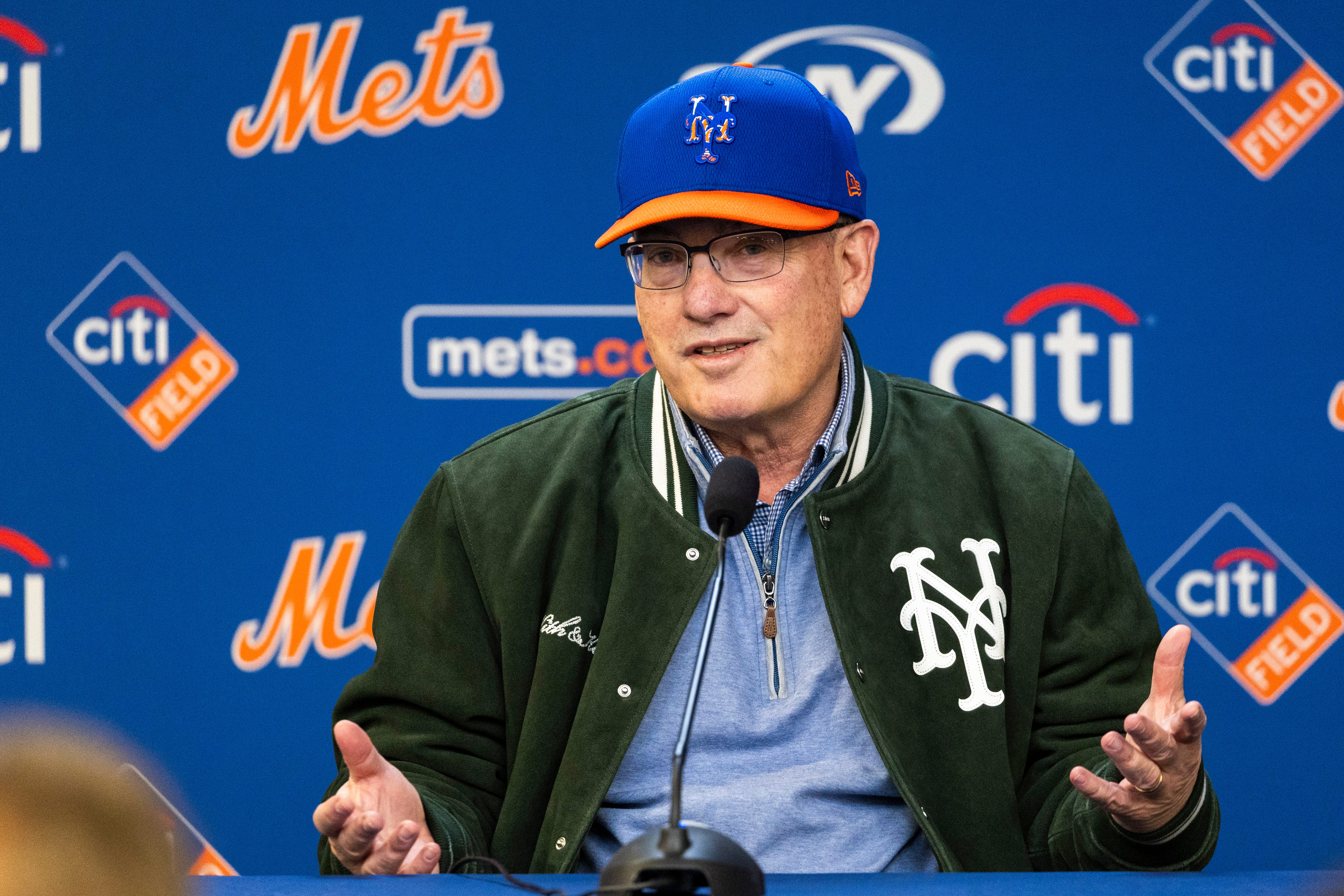
They have yet to replace Nimmo, and they probably still need another first baseman even if we are to believe them about Jorge Polanco playing there “as of right now,” as David Stearns said in a statement earlier this week.
They also need another outfielder on top of Nimmo’s replacement, they need two arms for their bullpen, and they need rostered position player depth as well.
That’s a lot. It’s a lot to fill with a theoretical $38 million budget and 110 percent in tax on every new dollar spent. It’s a lot even with a $50 or $60 million cash budget and 110 percent tax. It’s a lot for any team that wants to contend no matter what.
But, considering they’ve signed two top-of-the-market relievers (not the top one, of course) and brought Polanco in on what was arguably a short-term overpay, they appear to want to contend in 2026. Otherwise, what’s the point in spending $46 million on the three acquisitions they’ve made? And what non-contender needs a closer anyway?
It doesn’t mean they will, of course.
Now, as we’ve discussed and has been well chronicled since the beginning of October, the Mets have parts to spare. Jeff McNeil remains the most obvious, and they’ve been rumored to be shopping Kodai Senga as well. There’s also Mark Vientos, who doesn’t appear to have an obvious spot to play. They are set to earn $28.3 million combined towards the CBT payroll. The problem is, how much would the Mets need to offset financially in order to free them of those contracts? That part is unknown, but Senga is owed $30 million in 2026 and 2027 (same as the CBT obligation), and McNeil is assessed at $12.5 million towards the CBT, and is owed $15.75 million in cash this season with a $2 million buyout for 2027. Vientos will earn around $800,000 as a 0-3 player in 2026.
And, right now anyway, should the Mets be looking to move Senga, or should they wait to see if they can upgrade first and/or bet that $15 million on his upside?
So, that’s easier said than done.
Now, I’ll be the first to tell you I don’t know how the Mets are actually going about this. The only communication from the Mets since David Stearns’ last scrum at the winter meetings nearly two weeks ago was Mr. Cohen’s tweet on Friday about payroll, and being critical of people misinterpreting a report about how much they want to spend in the New York Post. I do find it interesting that Mr. Cohen all of a sudden wants to remind people about the cost of waiver claims, player movement between the minors and majors, and trade deadline acquisitions as part of their cost structures and budget for the upcoming season. That’s not someone who seems ignorant of the cost per dollar on their current payroll, even if this is going to be one of the highest payrolls in the sport yet again.
There have also been several reports the Mets are involved and interested in what Stearns has labeled “need-for-need” trades, which is a fun way of saying bad contract for bad contract trades. They were reportedly talking with the Padres about a deal involving Mason Miller and/or Nick Pivetta, and they have reportedly been looking at more Polanco-like signings, as in short-term, high-salaried free agent procurements and not at the longer-term, top-shelf free agents as much. But at the same time, they’re “very in” on Cody Bellinger, who we can safely expect will get at least five years in his next contract.
So, again, there’s no way to really know where this is all going.
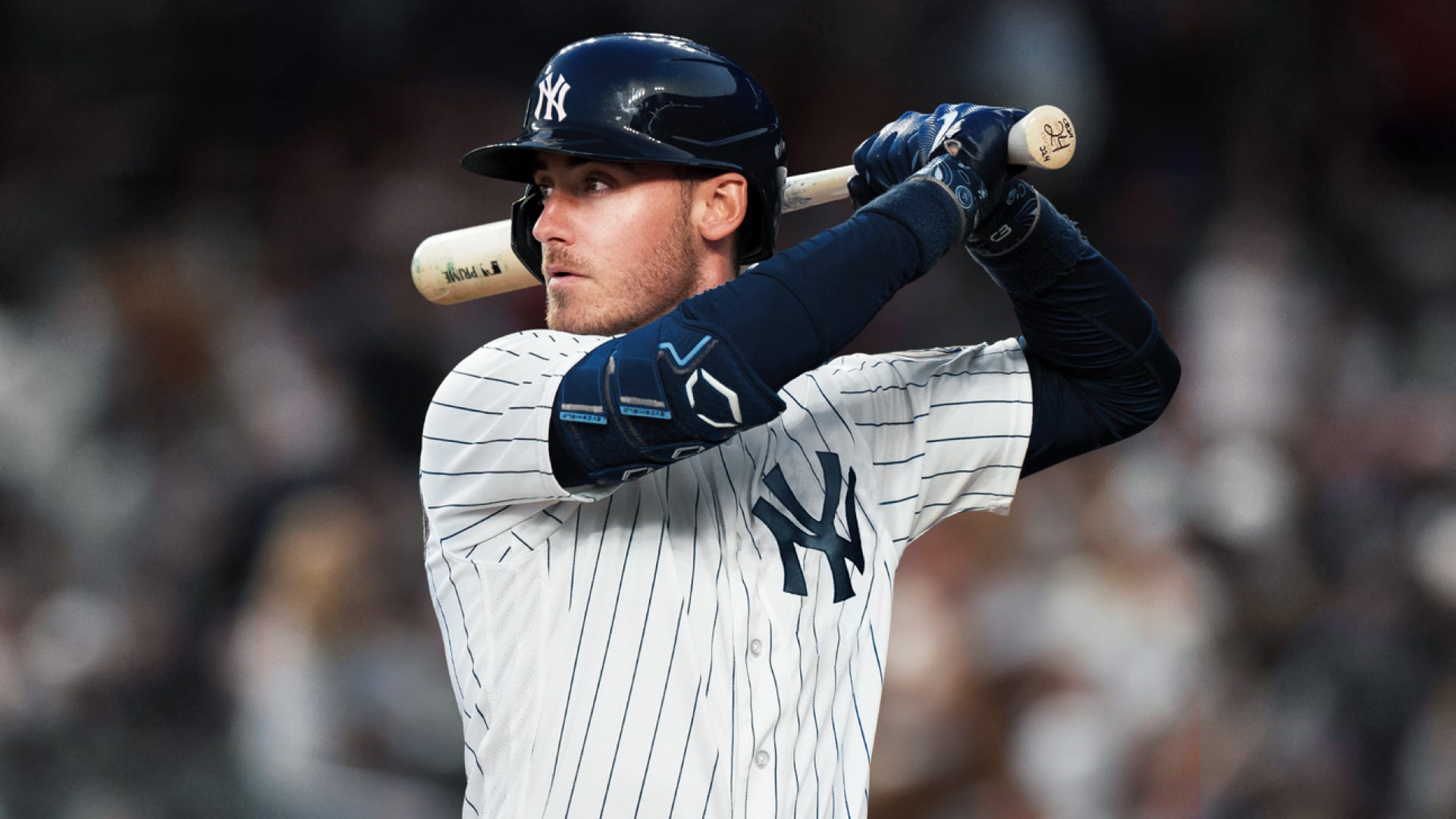
Yes, the Mets have the sixth-highest fWAR projection in the game for 2026. But they have serious deficits in their starting pitching projection (17th) and their bullpen (12th), which are the two areas that killed their season in 2025. They also project at 23rd in fWAR in centerfield, 21st in left field, and generally middle of the pack at most other positions aside from right field, second base, shortstop, and catcher, which are all top third or better. And that all assumes they stay healthy too.
So, don’t get too excited about the overall fWAR projection. We saw how that worked out in 2025.
The question about spending and the Mets centers around their willingness or, as I always essentially say, their capability and competence in improving the roster. I don’t think there’s any question that more moves are coming, which in turn means they have to add to their current payroll. They can barely field a team right now, they can’t get through a nine-inning game on the mound, and they have no room for anyone to get injured. And, that’s with an already absurd $306 million CBT payroll.
So, I think the Mets will easily match, if not exceed, their dollars spent in 2025. They have to. It’s more of a question of whether or not they will create a balanced, effective, and once again, competent roster. Right now, they have to get a lot and spend a lot just to be as bad as they were in 2025, at least from an fWAR perspective. For instance, if they sign Cody Bellinger at $27 million per year, that will cost them $56 million or so with the 110 percent penalty and only get them to around 1-2 fWAR better than they were at the end of 2025 (that’s based on 2025 marks). And, if they trade for Luis Robert Jr. and the $20 million owed to him, that’s another $42 million assuming that’s a prospect buy and nothing offsets that salary.
And, that’s without any new starting pitchers or additional bullpen help. For context, the Blue Jays gave Dylan Cease seven years and $210 million after posting a 4.55 ERA and 3.4 fWAR for San Diego in 2025, or $8.82 million per fWAR. Obviously, Toronto is banking on better performances from Cease going forward, but he set a high bar for second-generation free agent starting pitching this winter, which is presumably why that market stalled out in the month since the signing.
It’s also worth mentioning that, maybe aside from Framber Valdez, there isn’t anyone available who can move the needle as an ace for the rotation, and it’s debatable at this point in Valdez’s career if he’s capable of doing that, not to mention the fact that it would be incredibly unwise to give Valdez more than a four-year deal at age 32 and already appearing to be diminishing. Valdez will most certainly get a higher AAV than Cease as well, perhaps in the $30-34 million AAV range, which seems crazy but he can thank Cease for that bump.
I do believe the Mets’ best path forward, at least for their rotation, will be via the trade market. It’s not so much that the salaries coming back will be less than that for free agents as much as it’s about finding the quality they seek combined with having the prospect capital to move that most teams don’t have. I still don’t know what kind of appetite the Mets have for making that kind of big trade - they have yet to make that big trade since the ill-fated one that moved Pete Crow-Armstrong for Javier Báez 4 1/2 years ago, which is partially why their farm system has become so rich with quality prospects since that time.
Is that player Tarik Skubal? Would the Mets be willing to take that kind of risk on a sure-thing rental? They could only take that risk if the signability risk was medium or lower considering what they would have to relinquish to get him, regardless of how strong their system is right now. Do they increase their risk tolerance if they know the Dodgers could be involved in trade talks for him? Do they increase their risk tolerance in general as time grows shorter this winter and their needs go unaddressed? Are the Mets really a Skubal away from being a World Series contender, even if they address their bullpen and find at least one outfielder?
Maybe that arm is Sandy Alcantara or Joe Ryan, if they’re available. Or, maybe the Mariners want to trade from their rotation, or perhaps it can be someone we haven’t even thought about yet.
But that goes back to spending their resources wisely, or foolishly. Whether that’s money, prospects, draft picks, or all of the above.
And, if history is any indication, the Mets have not done any of that well in a long, long time. So, they have a lot to prove regardless of how much coin they throw at the problem.
Around the League 🚩
The White Sox agreed to sign Japanese slugger Munetaka Murakami to a two-year, $34 million contract - he is expected to play first base (ESPN)
The Cardinals traded 1B Willson Contreras to the Red Sox (ESPN)
The Yankees are bringing back former Met RHP Paul Blackburn on a one-year, $2 million deal (NY Post)
"Polanco worked out at first base several times" is not a feasible plan
Hope they don't get Luis Robert. Seems like another version of Siri. Disappointed they couldn't procure Wilson Contreras as a short term fix for first. Unless that means they're aiming for Bellinger at first.