



What’s Up with the Mets? 🌴
Despite another strong start from Freddy Peralta, the Mets fell to the Astros on Saturday night, 8-2 (box)
Peralta struck out five Astros while allowing a single run on just one hit
C Ben Rortvedt provided off-the-bench offense from behind the plate, going 2-for-2 and scoring two runs
LF Cristian Pache continued his strong spring with a two-hit day, driving in a run and making several nice plays in the field
2B Mitch Voit, drafted eight months ago, got his first Grapefruit League start and hit
1B Mark Vientos struggled at the plate again, going 0-for-4 with a strikeout and grounding into a bases-loaded double play to end the seventh inning. The Mets were only losing 4-1 at the time
The bullpen had a tough day, as Saul García and Jordan Geber allowed six runs in their 2.1 innings of relief
Roster Moves
RHP Richard Lovelady claimed off waivers from the Nationals
RHP Justin Hagenman placed on the 60-day injured list with a fractured rib

Saturday, March 14:
OF Nick Morabito caught the final out of Italy’s victory over Puerto Rico
Schedule | Standings | Scores
What I’m Reading 📰
Freddy Peralta passing on his wisdom at Mets camp (NY Post)
Team Italy “embraces the cliché” as WBC darlings (The Athletic)
Just Mets Podcast 🎙️
SUBSCRIBE: YouTube | Apple Podcasts | Spotify
Today’s Game 🏝️
Match-up: Mets (10-8) vs. Blue Jays (8-11)
Where: Clover Park - Port St. Lucie, FL
Starters: TBD vs. RHP Grant Rogers (0-1, 3.60 ERA)
When: 1:10 EDT
Where to Watch: WPIX
The Mets’ offense has been kind of quiet this spring ✍️
I know, I know, spring training stats don’t mean anything…but don’t they, though?
With less than two weeks and just a handful of Grapefruit League games remaining, team identities are starting to crystallize. Spring stat sheets are little more than a sea of small sample sizes, but even the smallest sample can hint at a bigger story.
The story I want to tell today is one of a lack of slugging and scoring. For all the excitement and optimism I’ve hawked on this platform since pitchers and catchers reported, I’m admittedly troubled by this lineup’s present lack of thump.
Save for a few high-scoring performances, Mets hitters are generating fairly little in the way of pop and run scoring this spring. Entering Sunday’s slate of games, here’s where the team stands in some key hitting metrics:
Team SLG: 23rd (.381)
Total Hits: 25th (150)
Home Runs: 23rd (18)
Doubles: 20th (33)
Runs: 27th (85)
RBI: 25th (82)
OPS: 23rd (.715)
Not exactly amazin’.
Still, ever the optimist and knowing how unreliable spring stats are as predictors of regular season success, I wanted to see how the Mets have fared in the same categories over the last couple of years’ of spring trainings and regular seasons to see if there are any discernible patterns at all. I also wanted to see if any of the newer roster additions have any traits or patterns that carry over from camp to regular season.
Interestingly, despite the changes at the core of this team’s nucleus, the last few seasons have yielded similar spring results. In both 2024 and 2025, the Mets were among the league’s weakest offenses, ranking among the league’s bottom-three in most of the categories listed above. However, in both regular seasons, the team significantly outperformed their spring numbers, finishing among the league’s best units in the power department in each season. That’s a fun tidbit, but it admittedly doesn’t tell us all that much, mostly because each of those previous teams featured Pete Alonso, so overall slug was destined for a natural boost over a season’s worth of plate appearances.
Looking at how this year’s group is performing at the plate in camp, I’m really starting to wonder where that guaranteed power and scoring surge is going to come from.
When Alonso left, the instinctive first question was how the Mets were going to replace his home run production. The first player the Mets signed in the wake of his departure was Jorge Polanco — a perfectly capable hitter over the course of his career who seemed to have tapped into some refreshed mechanics last year, but not a 40+ homer guy.
To his credit, though, Polanco has shown up at the dish in his limited chances so far: he’s got two homers and a .500 OBP in just shy of 20 plate appearances. It’s not a lot, but he’s looking comfortable and healthy, so he’s not the new addition I’m most concerned with.
Currently, my eyes are turning nervously towards Bo Bichette and Marcus Semien.
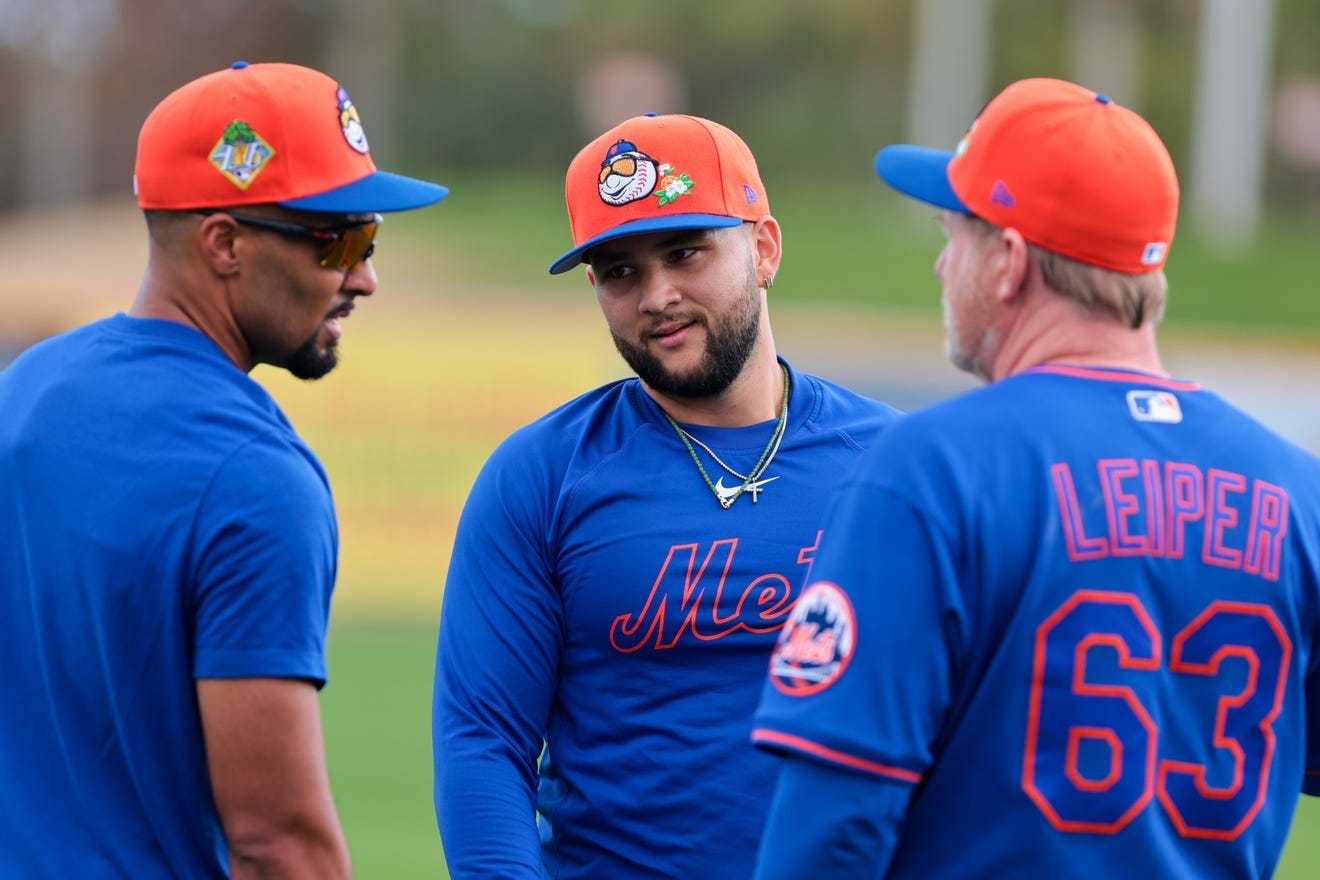
Despite being tied for the third-most plate appearances on the team through the team’s 19 games, Bichette and Semien are two of the team’s worst hitters. They’re both slugging sub-.300, with three total extra-base hits and seven total runs created between them in 56 cumulative appearances.
For a pair of players who have historically looked like themselves both in camp and during the regular season, seeing such a precipitous dip in production from their usual baseline is a little jarring.
I’m sure I sound like a Bichette apologist by now (and I am), but his slow start doesn’t concern me all that much. I’m not at all surprised to see his numbers at the plate take a dip in the same season he’s adjusting to both a new team and a new position. His track record suggests the bat will come around once the games start to matter.
I’m not sure I feel as confident about Semien.
Though his bat has been steadily quieting over the last few seasons, Semien has still managed a 105 wRC+ across the last three spring trainings, and a 108 wRC+ across those same three regular seasons. That’s not been the case this year.
As bad as Mark Vientos has been this spring, Semien has been only slightly more functional in the batter’s box. In 28 plate appearances, Semien is hitting .148 with a .475 OPS, with eight strikeouts against a single walk. Digging into his data a bit this spring, I’m seeing a big red flag: Semien is currently sporting a ~43% infield fly ball rate.
Yes, that percentage is almost assuredly exaggerated by the small sample, but it’s a trend that troubles me all the same. Pair that with his ineffective line drive production (33% line drive rate, 37% pull-side contact, sub-.150 average) and you’re talking about a bat that may not have much juice left in it at all, let alone one that’s ripe for a bounce back.
Again, these numbers only mean so much in March — players are still getting loose, and truly anything can happen over a mere 30 plate appearances. However, if a player’s bat has been declining for several seasons, and they’re on the ‘wrong’ side of 30…maybe those spring numbers will prove more prescient than previously thought.
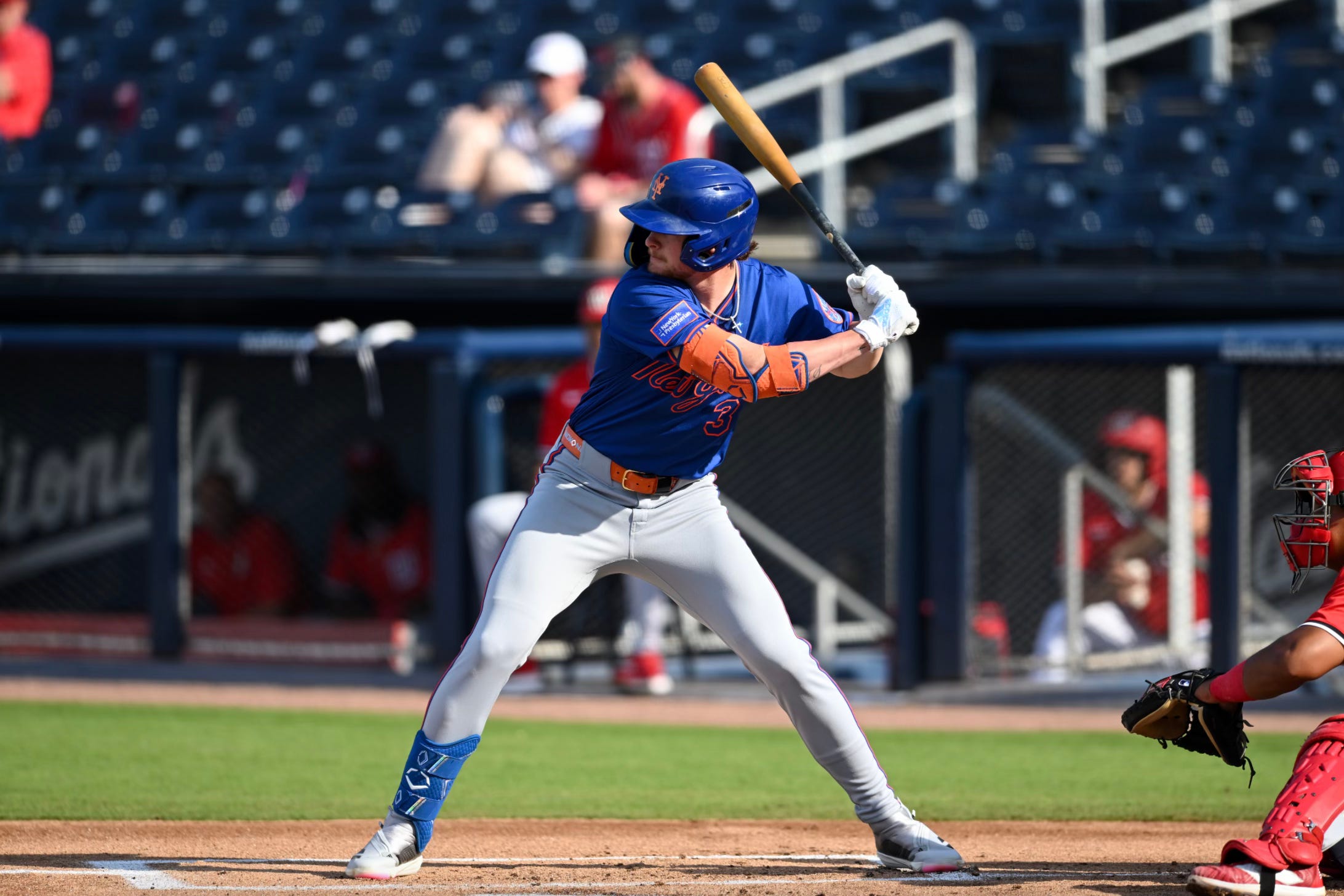
I’ll also admit I’m slightly concerned about Carson Benge’s lack of power this spring. That sounds ridiculous to say considering he leads the team in hits, even more so when you see that homers and power output have never been a huge part of his profile. However, I can’t help but remain apprehensive that almost all of his offensive production has come by way of singles. He’s made some excellent contact with the ball, and I do not at all doubt that he’s a big-league hitter…but clearly the power isn’t going to come from his bat. And for all the increased line-drive and hard-hit activity from A.J. Ewing, he’s still a little ways away from Queens, and though he’ll undoubtedly add to the run creation equation, he’s another guy who isn’t likely to bring many homers to the table.
Take a look again at the numbers I listed above, and then think about the rate of scoring that’s happening here: of 150 total hits, 53 have been homers (18), doubles (33), or triples (2); that’s about a league-average ratio. However, the number of runs scored as a result of that extra-base traffic is among the league’s lowest.
Additionally, though the Mets have collectively struck out the second-fewest times of any team in the league while walking at a league-average rate, they’re also tied for sixth-most double plays grounded into, with 19 in 19 games. That suggests to me that the current hitting program is centered around contact and discipline in the batter’s box. I’m all for increased contact, but if you’re unable to score batters who earn free bases or consistently keep the ball off the ground (50%+ team ground ball rate), there’s maybe something left to be desired from your hitting program.
So, should we be worried about the Mets’ offense? Time will tell — we haven’t seen it at full strength once yet, and presumably remaining rust will get knocked off the lumber and chemistry will build as the season progresses.
But in between doubles from Mike Tauchman and Tyrone Taylor, it’s been hard to ignore how quiet this team is in the box, even for the eternal optimist.
Around the League 🚩
Venezuela knocked defending champion Japan out of the WBC, winning their quarterfinal matchup 8-5 and securing their spot in the semifinals against Italy
Cubs slugger Seiya Suzuki left the Venezuela-Japan quarterfinal matchup due to knee discomfort after a first-inning stolen base attempt; there was no update available after the game
Phillies righty Zack Wheeler faced hitters for the first time since his thoracic outlet surgery
I would be more concerned if Soto wasn’t in the WBC (and raking), Lindor wasn’t recovering from hand surgery and Robert Jr hadn’t just made his first appearance in a game a couple days ago. Bichette will get it together, the Semien concerns are very valid (worst case scenario, he ends up hitting 8th and Robert Jr is hitting 4th or 5th).
Benge is the one I’d like to touch on most. I’m not as worried about the power as you are. I see a kid with barely any pro ball experience whose GM put an ungodly amount of pressure on him in the biggest media market in the country and he’s thriving. He’s making sure that every at bat counts, that he’s doing the little things and getting on base as often as possible. Realistically, that’s going to be the overall profile of this new Mets lineup - where power is secondary and moving the runner along is the goal. When Benge is batting 6th or 7th with Soto, Lindor, Bichette, Robert Jr, Polanco, and Alvarez all ahead of him, he’ll have the chance to settle in and let the big dog eat every once in a while. For now, let him be an on base machine and just keep getting comfortable hitting major league pitching - even if it’s just for singles. Now, could you argue the Mets might be best served letting Benge find his power at AAA and having Tauchman as the starting RF? Sure, but I think we’ve seen enough to know that barring something really bad, Benge is making this team. It’s a matter of whether how Stearns wants to fill out the bench - carrying 5 OF’s or a different mix.
Brother Buskirk, thanks for taking on the endlessly repeated "spring training performance doesn't matter" mantra. There's something in between "reliably predicting the regular season" and "...doesn't matter". It matters some. Some people try to have it both ways: getting enthused about Senga's and Peralta's pitching and dismissing Semien's inability to get on base.