


What’s Up with the Mets? 🌴
The Mets tied the Marlins on Tuesday afternoon, 5-5 (box)
Sean Manaea delivered his best outing of the spring, striking out four Marlins over his four perfect innings
Bo Bichette led the way for the offense, driving in all five of the Mets’ runs
Marcus Semien and Tyrone Taylor had two hits apiece, crossing the plate three total times as a result
Tobias Myers had his roughest relief outing to date, allowing a run after issuing two walks; he also had three strikeouts in his 1 1/3 innings
The Mets maintained a 5-2 lead late into the afternoon, but the Marlins tied the game on a three-run homer in the eighth
Roster Moves 📰
OF MJ Melendez & RHP Christian Scott optioned to Triple-A Syracuse
RHP Adbert Alzolay, INF Christian Arroyo, RHP Nick Burdi, RHP Daniel Duarte, and INF José Rojas reassigned to minor league camp

Tuesday, March 17:
Venezuela secured its first WBC championship with a 3-2 victory over Team USA
RHP Nolan McLean: 4.2 IP, 4 H, 2 R (2 ER), 1 HR, 1 BB, 4 K
Schedule | Standings | Scores
What I’m Reading 📖
The prospects with the most interesting Statcast data (MLB.com)
Sometimes it really is a children’s game (Fangraphs)
The Just Mets Podcast 🎙️
ICYMI: Rich and Andrew went live on Sunday! They discuss Francisco Lindor’s return, Carlos Beltran’s upcoming jersey retirement, the right field competition, and more.
SUBSCRIBE: YouTube | Apple Podcasts | Spotify
Today’s Game 🏝️
The Mets are off today. They’ll be back in action tomorrow against the Astros. Mets prospects will also be facing off against Rays prospects tomorrow in a Spring Breakout matchup.
How Sean Manaea and Nolan McLean can maintain their consistency ✍️
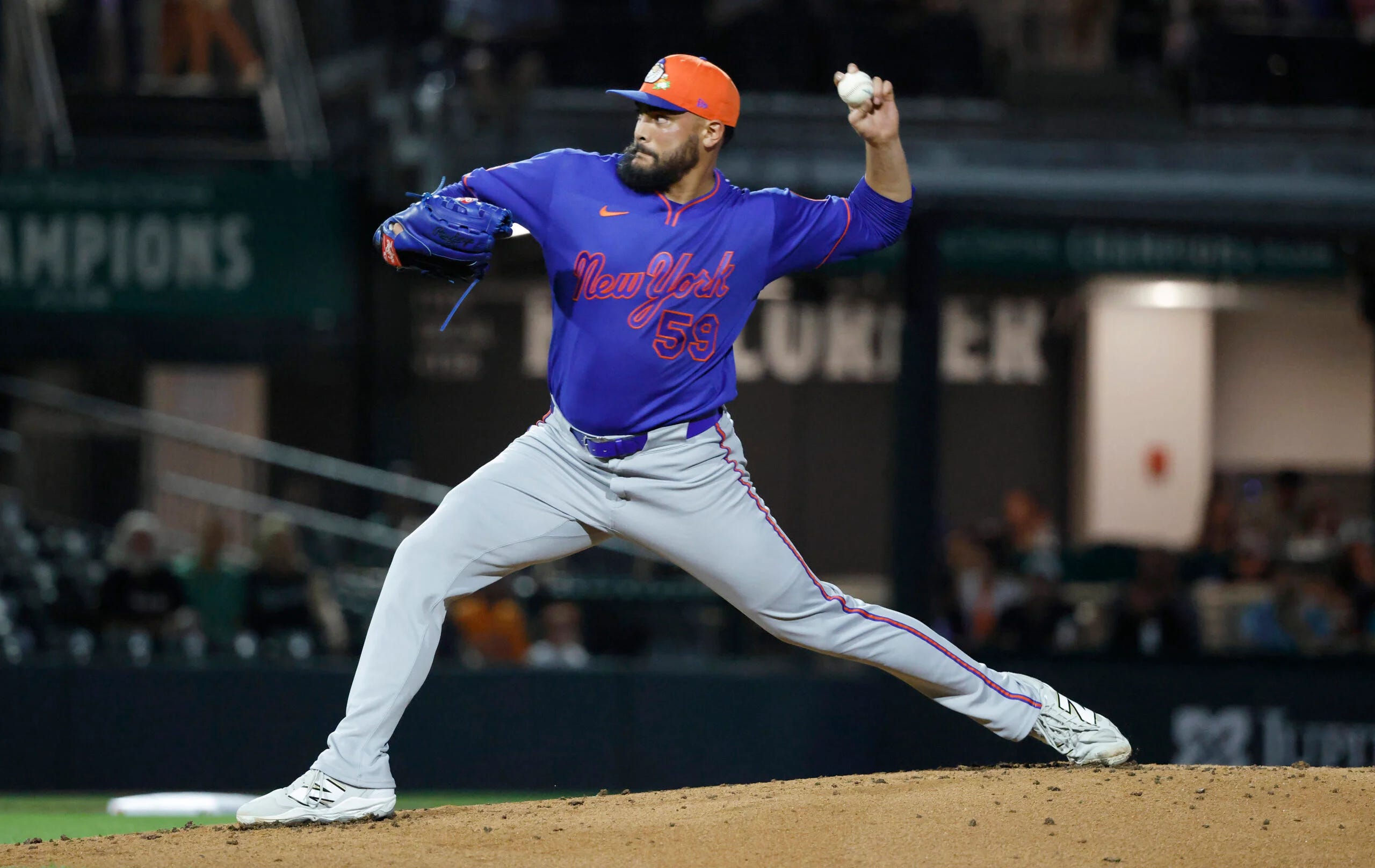
Yesterday, Mets fans saw both Sean Manaea and Nolan McLean take the mound in two drastically different sets of circumstances: one a burgeoning star, oft discussed as a prodigy, seeking to prove himself worthy of taking the ball in a globally televised championship game despite his rookie status; the other a veteran journeyman, working his way back from a season derailed by injury, his third start of the spring available only on the radio.
Their final lines were similarly different. Manaea, the struggling lefty, threw four perfect innings. McLean, the Stuff God, allowed two runs on four hits (including a homer). Both pitchers struck out four batters.
Beyond their surface stat lines, though, these starts shared more commonalities than they may seem, specifically in what they taught us about how these pitchers can best utilize their respective pitch mixes going forward.
At a base level, the concerns are straightforward enough: Manaea’s fastball velocity is drastically reduced, and McLean, though still eliciting whiffs, is proving more hittable than last year. However, while the solutions to these issues are certainly easier said than done, I do believe there’s less to panic about than some other reactions may suggest.
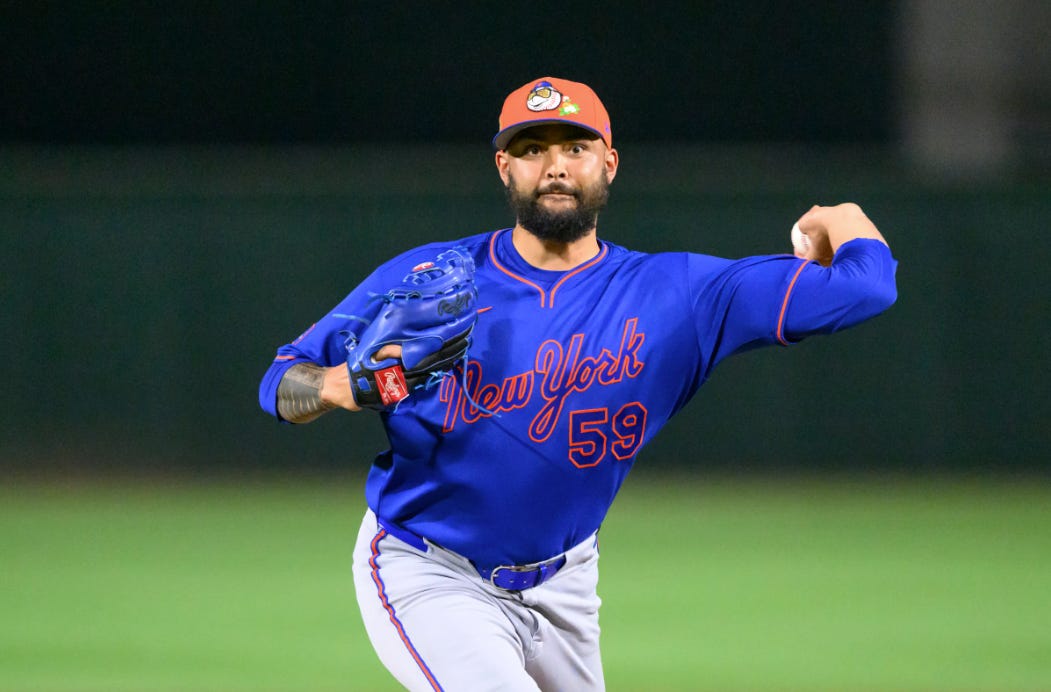
Let’s start with Manaea. It goes without saying that sitting sub-90 on his heater is less than ideal. There was only one qualified pitcher in all of MLB who threw that slow last year (Kyle Hendricks, 86.6 vFA), and he had one of the worst years of his career — not the best precedent.
Across his first three spring outings, Manaea’s fastball has consistently sat around 88-89 mph, a considerable drop from the ~92 mph he’s averaged since 2024. However, his results through those starts have been anything but consistent:
Mar. 6: 3.0 IP, 1 H, 1 R, 1 HR, 1 BB, 1 K
Mar. 12: 2.2 IP, 6 H, 3 R, 1 HR, 1 BB, 4 K
Mar. 17: 4.0 IP, 0 H, 0 R, 0 BB, 4 K
Each start has presented a different version of Manaea. In his spring debut, he tossed three innings of one-hit, one-run ball. A solo homer aside, he experimented with some new pitch shapes, incurred minimal damage, and left the game feeling satisfied with his progression. It was a perfectly solid start to the season.
In his next start, he fared far worse, but he also offered much more encouraging signs in the whiff department than in his debut. Though he surrendered more contact, his pitch charts further reinforce that his issues may be more related to pitch location than velocity. If reduced velocity was the main issue, we’d likely see steadier regression across the board from start to start. Instead, what we’ve seen is a developing pitch mix that has yielded increased swings and misses with each outing, and a fastball that has been thrown 57 times and generated three hits (nine total batted-ball events, four hard-hit balls) in three outings.
When looking through Manaea’s pitch data through these first few starts, a fairly obvious pattern emerges regarding what’s working: it’s all about pitch placement. He’s gotten most of his swings and misses on elevated fastballs set alongside breaking pitches that plummet down and across the zone. Overall, Manaea’s stuff has yielded a 25% whiff rate across his three starts, with the low-velo fastball responsible for as many swings-and-misses as his sweeper. There’s a clear recipe here, and it looks like all that tinkering may have cleared a pathway for him to discover it.
So, can Manaea find sustained success throwing slower than anyone else in the league? Incredibly, there’s reason for (measured) optimism that he can.
To start, high heat has never really been Manaea’s game. He’s sat below 94 mph on his fastball his entire career, and he’s only ever come close to that threshold twice. Looking at his numbers, Manaea has actually operated fairly well at lower average velo: in 2018, he sat just north of 90 mph over 160 innings of work, the third-highest workload of his career to date. He finished that season with a 3.59 ERA and a 1.08 WHIP while holding batters to a .230 BAA. His 4.26 FIP that season suggests he was the beneficiary of some good luck, but he also issued the third-lowest walk rate and fifth-lowest hard-hit rate of his career.
Of course, there are also lingering questions about Manaea’s elbow, as Linda touched on last week. Time will tell if he ends up having surgery on the loose body, which could render this entire analysis moot. He says he feels healthy and that he’s not concerned about his velo dip, which is a testament to good mental health, alongside at least functional physical health. Between a revitalized repertoire, revised mechanics, and a reinvented pitcher profile, this is going to be a crucial year for Manaea. If he can channel his conveyed confidence into full control over his mix, I think he can settle into a new rhythm that looks closer to yesterday’s start than not.
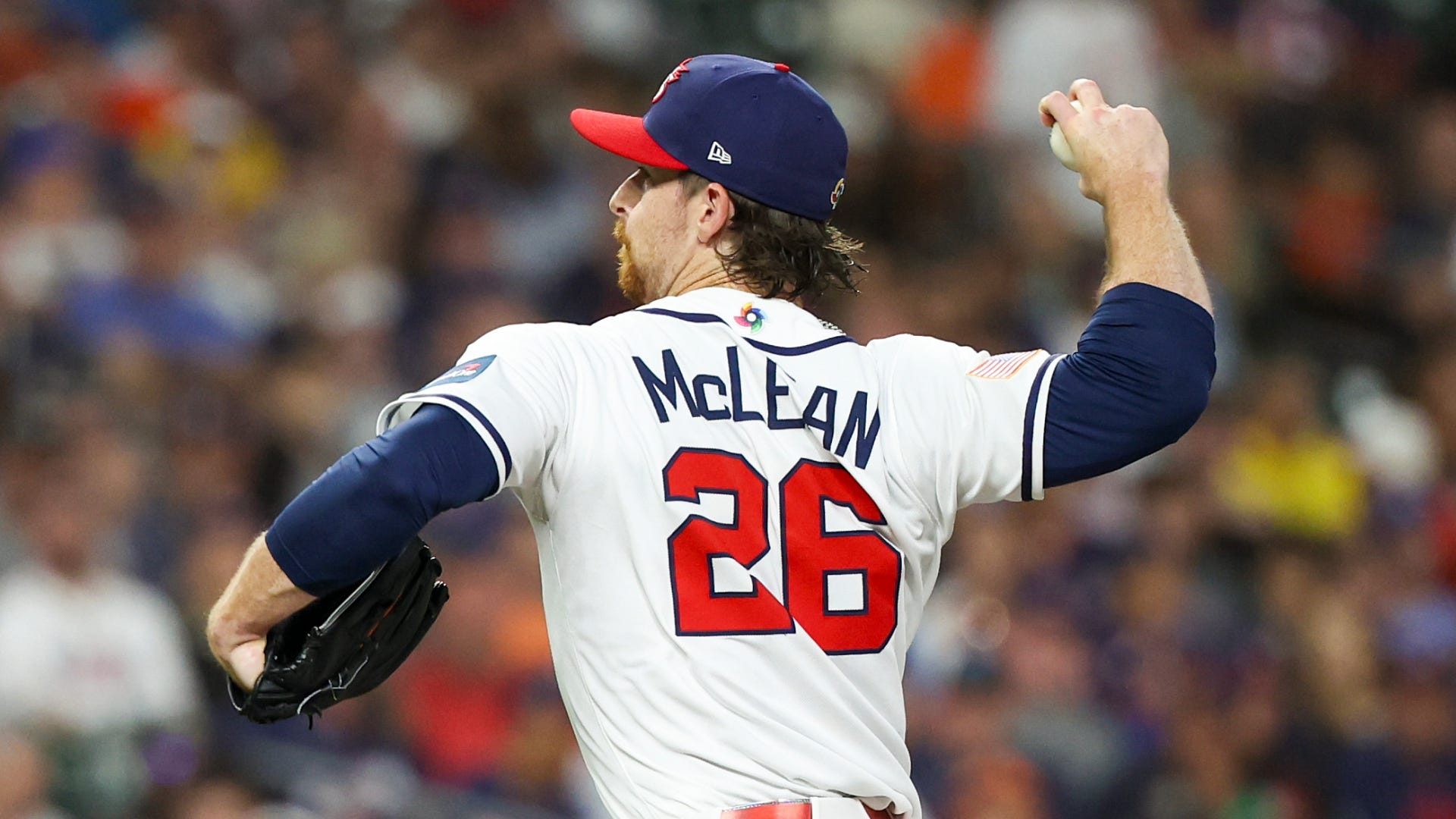
Now onto McLean.
If my memory serves me correctly, during the USA-Italy game, either Joe Davis or John Smoltz commented that while the break on McLean’s stuff is jaw-dropping, perhaps it’s moving a bit too much to be fully functional.
That might sound ridiculous at first, but it’s not.
We all know what McLean has in his toolkit: he wields five (maybe even six) plus-grade pitches, several of which are paired with so much spin and break they look like literal wiffle balls coming out of his hand. It’s amazing to watch.
But it’s also worth acknowledging that, like Manaea, McLean’s spring results have been difficult to predict:
Feb. 26: 4.0 IP, 1 H, 0 R, 1 BB, 6 K
Mar. 10: 3.0 IP, 2 H, 3 R, 2 HR, 2 BB, 4 K
Mar. 17: 4.2 IP, 4 H, 2 R, 1 HR, 1 BB, 4 K
McLean’s two World Baseball Classic outings told different versions of the same story. Against Italy on March 10, he flashed dominance early, striking out the side in the first inning before surrendering three runs almost immediately in the second. All told, just seven balls in play produced all his damage. Against Venezuela, though the surface-level results improved (two runs over 4.2 IP), hitters managed to put nearly twice as many balls in play. Despite different pitch selection strategies, each opposing lineup was able to regularly put bat to ball.
And here’s where that aforementioned ‘too much break’ theory comes in.
Though it’s essential, movement isn’t always valuable; as with velocity, ‘more’ does not inherently mean ‘better.’ If you try to force extra movement on breaking pitches, they can quickly go wild, as we saw on a costly errant curveball in the third inning last night. However, when not executed or sequenced properly, pitch shapes with significant movement can also be increasingly easier for hitters to pick up out of the hand. When it comes to velocity, you can throw a fastball as hard as you want, but if you can’t locate it consistently, your WHIP will inflate almost immediately, with additional earned runs not far behind.
To this extent, McLean’s two WBC outings have each done an excellent job in reinforcing the importance of tunneling.
I don’t think anyone reading this needs a reminder of what tunneling is, but the key to pitcher deceptiveness is having multiple pitch shapes that look identical for as long as possible before their paths ultimately diverge. If McLean’s pitch shapes are too distinct or severe, it may be much easier for hitters to pick up on which pitch is coming at them. That would help explain why his sweeper has actually been his most batted-around pitch this spring, with ten batted balls (23%) and three of his ten hard-hit events, despite most of those events happening on the perimeter of the zone.
It would also help to explain why his fastball has yet to generate a single whiff all spring.
In his outing against Italy, he simply left his fastball directly over the middle of the plate in the mid- to upper-zone, a death sentence for a pitch shape that’s so flat relative to the rest of his repertoire. Its lack of shape makes it easier to identify, illustrated by the fact that all four batted-ball events on the heater in that game occurred in the same general part of the plate. In the championship game, both the fastball and the sweeper induced contact throughout the zone, which implies that hitters are identifying pitch shapes earlier and more frequently, regardless of where they’re placed.
To be clear, I’m not saying that McLean’s otherworldly movement is suddenly his biggest flaw. I am saying, however, that maybe the next step in refining McLean’s repertoire involves increasing some of the velocity on his breaking stuff in an attempt to induce later break and make timing even harder for hitters to level up on. Once he gains complete control of his bag, it won’t take long for him to cement himself as an annual fixture in Cy Young Award conversations.
Remember, McLean is still young, and he has eight major league starts under his belt. He still has a lot to learn, as promising as he is.
At a glance, these two pitchers offer very different profiles, but their progressions this spring have mirrored each other in several discernible ways. Each pitcher has had a gem of an outing alongside two less-than-great performances; each pitcher has been forced to bear the brunt of an ineffectively placed fastball.
Most crucially, though, each pitcher is still getting strikeouts — McLean has 14 in 11.2 IP, Manaea has 9 in 9.2.
For Manaea, success this season will come as the result of effective location and sequencing, living on the edges and attacking the middle exclusively with his offspeed arsenal as a way to keep hitters off balance. So far this spring, that’s how he’s been most successful in limiting offense. For McLean, the mission will be making the most of his movement and learning how to set pitches (and hitters) up for repeated instances of swing and miss. The more looks lineups get, the quicker they’ll be able to recognize some of his more aggressive pitch shapes; refining where he places them and when he uses them will make all the difference.
I can’t wait to see how Justin Willard’s lab continues to develop these two key cogs in the Mets’ pitching machine.
Around the League 🚩
MLB will be experimenting with major rule changes in the Minor Leagues this season, including moving second base, pitcher re-entry, standardized checked-swing parameters with challenges, and more (The Athletic)
Phillies INF Johan Rojas’s 80-game PED suspension was upheld following his appeal; it starts on the first day of the 2026 season (MLB.com)
White Sox DH Munetaka Murakami hit his first homer of the spring in his first game back at camp after Japan’s elimination from the WBC
Yankees ace Gerrit Cole is scheduled to make his spring debut against the Red Sox today
McLean in the WBC isn’t going to be the same guy we see this season and I’m going to say it’s because of Alvy and Torrens. They know him and what he needs to throw at whatever time. They both call good games and while Smith is a good backstop Alvy or Torrens are gonna tell him to back off or amp up to get the pitches to do what they should do. McLean was hitting 99 and it’s great to know you got that in the back pocket it made all his other pitches flatter to me. He will get back to his battery mates and maybe go over what he did and be shown where he needs to be to get those whiffle balls to dance. He is a young kid thrust on the world stage playing with the stars of baseball and he wanted to not only proved he belonged but he had the added pressure of wanting to be perfect. Good experience for him for sure but it’ll be different when he has his guys around him helping him handle that pressure. That’s my two cents anyways. DeRosa is a terrible manager too. Why he didn’t have Taylor pitch instead of Whitlock we will never know.