


What’s Up with the Mets? 💭
The Mets are hoping to interview John Mallee for coaching one of their coaching staff vacancies in addition to Kevin Long (MLB.com)
The Mets pipeline of arms ✍🏻
As the Mets’ farm system continues to evolve, plenty of names have moved to the forefront of our collective fan consciousness. And though many of the most exciting prospects in the pile are readying themselves for a big-league debut in the field and at the plate, quite a few guys are toeing the rubber in orange and blue who deserve attention and hype.
Fans are likely well acquainted with names like Jonathan Santucci, Jack Wenninger, Dylan Ross, and Ryan Lambert by now, but there are several other arms in Binghamton and Brooklyn that are worth your attention in the coming calendar year.
Let’s meet the staff:
Daviel Hurtado, LHP (#23 prospect, 21 y/o, High-A)
2026: 2.93 ERA, 86.0 IP, 89 K, 27 BB, 1.03 WHIP
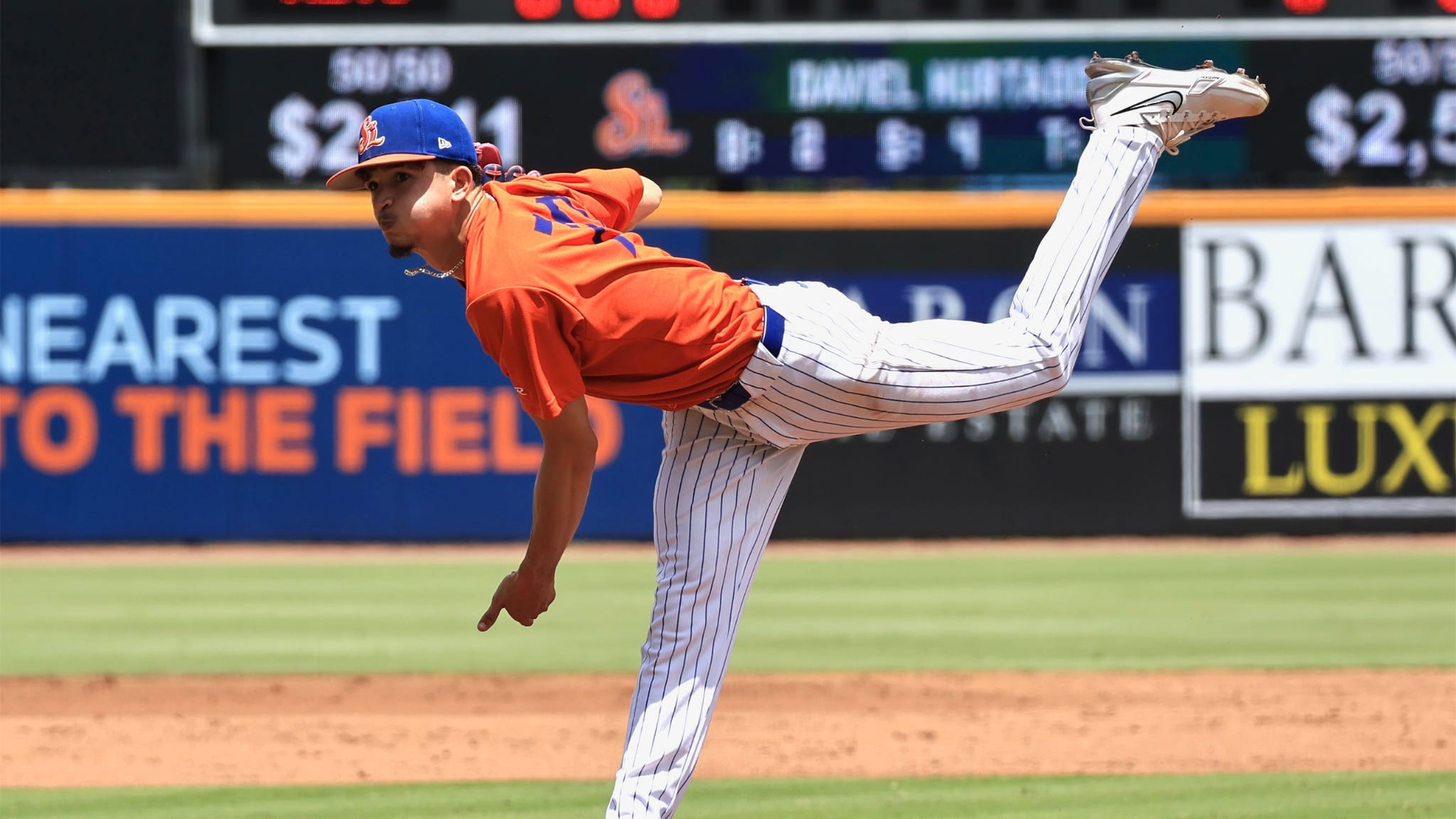
Daviel Hurtado started making a name for himself in 2025, and his 2026 campaign cemented the sterling reputation he’d worked hard to build. After a 2.70 ERA season in Low-A last year, Hurtado did the same at High-A this year, posting a 2.69 ERA over 77 innings. His strikeout numbers weren’t the flashiest (24%), but he cut his walk rate and got better at keeping the ball on the ground against elevated competition. He also held opposing hitters to a sub-.200 average, and maintained a 1.01 WHIP over his 17 outings for Brooklyn.
The 21-year-old southpaw’s appeal goes beyond his results. Hurtado’s fastball sits around 93–95 mph and can touch 96, but it’s the way he uses his mix throughout the zone that makes him hard to hit well. He deploys a gyro slider and a hammer of a curveball that both elicit swings-and-misses, his heater operating primarily as a setup pitch up top that he can use to generate weak contact if needed. All three pitches grade out positively in scouting reports (50+ grades for each), and his ability to locate bodes well for his continued development.
Though Hurtado also has a changeup in his bag of tricks, he’s not quick to use it; fair enough, as he’s been successful enough against hitters on both sides of the plate to this point to not really need to work on developing it much. However, as he approaches the next phase of his evolution as a starting pitcher with eyes on a big league rotation spot, his efficiency is undoubtedly going to be challenged — having a weapon that he can use to directly attack lefties will only make him harder to hit. If he can figure out how to turn his gifts for tunneling and location into increased whiffs, we could have another fast riser here.
Channing Austin, RHP (24 y/o, Double-A)
2026: 2.26 ERA, 55.2 IP, 66 K, 31 BB, 1.15 WHIP
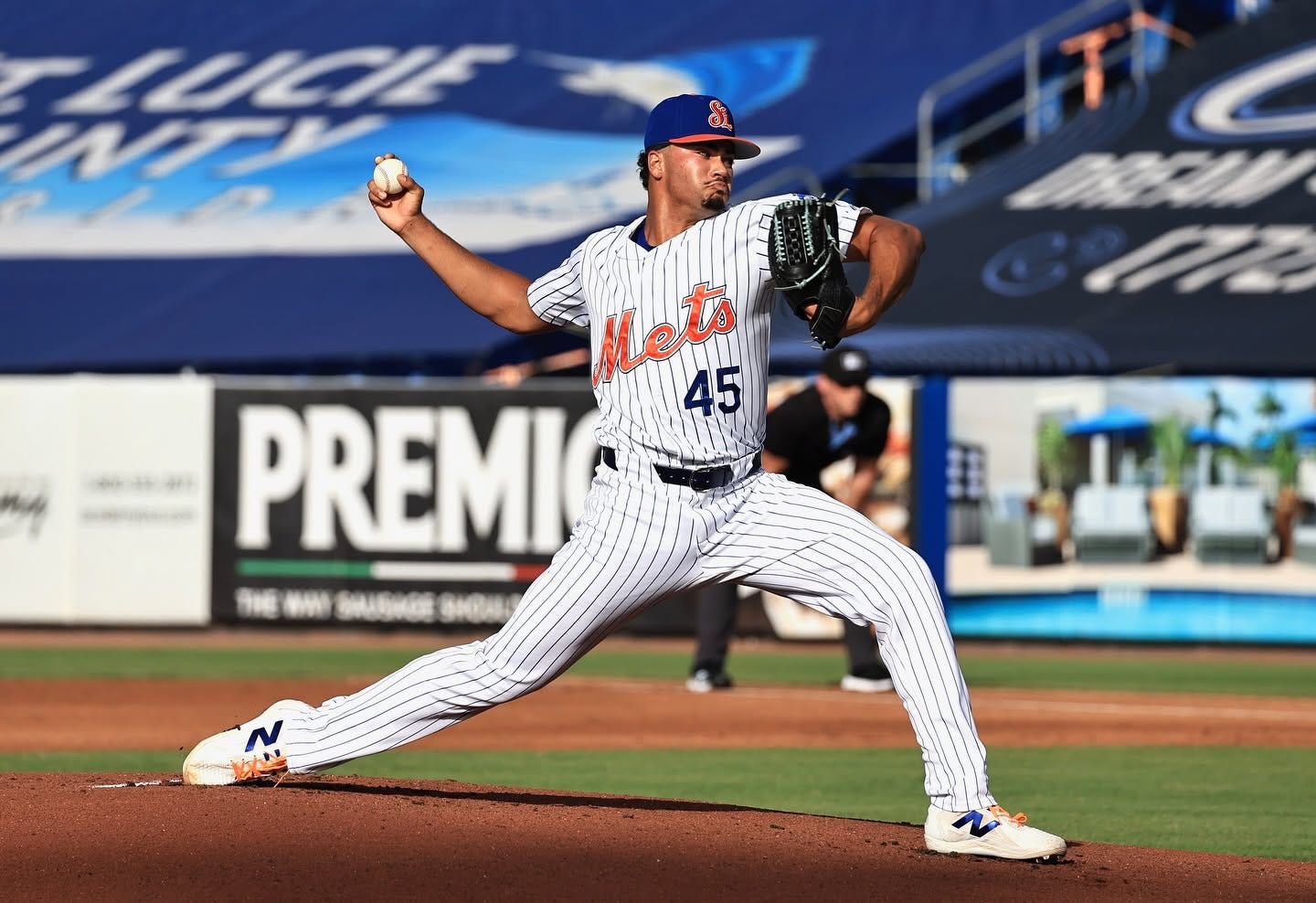
Channing Austin quickly emerged as one of the Mets’ more interesting pitching breakout candidates in 2026. An unranked and largely unknown name entering the season, Austin made noise among prospect watchers almost immediately, eventually turning a strong stretch at Brooklyn into a promotion to Double-A. The 24-year-old right-hander went undrafted out of USC before signing with the Mets in July 2024, and his development has accelerated considerably since then. Across 15 starts between Brooklyn and Binghamton, Austin recorded 66 strikeouts in 55.2 innings, holding opponents to a .169 batting average while allowing just two home runs.
Austin’s pitch mix is extra intriguing because of the movement and spin he generates across his arsenal. Kudos where it’s due: Thomas Nestico of TJStats had Austin clocked as a 2026 breakout candidate this time last year, pointing specifically to the quality of his raw stuff as a reason for optimism. Austin’s mid-90’s fastball carries “significant movement” through the zone that pairs perfectly with a slew of mid-80’s offspeed offers, namely a “fading changeup” that’s fared particularly well for him to date. The clear and primary concern with Austin is command: he issued 31 walks in his 55+ innings, perhaps illustrating some similar issues Nolan McLean initially had reining in his most aggressive pitch shapes. Austin’s also another Mets pitching prospect who spent significant time on the shelf due to injury, including a season-ending oblique issue that put a premature end to his breakout.
Austin’s definitely a bit of a late bloomer, and it remains to be seen if his recent health issues end up stunting his development in any way. But his demonstrated high-strikeout potential and promising repertoire definitely make him worth monitoring, especially considering his unranked roots. A healthy 2027 season with vastly improved control could help firmly establish him as a legitimate MLB option in the not-too-distant future.
Felipe De La Cruz, LHP (25 y/o, AA/AAA)
2026: 2.87 ERA, 47.0 IP, 59 K, 21 BB, 1.32 WHIP
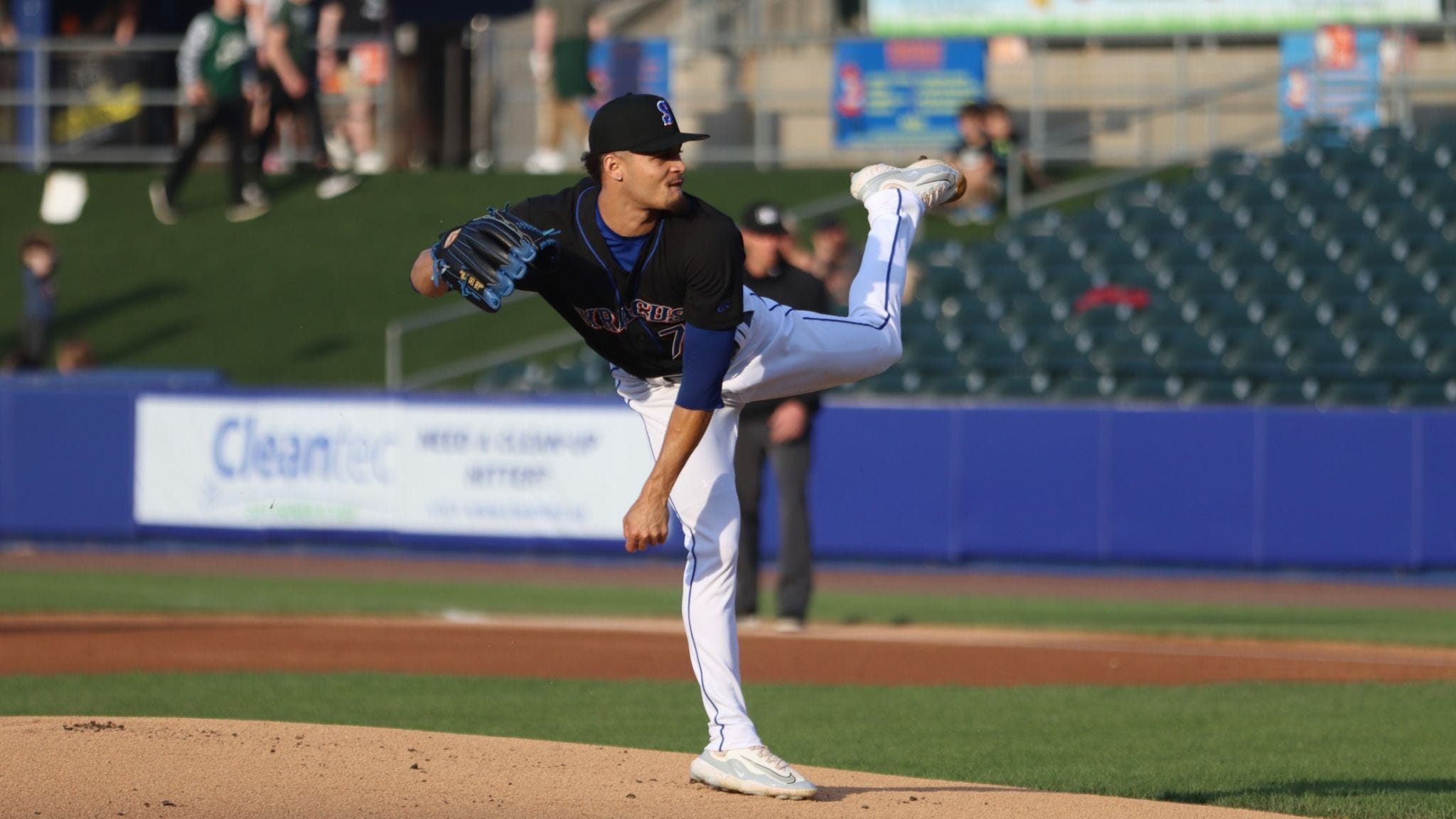
Felipe De La Cruz delivered one of the more encouraging turnaround seasons in the Mets’ system, posting a sub-3.00 ERA across 41.2 Double-A innings after an inconsistent 2025 split between Binghamton and Syracuse. Signed out of the Dominican Republic in 2021, the lefty started his minor league journey as a starter, logging over 100 innings in both 2023 and 2024 to less-than-stellar results. He transitioned to the bullpen in 2025, where he found vastly more success at Double-A, but struggled at the next level, maintaining his strikeout numbers but losing control of the zone more frequently against better hitting talent.
In 2026, De La Cruz was the best version of himself, posting a 2.87 ERA with 59 strikeouts in 47 innings across 36 total appearances, spending most of his time with Binghamton before making another quick trip to Syracuse. Characteristic of most Mets pitching talent, he’s a primary sinkerballer that sits mid-90s (though he’s flashed upwards of 99 mph) with exaggerated movement, a pitch that played heavily into his 82% groundball rate this season. He also offers a gyro slider that’s turned into an effective out pitch that generates a lot of whiffs (30% K rate), and a changeup that he, like Hurtado, uses infrequently — though in relief, a groundball/strikeout combo is really all he needs. As with Austin, what remains to be seen with De La Cruz is whether or not he can gain complete control of the strike zone: for all the flashy numbers, he also finished with a 1.32 WHIP, issuing 21 walks in his 47 innings, which will come back to bite him quickly in the upper levels if it’s not remedied soon.
Entering his age-26 season, the 2027 season will be a crucial one for De La Cruz to prove himself deserving of the ultimate promotion. He fared better in limited looks at Triple-A in 2026 than he did in 2025, and bullpen help from the left side is something the Mets always seem to be in need of. If De La Cruz puts together a strong start next season and maintains his 2026 baseline while establishing control of the zone, a September cup of coffee isn’t out of the question here.
Irving Cota, RHP (22 y/o, A+/AA)
2026: 2.30 ERA, 31.1 IP, 21 K, 6 BB, 0.99 WHIP
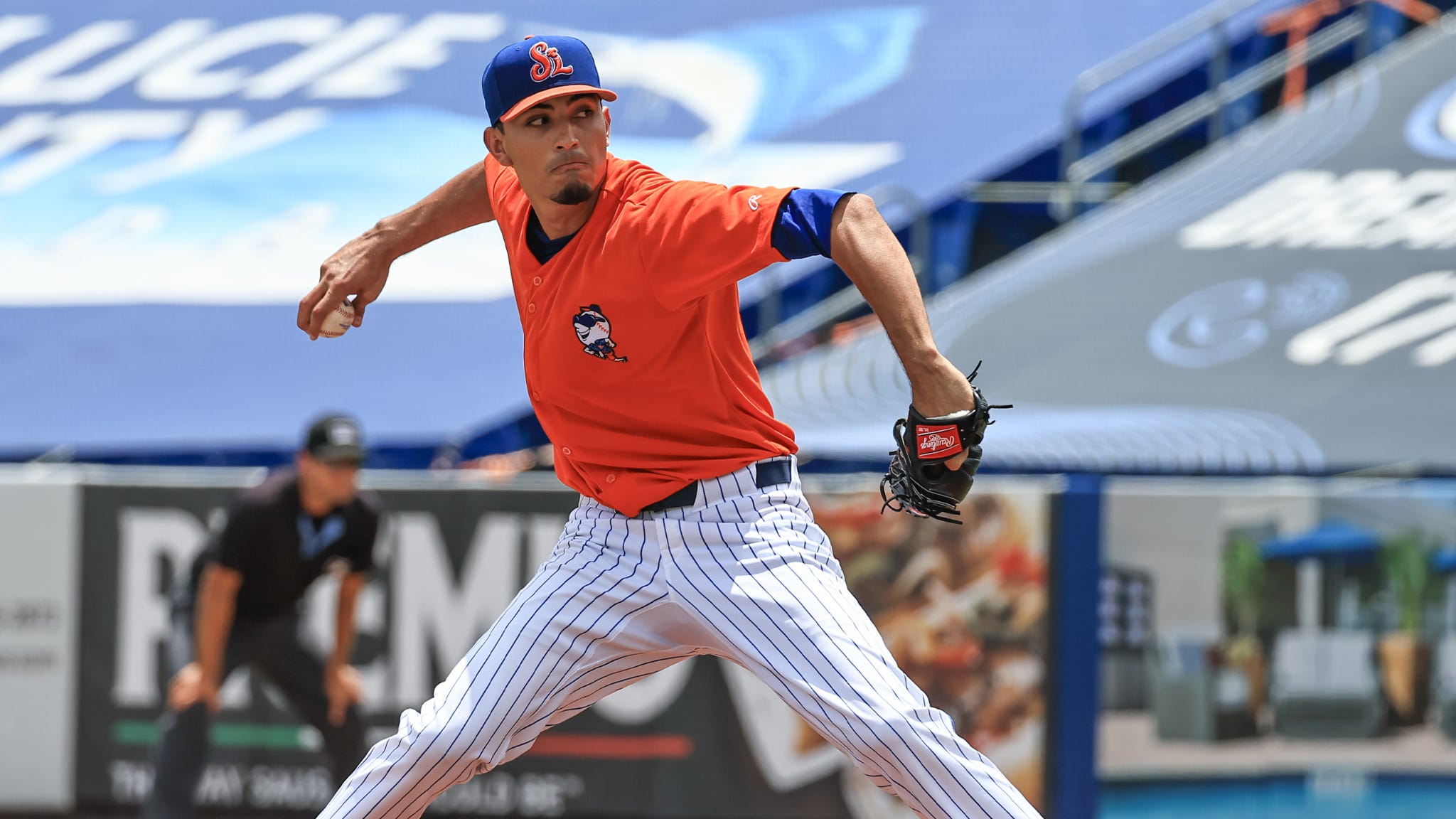
Irving Cota may be the name that intrigues me most on this list, if not in the entire Mets system. An injury significantly limited his opportunity to build on what had been an encouraging developmental track: the then-21-year-old right-hander was excellent in 2025, throwing 98 2/3 innings across three levels while continuing to establish himself as a dependable strike-thrower. He opened this season in similarly encouraging fashion, allowing just eight earned runs across 31 1/3 High-A innings.
Cota’s profile reminds me a lot of Zac Thornton’s: not a ton of strikeouts, but he keeps the ball on the ground and limits walks to an absolute minimum; he’s also not prone to giving up the long ball when the ball does go into the air (5.6% HR/FB). He relies on movement and command more than overpowering velocity. With a sinker in the mid-90s, his upper-80s changeup and high-spin curve are critical weapons that help him spread the zone and maintain a wide velocity spectrum. It’s his ability to consistently attack the zone while limiting hard contact that’s helped him find success despite a lack of overwhelming firepower.
Though a summer injury cost him most of his season, Cota made some rehab appearances and went to Binghamton for a very brief stint in September. To build on that progress, he’s one of eight Mets prospects playing in the Arizona Fall League. He’s performed well out of the gate in the desert, allowing three runs (two earned) on one hit and three walks in his 7.2 innings, with 12 strikeouts over that span. Reports suggest he’s been throwing his sinker harder since his rehab started; if Cota is tracking toward a higher average velocity while maintaining the control and strikeout ability he showed in limited opportunities in 2026, next season could see him leaping through minor league levels at Thornton speed.
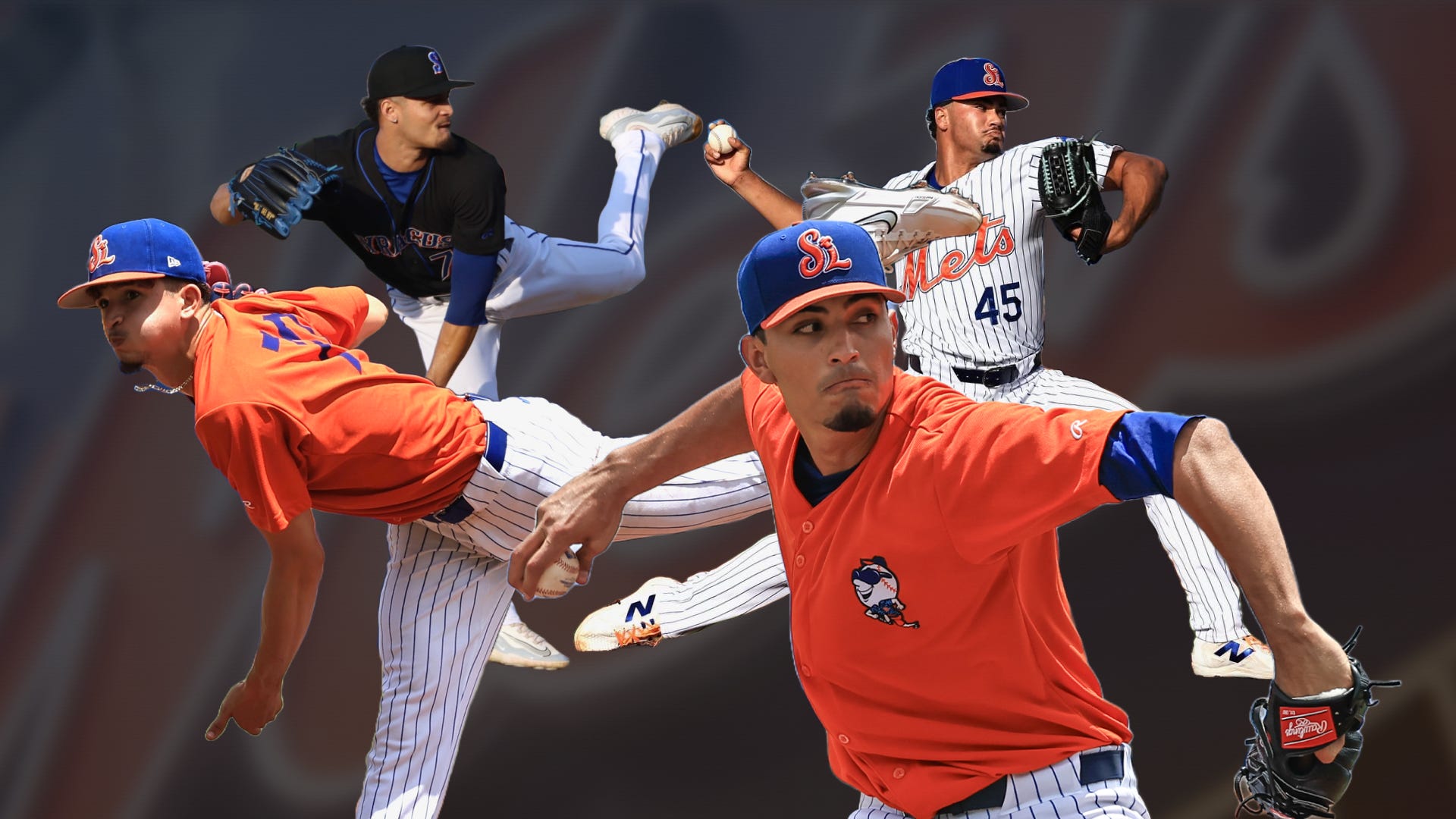
Now, it would be foolish of me to sit here and say that all four of these guys are locks to take the reins of the Mets’ rotation in the next couple of years; for all we know, none of them will even be on the farm after another trade deadline or two.
But it feels like more than a fluke that the Mets have multiple arm talents showing their potential early and often through all levels. Beyond the four guys here, Triple-A saw Jonathan Santucci rack up 163 strikeouts over 125 innings while Zach Franklin emerged as a legitimate bullpen option upon arrival from the White Sox and Gary Gill Hill slotted into the system seamlessly. Even Miguel Mejias and Zack Mack down in St. Lucie put together seasons worth looking at.
While the upper levels are more rife with position-player talent that’s flashed more readily-available big league potential in recent months, and thus gotten the lion’s share of attention from the media, the Mets have quite a few arms to be optimistic about as well. And though many of the more intriguing ones might still be a little ways away from an MLB debut, it’s worth paying some extra attention in 2027 to see how they continue to develop — and who might be next to erupt.
Thanks, Drew. This is encouraging. Realistic, but encouraging.