


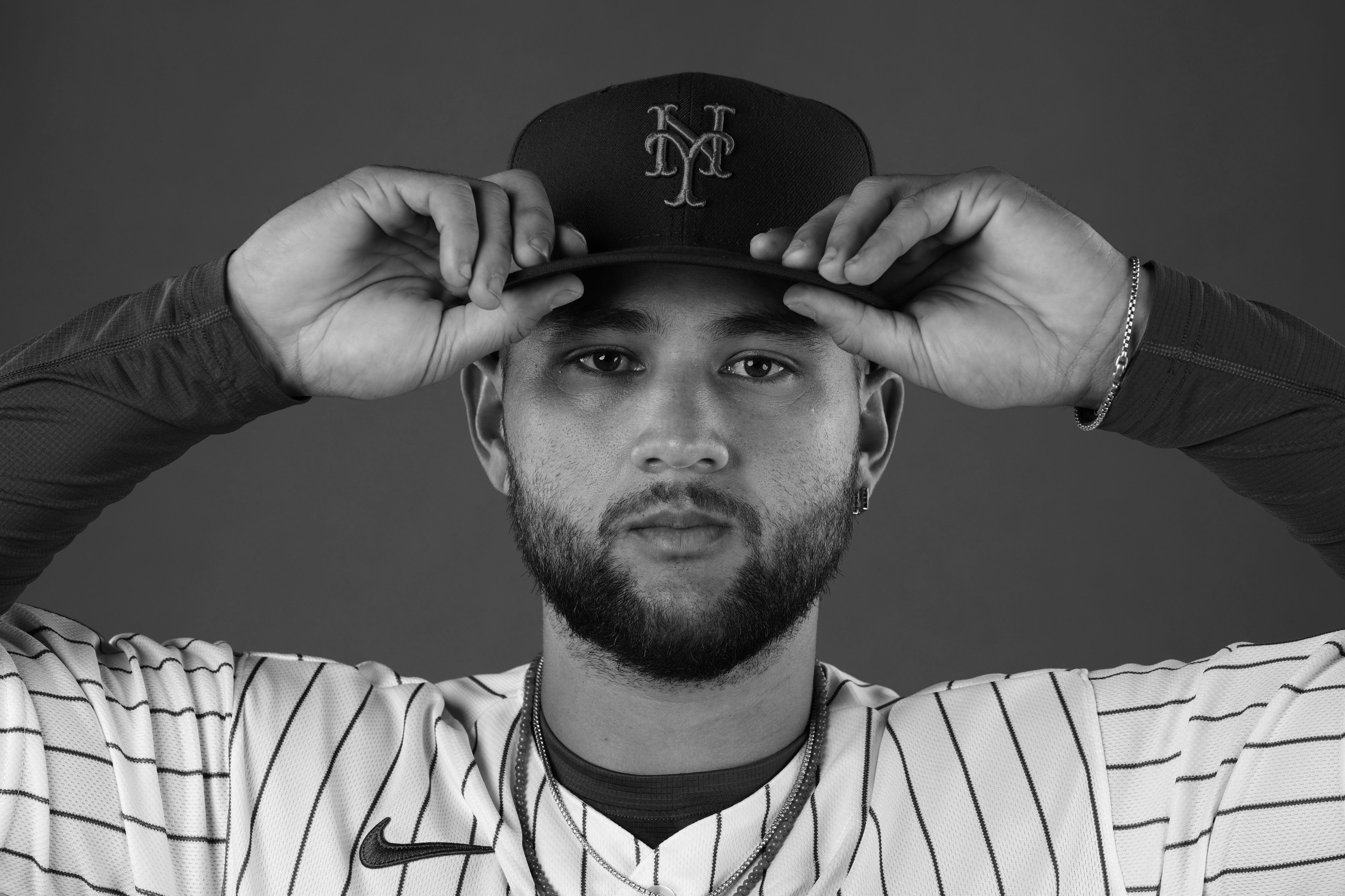
Nobody holds a more important key to the Mets’ off-season plans than Bo Bichette.
He holds an opt-out with a $5 million buyout at the conclusion of the World Series, at which point he would become a free agent and vacate third base. The Mets could then try to negotiate a long-term contract with Bichette and attempt to retain him (or do that right now, actually), or he could immediately become arguably the best free agent position player available in a weak free agent class and a potential bonanza in free agency ahead of December 1, the day the collective bargaining agreement expires between Major League Baseball and the Players Association.
For Bichette, though, neither decision is a no-brainer.
When taking a look at his entire body of work, Bichette’s first season in New York was average to slightly below. If you didn’t follow Bichette’s full-season journey, and just watched him in the first two months of the season, you saw a terrible player. If you didn’t start watching until mid-May, you saw the player the Mets envisioned when they signed him.
Of course, if you watched the season from beginning to end, you probably saw a player who had a difficult time adjusting to two things at the same time—third base and New York—but eventually figured it out and looked like himself.
From Opening Day through May 17, Bichette, who will be 29 on Opening Day, hit .210/.262/.269 with 39 hits, five doubles, two home runs, 18 RBI and 19 runs scored. He had struck out 34 times and walked only 14 times in 202 plate appearances over his first 46 games. He was generally competent defensively at first base while slumping through his first 46 games of the year, but the signing through mid-May looked like a square peg in a round hole.
BButMay 18 brought the winds of change for Bichette.
Over his final 114 games of the season, Bichette hit .281/.332/.440 with 20 doubles, two triples, 16 home runs, 60 RBI, 127 hits, and 57 runs scored. He struck out 93 times with 35 walks over his final 494 plate appearances.
Now again, Bichette’s struggle over the first two months of the year can be attributed to adjusting to a new position and New York at the same time. In fact, David Stearns spoke during his end-of-year press conference about Bichette’s adjustment period this past season, and how that generally needs to be examined for all players they have on their whiteboards.
At the same time, when evaluating Bichette’s potential free agency and his price point, the first two months cannot simply be dismissed by any club, if he enters the open market. At the end of the day, Bichette produced 2.0 fWAR, which is fine but not $42 million fine, and his 96 wRC+ was four points below league average.
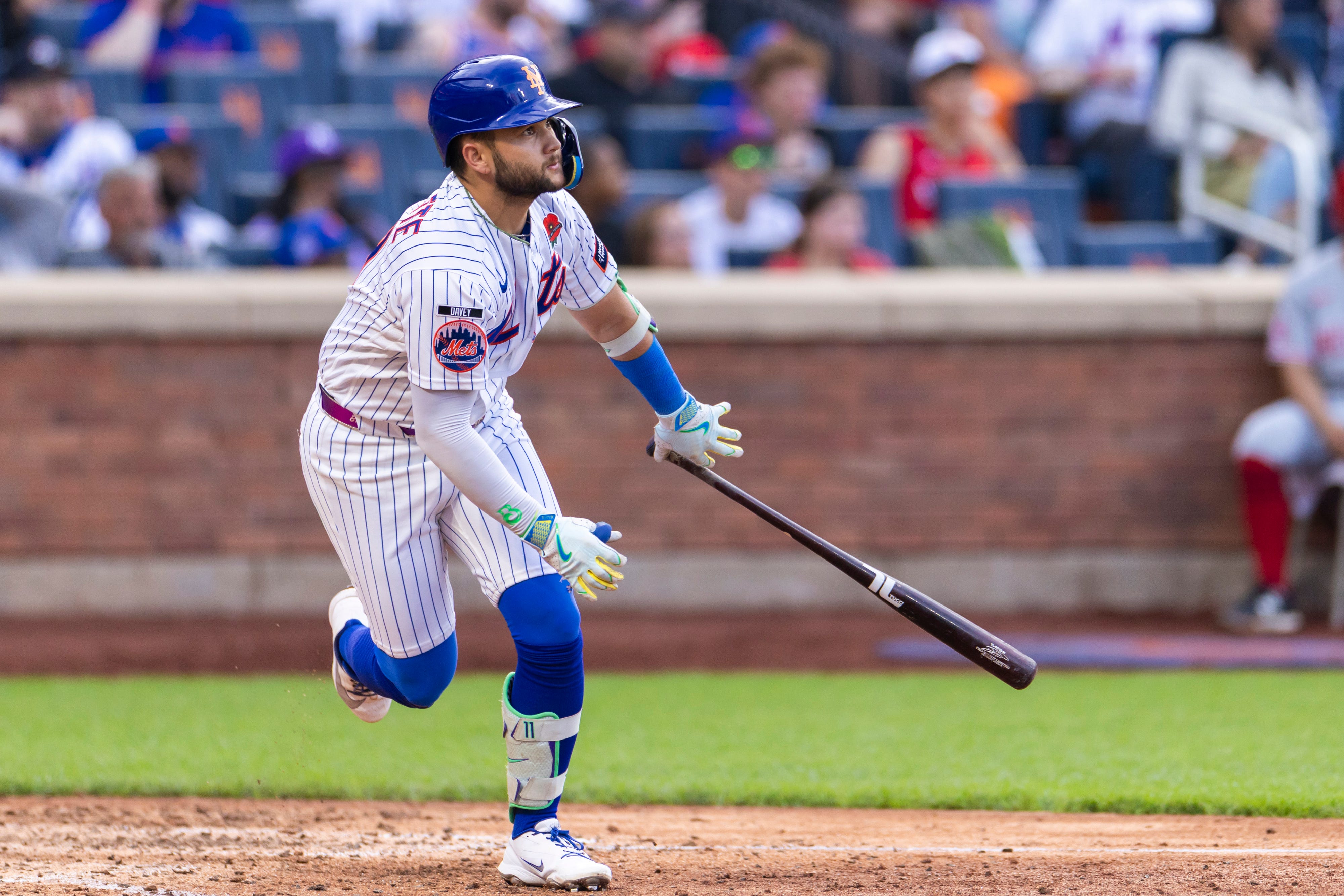
Interestingly enough, Bichette’s strikeout rate was around four percent higher than it was in 2025 while with the American League champion Blue Jays, but still lower than his career average by a full point. And, while you might’ve thought he was striking out at a higher rate over the first two months of the season, he was actually striking out at a higher rate after May 17.
As for his defense, Bichette was generally dependable at third base, which was an entirely new position for him in 2026. It was a little concerning in Spring Training and in the very early part of the season, but overall, he was a plus defender as far as outs above average (2) and fielding run value (1) are concerned. He did have -8 defensive runs saved at third, which, when combined with the rest of the defensive messes on the infield, is less than good. BButI can’t complain about Bichette’s body of work at third base, all things considered.
The problem for Bichette and free agency was his 2.5 fWAR and 117 wRC+ from May 17 on equated only to 2 fWAR and 96 wRC+ for the year. That’s how bad his first two months of the season were for him.
I am not trying to criticize Bichette by any means. I have every bit of faith Bichette will look more like the post-May 17 version of himself next year than not, wherever he ends up. But the question he has to ask is, given his overall performance in 2026 with respect to his salary, can he top the two years and $84 million he is signed for right now in a longer-term deal? It would seem incredibly unlikely he could even approach the $42 million salary, but would another team in need of a third baseman out there, such as the Yankees, who could conceivably move Ryan McMahon to second base if they let Jazz Chisholm Jr. walk, be willing to give Bichette the $28.5 million per year over even five years the Phillies reportedly offered him last winter before he bolted for the Mets?
Now, again, in a weak free agent class, anything is possible, Especially when it’s slim pickings out there. And, even two months ago, I would’ve said Bichette would’ve been wise to opt into his $42 million salary and bank on a more consistent season before considering opting out again after the 2027 season, especially with economic uncertainty ahead with the expiring collective bargaining agreement.
But I am not as confident Bichette will stay on this date simply because he was so good after May 17, free agency is extraordinarily weak this winter, and the potential for a free agent frenzy in late November.
It’s also worth mentioning that, because Bichette received a qualifying offer from Toronto a year ago, he cannot get one from the Mets. So, it makes his free agency that much more attractive for potential suitors even in what can only be considered an inconsistent year at best.
And if he leaves, it just creates another problem for them on an already problematic infield.
Leaving Francisco Lindor’s defensive issues out of it for a moment, the Mets were dead last at both first (-0.8) and second base (-0.7) by fWAR in 2026. At second base, their -5 outs above average was 21st in MLB, their -5 fielding run value was 26th in MLB. At first base, their -14 outs above average was tied for 30th, their -10 fielding run value was 28th.
Meanwhile, their three outs above average at third base was the eighth best, and their 2 fielding run value was 11th best in the game. In other words, Bichette offered an element of stability to their chaotic infield mess, which helped lead to their demise in 2026.
Internally, the Mets could consider taking Brett Baty out of the equation at second base and shifting him back to third, which is his natural position and the place he has given the Mets the most consistency on both sides of the ball. However, as Stearns indicated during his end-of-year press conference, the Mets would like to see more consistency from Baty end-to-end in a season. In other words, it sure doesn’t sound like the Mets are willing to entrust Baty with a starting role at this time. If they did this, however, they would unquestionably need to sign or trade for some kind of solution in free agency, as they cannot depend on Marcus Semien being competent or lean into any one of their top prospects (yet, anyway).
There’s also the possibility the Mets could keep Baty in a super-utility role or have him compete with top prospects Jefferson Rojas in camp at third. Given their issues at second base, this might be a less desirable outcome, though, at least at the beginning of the season. They would unquestionably need major league insurance there, but again, this might fall into the “too risky” bucket, that which Steve Cohen clearly wants the front office to avoid where possible and logical.
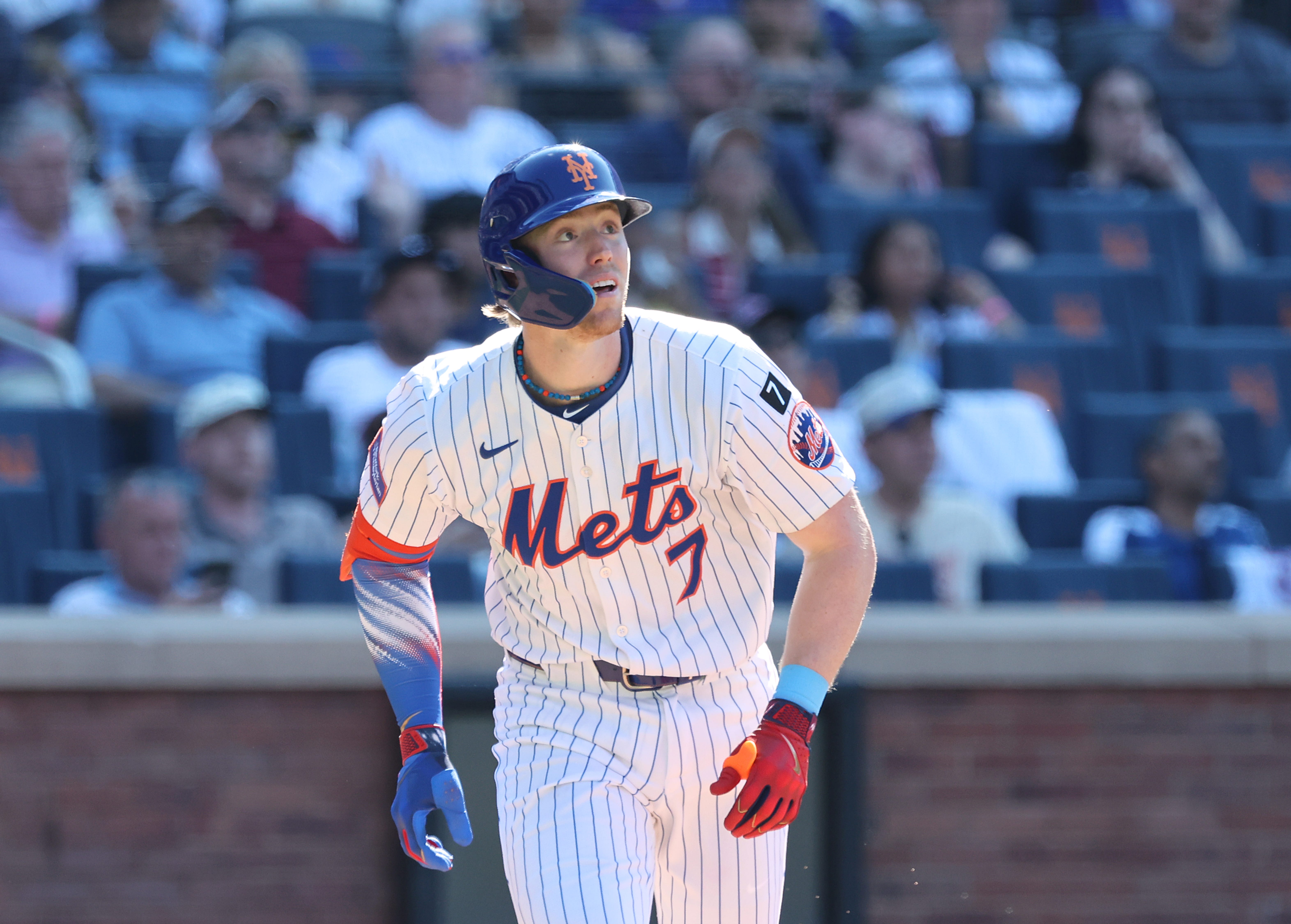
On the free agent front, the alternatives to Bichette are not that appealing. There’s Chisholm, who has been the Yankees’ regular second baseman, then Alec Bohm, who has been at first base for the Phillies since the trade deadline after being largely terrible at third base throughout his career (he could be an option at first base, which we can talk about another day, for what it’s worth). There is Mauricio Dubon, who has been a utility infielder throughout his career but average to slightly above recently at third base for the Braves, but spent the bulk of his innings at shortstop for Atlanta this past season. He could be an interesting get for the Mets as someone they can float around the infield while providing solid and dependable, contact-centric offense, and that could be where Baty fits in over there in that scenario.
But aside from that, there really aren’t any viable free agents on the list. And again, it just adds to the mess pile the Mets have to clean up on their infield if Bichette leaves.
So yeah, as you can see, Bichette’s decision is a pivotal one for the Mets this winter, and something they’re going to know about very quickly. The Mets are better with Bichette than without him, they have fewer uncertainties with him than without him, but in the end, he holds the key to so many things for this club going forward.