



What’s Up with the Mets? 🌴
The Mets dropped their Grapefruit League opener against the Marlins, 2-1 (box)
Brandon Waddell opened the game with two strong, scoreless innings for New York
The Marlins scored their first run of the day on a botched ground ball play between Bo Bichette and José Rojas
After being held hitless through the first four frames, recently acquired Austin Barnes got the Mets’ first hit of the spring with a single in the fifth inning
Phenom prospect A.J. Ewing drove in the Mets’ only run with a sac fly in the 8th; he then recorded an outfield assist the following inning
What I’m Reading 🗞️
What we’re seeing at Mets camp (The Athletic)
Game action will be crucial for Bo Bichette (The Athletic)
Marcus Semien is hungry for a championship (NY Post)
What I’m Watching 🎥
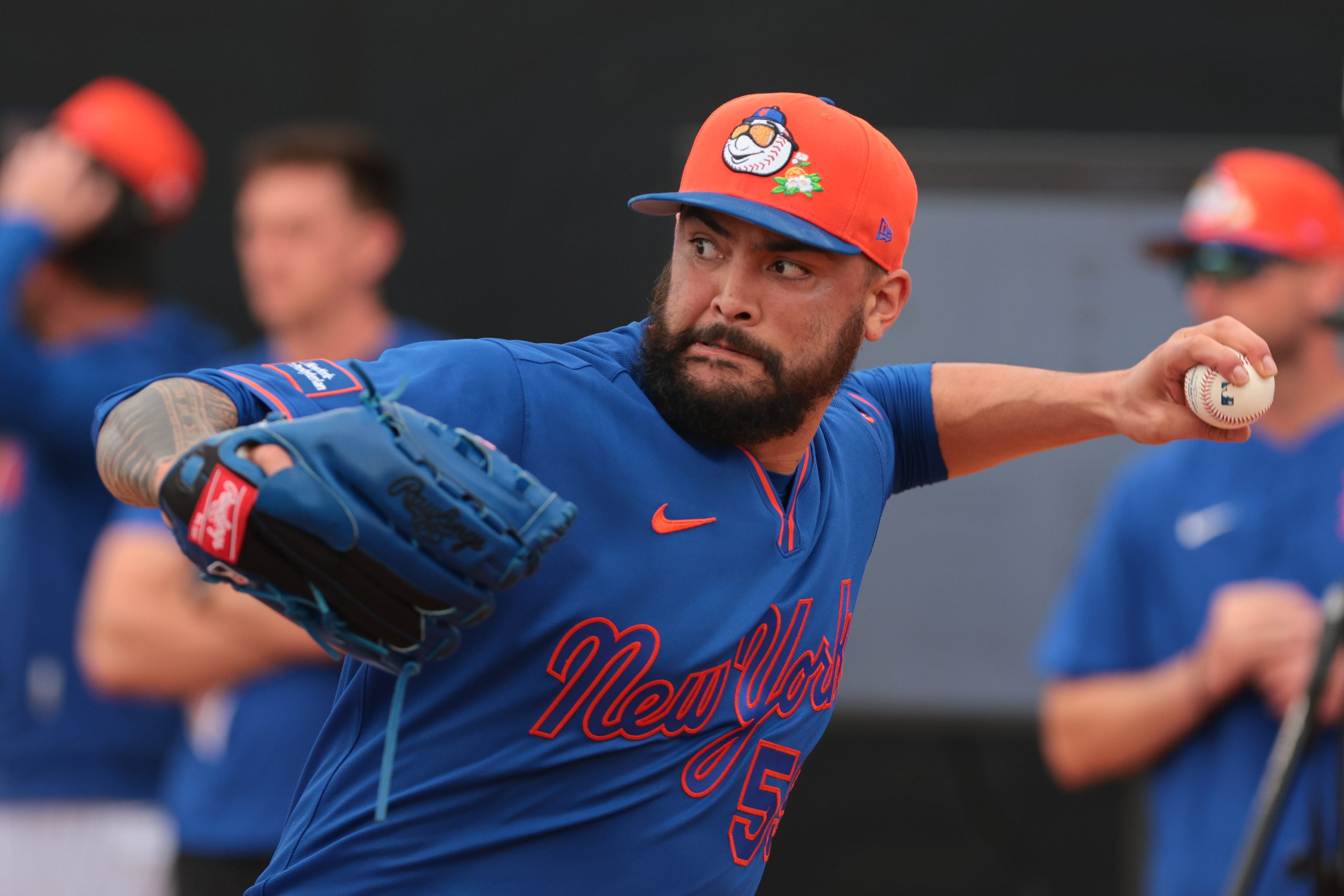
Brandon Waddell and Bo Bichette fielded questions from the media following yesterday’s preseason opener.
Just Mets Podcast 🎙️
SUBSCRIBE: YouTube | Apple Podcasts | Spotify
Today’s Game 🏝️
Match-up: Mets (0-1) vs. Yankees (1-1)
Where: George M. Steinbrenner Field - Tampa, FL
Starters: RHP Justin Hagenman (0-0) vs. RHP Luis Gil (0-0)
When: 1:05 PM ET
Where to Watch: SNY
Some takeaways from the spring opener ✍️
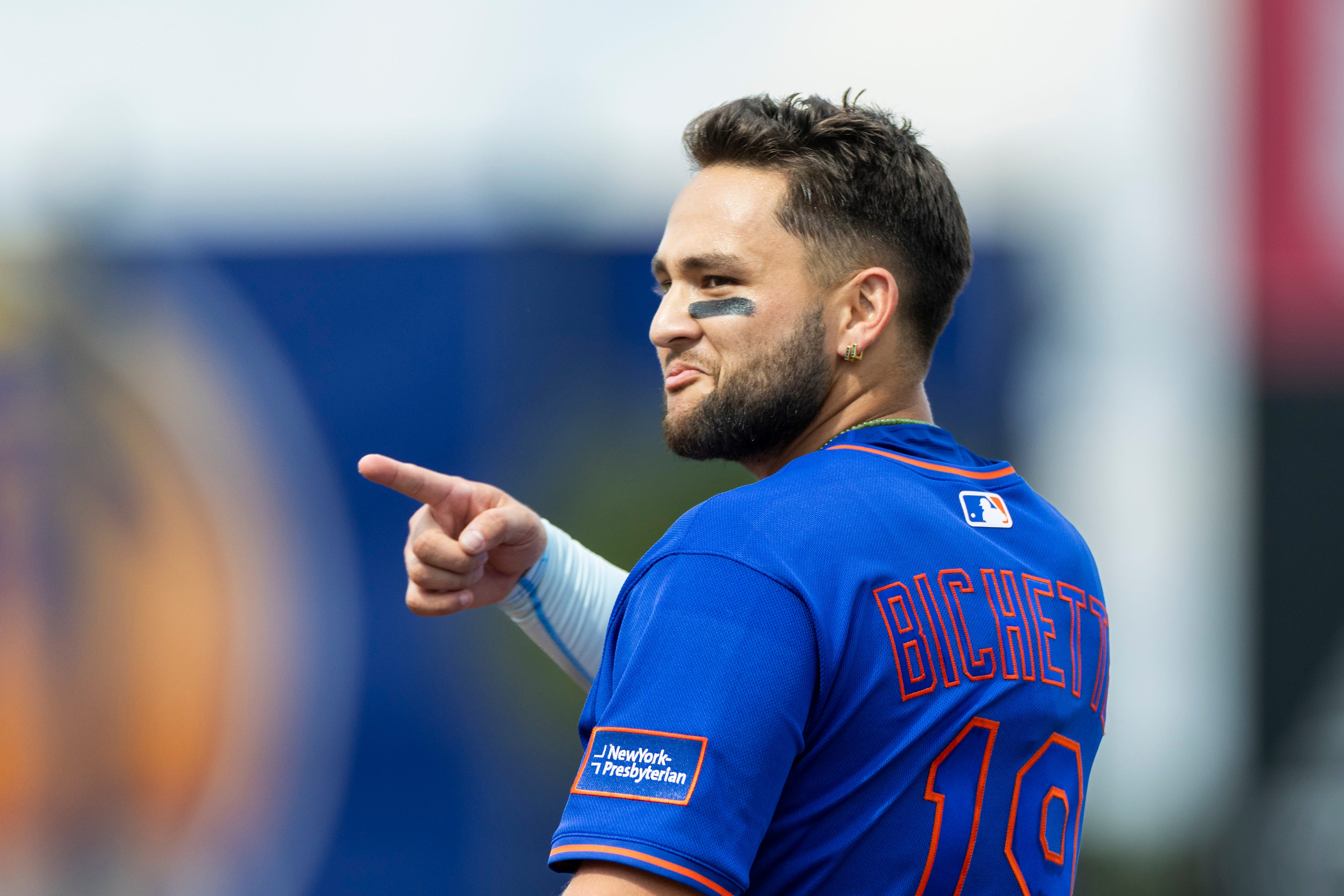
Yesterday, the New York Mets played baseball for the first time since last season’s tragic loss in Game 162 ended their season in Miami.
How fitting the Marlins were their first opponent in Grapefruit League play.
Ultimately, not much of note happened in this game: there were some misplays, some solid pitching displays, some decent outfield defense, and a notable lack of offense. (Surely we all had Austin Barnes locked in to tally the first Met hit of spring training.) Beyond Ewing, we got a glimpse of some highly touted prospects in Chris Suero and Eli Serrano III — though they didn’t give us much to gawk at.
Though we didn’t learn a lot from yesterday’s preseason opener, here are a handful of my key observations and takeaways:
Brandon Waddell can be a sneaky stud reliever
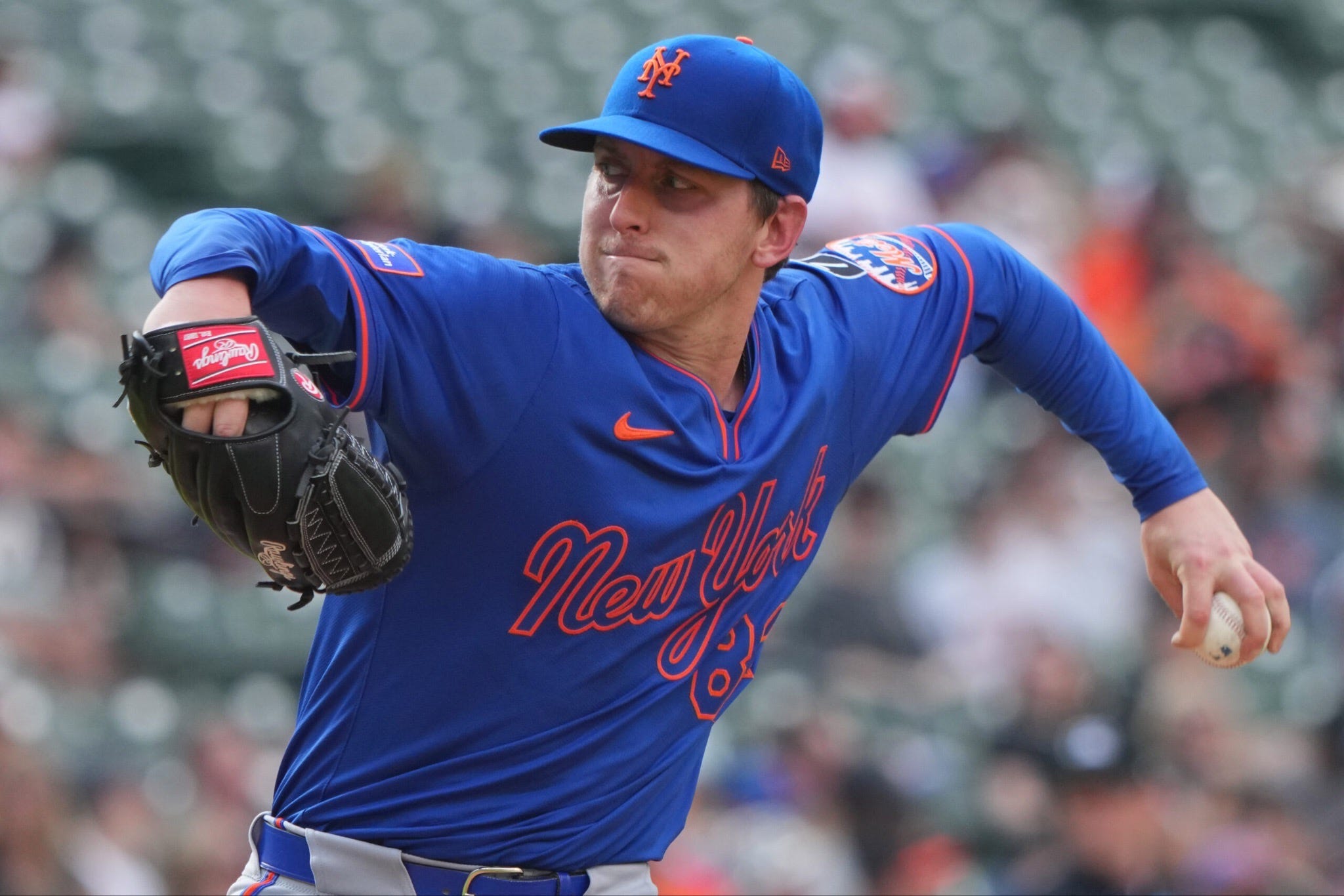
For a guy who’s bounced between teams and leagues, Brandon Waddell has been remarkably consistent.
In college, Waddell delivered a 3.40 ERA and 1.28 WHIP over 312 ⅔ innings across his three seasons. In three seasons between the KBO and CPBL, he pitched to the tune of a 3.05 ERA with a 1.16 WHIP in 315 ⅔ innings. Save for just shy of 13 rough innings across three organizations in his first few pro years, Waddell has always shown encouraging stuff, and it’s really only ever gotten better (for the most part).
During his time in KBO, Waddell saw his strikeout rate skyrocket from 14.5% in 2022 all the way up to 23.8% in 2024. He also saw his walk rate plummet, dropping his free bases from 8.7% to 3.5% from 2022 to 2024. That trend is indicative of a pitcher who’s found total command of his arsenal and has developed a repertoire that’s competitive across levels.
With the Mets, it seems Waddell is finding his stride. His 8.2% K-BB% rate last season may not look all that flashy, but then remember that he’d been out of MLB for four seasons and threw nearly triple his previous MLB workload (31.1 IP in 2025, 12.2 from 2020-21), and still managed to maintain a 2:1 K/BB ratio, a vast improvement from his prior MLB marks. Though he didn’t demonstrate the same year-over-year improvement he showed off in the KBO, his performance was mostly reflective of expected regression from the skill adjustment rather than it was suggestive of Waddell being overmatched or ill-equipped for a higher talent threshold.
It’s worth noting that he showed a drop in fastball velo from the KBO to MLB last season, but if yesterday’s game is any indicator of future performance, that concern might be moot — Waddell averaged 92 mph on both his fastball and his sinker, much closer to the ~93 mph he averaged in 2021. Waddell also put a good chunk of his aforementioned arsenal on display, going mostly fastball-sweeper with a few sliders and a changeup mixed in; both his sweeper and slider were responsible for three of the four whiffs he induced on the day.
Overall, it was an encouraging appearance from another potential lurking X-factor in this Mets pitching factory.
Bo will be fine, I think
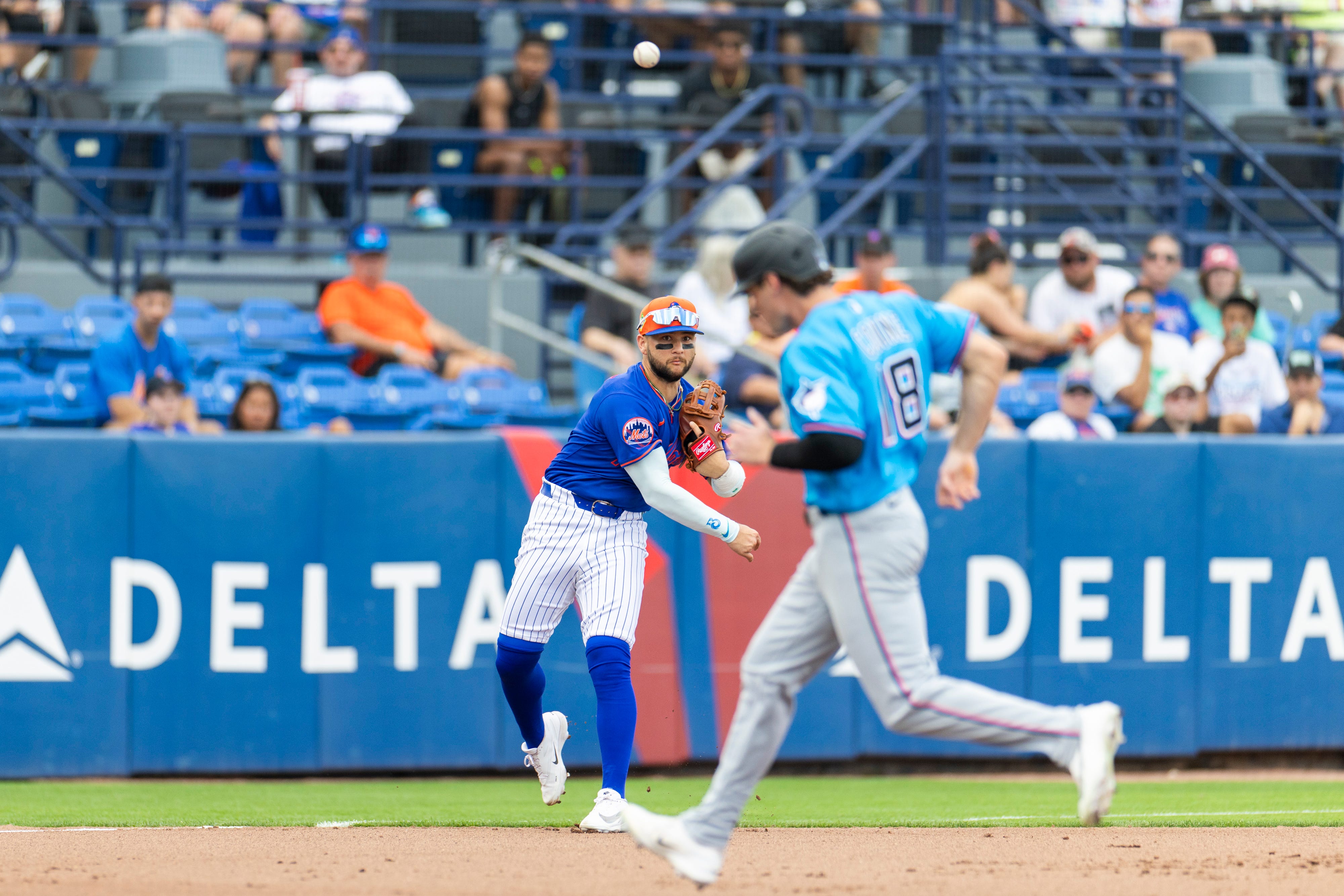
Unsurprisingly, the instant Bo Bichette was part of an error, it was a headline.
This has been the case since the beginning of the week, really — I’ve seen at least three videos reposted by multiple accounts on various platforms of Bichette booting a ground ball during workouts. In yesterday’s game, he showed some range ability and was able to get to a few sharply hit balls by taking good angles, but he didn’t do much to dispel doubts about his arm strength.
But here’s the thing: it’s spring training, and his first game ever at third base.
No, it’s never reassuring to see your new $42 million AAV infielder making misplays as he learns a new position – but that’s what this time period is for. There should never have been an expectation that Bichette would suddenly look like Manny Machado after a week of workouts.
The reason I have remained so staunchly confident that he’ll adapt to the position more seamlessly than Jorge Polanco will to first base is because the shift he’s making is far less severe. Of course the timing and angles are different, but at the end of the day, he’s still operating on the same side of the infield, so his learning curve should be a bit less steep than Polanco’s. Third base is much more about reaction time and reflexes than it is about range and depth of throwing ability; based on the way he fielded balls that were hit his way yesterday, he at least seems to have a feel for positioning.
And even if Bichette is a nightmare at the position and settles more naturally into a DH-forward role, it’s not the end of the world. In Brett Baty and Mark Vientos, the Mets currently have two third basemen rostered, though one is obviously a much more capable defender than the other. Should the need arise to slot Baty in at third full time, that effectively turns 1B/DH into an ever-revolving door of Bichette/Polanco/Vientos, but that should be navigable.
None of this is an attempt to make excuses for Bichette, at all — it’s just worth remembering that things take time. It was the first game of the preseason. There’s more than a month to go until Opening Day, and plenty of exhibition games and workouts/drills in between.
The Mets don’t need Bichette to be a Gold Glove third baseman - they need him to merely be competent.
We’ll see how things look in a few weeks’ time.
I ❤️ A.J. Ewing!
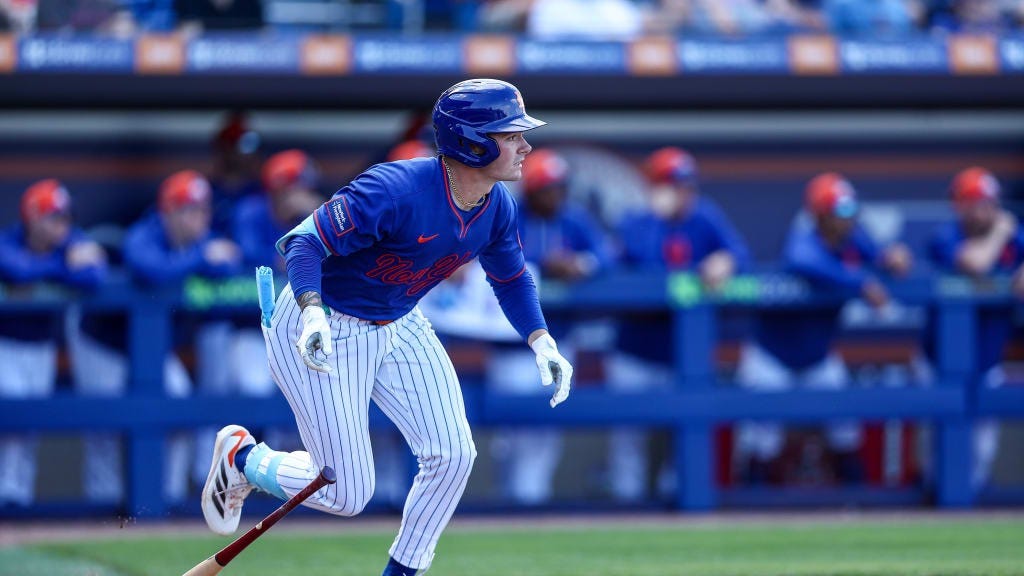
He didn’t have the most monstrous day, but he certainly made an impact.
A.J. Ewing has been one of the hottest prospects in the Mets system for the better part of the past year. No one reading this should be unacquainted with him by now, but as a quick intro: this guy flew through three Minor League levels last season, hitting .315 with an .830 OPS, a 147 wRC+, and 70 steals in 124 total games. Though he initially split time between infield and outfield work, he got extended reps in the outfield last season, specifically in center field with 653 innings of work (168 at second base).
A non-roster invite to camp, the 21-year-old was responsible for the Mets’ only run of the day with a bases-loaded sac fly in the eighth inning and a terrific outfield assist in the ninth inning to help maintain the one-run deficit. On an errant throw to second to catch a stealing Colby Shade, Ewing charged into shallow center and fired a strike to third base.
(Would the play have been overturned if replay was allowed? Who cares!)
Though Ewing doesn’t have much to offer in the power department and can be a bit picky at the plate, his bat-to-ball skills are excellent, and his line drive rate saw a significant uptick from 2024 to 2025, which suggests that he’s learning how to power the ball up off the ground more without selling all the way out for weak fly balls. He also started placing the ball more effectively around the diamond, hitting to the opposite field almost 10% more last season than in the year prior. These trends support the improved Hit grade in his latest scouting report (45 → 50), and his improvements in the field (55 → 60) and a full-tilt speed tool (60 → 70).
For the unacquainted: prospects are ‘graded’ on a collection of key performance tools from a scale of 20-80. Position players are graded on their hitting, power, speed, arm strength, and fielding. 20-30 is terrible, 40 is not great, 50 is average, 60 is All-Star caliber, and 70-80 is the stuff of a superstar. With an overall grade of 55 (up from 40 in 2024), Ewing is grading out above-average, and trending towards that All-Star tier at a rapid pace.
Based on his scouting grades, performance charts, Top 100 ranking(s), and numerous glowing preseason previews, Ewing has impressed scouts and coaches alike early and often. When asked about the prospect after the game, Mendoza said, “There’s a lot to like.”
I agree.
What’s up with Manaea and Polanco?
Carlos Mendoza gave an in-game interview on SNY yesterday, and though he was encouraging about Kodai Senga’s progress, he seemed a bit less confident in Sean Manaea’s.
At risk of being too literal or reading too deeply between the lines, it’s hard to hear some of the skipper’s phrasing — that Manaea showed up in “pretty good shape,” and that Mendy likes “some of the things” he’s working on mechanically — and feel that he’s as confident in a bounce back from the southpaw as he was last year.
Again, it’s possible that I’m reaching here, but most of the reports to emerge about Manaea this spring have felt fairly devoid of enthusiasm. Another quote from Mendoza a few days ago remarked mostly about what went wrong for Manaea last year, and that there’s “stuff they’re working on,” but all comments surrounding the lefty sidearmer have come without the palpable pomp and circumstance that some others have received from Mets brass and media thus far.
With Senga and recently-acquired Bryan Hudson, we know how hard they’re throwing already. With Clay Holmes, Mets reporter Andy Martino remarked that the ball “sounded different” coming out of his hand and hitting the catcher’s glove in his most recent bullpen session.
But with Manaea, all we’ve heard is that they’re continuing to work on things…it feels like there’s zero comparable hype around him so far.
Still, the air around Manaea hasn’t been purely gray. New Mets pitching czar Justin Willard sat down with the Athletic last week to share some insight into the development plan for several starters in camp, and he shared some encouraging words about Manaea’s work this winter. It sounds like a primary focus is for Manaea to rediscover his changeup, which he says feels “great” and that he just needs to trust it. It will be interesting to see how that plan evolves over the next few weeks.
Mendoza also mentioned in his in-game interview that though Polanco’s development and progression at first base is going well, it’s going to take game time to get him fully comfortable. Given comments from Mendoza earlier this week that Polanco is just one of several Mets who will be on a slower ramp-up timeline, it doesn’t sound like he has much game time coming his way this spring.
With that in mind, it shouldn’t be surprising to hear that Polanco has quite a few DH at-bats coming his way:

Ultimately, this was likely the plan all along. And that plan will help provide at-bats to the likes of Brett Baty and Mark Vientos, who should both see quite a bit of time at first base over the course of the season.
Though Polanco reportedly advertised himself as a first baseman this offseason, and even considering the amount of work he put in last season behind the scenes, it should never have been assumed that Polanco was going to slot into full-time first base duties right away, if at all. Most reactions that I saw did indeed have this clocked from the get-go, as no one could believe that the Mets would be replacing Pete Alonso with Jorge Polanco. As bad as Alonso’s defense has been, swapping a career first baseman for a career middle-infielder with only slightly better defensive metrics was a move that never made much sense to anyone.
The optimistic take on this is that easing Polanco into game action should only further aid his transition. Letting him steadily adjust to real-time speed should help ease some of the anticipated bumps in his specific road ahead, and giving him ample opportunity to settle in at the dish and help establish some lineup stability should only serve to benefit the offense.
The pessimistic take is that Polanco can’t handle the position and needs to be relegated to primary DH duties — but of course, with me, there’s always a silver lining. As with Bichette, the Mets have a contingency plan in Vientos in case the Polanco experiment goes bad quickly. ‘But what if Bichette and Polanco both need to DH?’ Then Baty and Vientos play the corners full time and Steve Cohen has the league’s most expensive DH unit, I guess! If they hit and the team wins, who cares how much they cost?
The Mets take on Luis Gil and the Yankees today in Tampa. Among notable Mets making the trek to Tampa include Carson Benge, Mark Vientos, and Luis Torrens.
Around the League 🚩
Bill Mazeroski, who famously hit the homer that won the 1960 World Series, passed away. He was 89 years old (Hall of Fame)
Aaron Judge homered twice as the Yankees hung 20 runs on the Tigers
Ryan O’Hearn homered in his Pirates debut
Twins starter Joe Ryan was scratched from his scheduled start due to low back tightness (MLB.com)
Mr. Buskirk, thanks for bringing up the possibility that neither Bichette nor Polanco work out in the field. It's real. The cliche "Hope is not a strategy" comes to mind. As I read through today's piece I kept thinking, "This would be a hugely better team if they still had Pete Alonso". 30M a year for Alonso seems a bargain if you're paying Polanco 20M a year. Maybe they should've just accepted Alonso would fade in years 4 and 5 but what he would give you in years 1,2, and 3 would be worth it.
Bichette’s throw to first was fine. It was Rojas who for some reason attempted to tag the runner when he was already out as his foot was on the bag as his glove hit the runner the ball came flying out. The Mets should have given Ty France a minor league deal with an invite to camp. I don’t like that we really don’t have a real first baseman in camp unless they are going to give Ryan Clifford a serious look. Let’s hope he mashes and makes the decision for them. Manaea to me will be headed for surgery. He is still screwing around with his arm slot and the only reason I can see for him to be doing that is to figure out which slot gives him the least amount of pain. I always thought it was a joke that he didn’t clear this up in the off season and if he gets surgery now he should give back his salary. The Mets will be lucky to get anything out of this guy the next 2 years and that’s a shame because I like Sean. He’s a funny interview anytime I’ve seen him give one and is a good clubhouse guy. Polanco is going to DH more than play the field. I think the Mets should trade Vientos and maybe Mauricio or another piece for Yandy Diaz. That would solve the first base problem and be a huge upgrade over anything we currently have in camp unless they are going to give Clifford a serious look. The “run prevention” mantra doesn’t look that serious having Vientos with a glove on and Polanco being your everyday first baseman. This move never made any sense to me. Waddel looked great. AJ Ewing credited his ‘24 season and his struggles during it with his resurgence now. Kid is a rising player for sure. Time for USA hockey. USA! USA! USA!