


What’s Up with the Mets? 💭
Jeff Albert (director, major league hitting), Danny Barnes (QA coach), Kevin Mahoney (batting practice pitcher) will not return to the major league coaching staff in 2027
The state of the Mets rotation ✍🏻
So far, I have discussed the impact Bo Bichette can have on the Mets’ off-season with his opt-out decision looming, as well as the deep abyss at second base and what the Mets seem poised to do about it.
Another point of emphasis David Stearns discussed in his end-of-year press conference was the club’s starting pitching, and their intention to pursue upgrades to their rotation over the course of the winter.
The calculus for the starting rotation has unquestionably changed from the early part of the season to now. On Opening Day, this rotation consisted of Freddy Peralta, Clay Holmes, Nolan McLean, David Peterson, and Kodai Senga. Sean Manaea was in the bullpen, Christian Scott wasn’t ready to return to the major leagues, and nobody was really talking about Zac Thornton, both of which not only were injected into the Mets rotation over the course of the season but both performed and changed the trajectory of their entire rotation heading into future seasons.
Then, of course, there’s Jonah Tong, who made a pretty strong and encouraging case for himself during the final month of the regular season as a member of the rotation after an up and down season at Triple-A.
Now, Peralta is gone, as are Holmes and Peterson. Senga is a bipolar short reliever right now, and for the time being anyway, Manaea is a member of this rotation. There’s also Tylor Megill, who missed the entire season while he recovered from Tommy John Surgery but is expected to have a normal off-season and be in competition for a spot in the starting rotation during Spring Training. For now, anyway.
And I say for now on Megill—which also applies to Manaea and Senga—because, again, Stearns said he intends to find more starting pitching this winter. In fact, he spoke more directly about finding additional starting pitching (without naming names, of course) than finding upgrades for any other area of need on the roster. So, this is clearly a priority for the club this winter.
So, to recap, here’s the rotation today in no particular order:
Nolan McLean
Zac Thornton
Christian Scott
Sean Manaea
Pray for rain
Yeah, they don’t really have a fifth starter at the moment, and I’d argue Manaea is seriously on the bubble in the rotation right now as well. It’s not even clear yet how they view Thornton or Scott, although both were truly excellent under the circumstances and I’d pencil them in at the moment.
In 2026, Mets starting pitchers threw to the tune of a 4.47 ERA, which was 23rd in the game. That actually seems surprising considering how good McLean, Thornton, and Scott were in the second half and how good Holmes was for the first two months of the season for the club, but the numbers are what they are and it’s a testament to how poorly everyone else pitched for them. The rotation recorded 791 innings (4.88 IP per game), 22nd in the sport, and provided 54.8 percent of the entire staff’s overall workload. Walks were once again a problem for this rotation—they walked 3.56 batters per nine, which was the sixth-worst mark in the game, and the 10.4 fWAR produced by the rotation was the 11th-worst mark in baseball.
It’s safe to say this rotation was victimized by poor defense throughout the year with their 4.18 FIP, which shouldn’t come as a surprise considering the club’s defense was pretty bad at three infield positions and the rotation produced a 41.3 percent ground ball rate, which was middle of the pack.
But again, this was a tale of two seasons for the Mets rotation.
This version of the starting rotation for the Mets wasn’t in place full time until July 12 which, conveniently, is the approximate date the Mets began to play better in 2026. Before July 12, the Mets rotation had a 4.59 ERA in 96 games. In the season’s final 66 games, the rotation pitched to a 4.32 ERA, but a lot of that was inflated by Manaea, Robert Stock, a few more bad starts from Peralta, and a bunch of bullpen games as a result of simply not having enough starting pitching.
If we split out the starting pitching for the entire season, the combination of McLean, Thornton, and Scott, and Tong combined for a 3.44 ERA. Every other starter for the Mets (min. 10 IP in that role)? A 5.28 ERA. And that includes Clay Holmes’ 2.39 ERA over 52.2 IP through mid-May.
So, it stands to reason why Stearns wants to pursue starting pitching this winter. At the top of the depth chart, the Mets need two legit major league starting pitchers. But they need more at the bottom too. After all, if you’re betting the Mets are getting through 162 games with six or even seven starters, just hand me the money now and save yourself the stress next spring and summer.
The question is, are his pursuits going to be more of the same, as in reclamation projects, pitchers coming off a down year or years, and stocking quantity at the expense of quality? Or will it be more top-end solutions to the problem?
From my seat, it has to be a little bit of both.
When Steve Cohen spoke with the media after the trade deadline, he spoke out about the need for Stearns and the front office to be less risk-averse in their player acquisition strategy. Now, I think it’s ok for any GM to see a player’s upside and gamble on it, but only if they have surer things to support the risk of failure with that player. Stearns said it himself during his end-of-year press conference that the front office did a poor job protecting their gambles from last winter, which pretty much encompassed all of their external acquisitions from failing, which in turn caused what could only be viewed as an endless free fall for the team.
Now, that’s not to say even the lowest-risk moves won’t burn the Mets. Peralta specifically was seen as a great get for the top of the rotation, albeit an expensive one in prospect currency, and it just didn’t work out simply because the front office probably missed on Peralta’s inability to thrive in New York, thrive inside their pitching system, or both.
The problem is, most of Stearns’s external acquisitions did not work out, and most of that wasn’t unpredictable, either.
Now, I don’t know how most players might profile in New York. Especially starting pitchers when the spotlight is squarely on them every 5–6 days. And the Mets, for whatever reason, have this dynamic to them that makes it especially difficult for players to adjust to their environment. Maybe its the media, maybe its media relations, maybe its their organizational culture, who knows. But this hasn’t changed with their new owner, either.
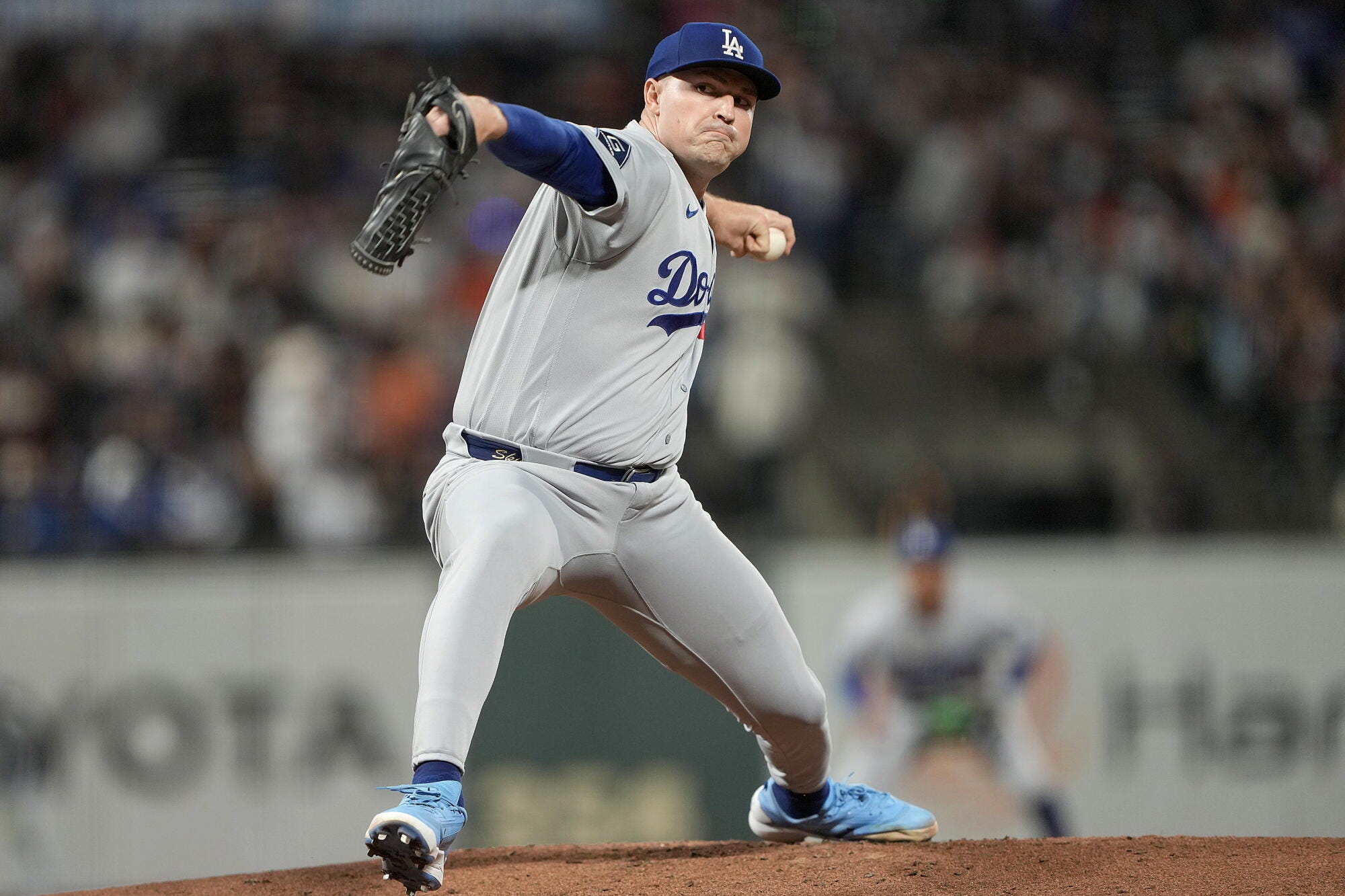
The free agent starting pitching class is headlined by Tarik Skubal, who I have said many times the Mets have to do what it takes to sign with them. He could cost north of $400 million over a very long term, but Stearns basically said on Monday that, like they did with Juan Soto two years ago, they’re willing to flex their financial muscle for the right players.
Now, would Stearns be willing to break completely out of his comfort zone by giving out a long-term contract to a pitcher and get into what could be a high-stakes bidding race against the Dodgers, Yankees, Red Sox, and other teams hungry for a two-time Cy Young Award winner about to turn 30? Skubal is pitching in Los Angeles, is going to pitch on the national stage in the playoffs for the most scrutinized team in the game today. If he can see this through, that would leave little doubt about his ability to thrive in New York.
The next tier of starting pitching would include Kevin Gausman, Clay Holmes, Sonny Gray, and Michael King if he opts out (he will presumably do so), and Nick Martínez $20 million mutual option), among a few others potentially.
The Mets were interested in King last winter to an extent before he signed back with the Padres, and he is coming off a season in which he set a career high in innings pitched (185) and starts (32). His strikeout rate was down from 2025, but his home run rate improved along with his WHIP and hits per nine rates. He’s not a big veto guy, but his sinker/change-up combination makes him hard to hit, which is demonstrated in his 32.7 percent hard-hit rate allowed along with the 87 mph opposing exit velocity, both of which are in the top 15th percentile in all of baseball.
King would be an ideal target if they cannot land Skubal for sure, as would Holmes, who might ask for fewer years than King, considering Holmes is coming off an injury-riddled season and struggled a bit after the trade to the Cubs.
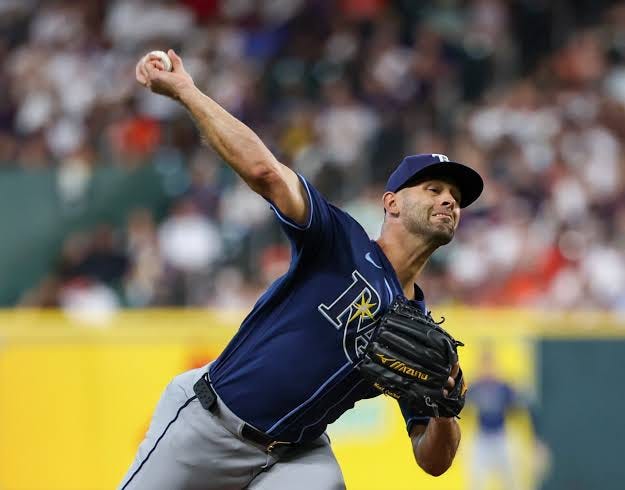
Martínez, who just turned 36, is always someone who flies under the radar but is very, very good and could be had on a shorter deal. He made 31 starts for the Rays in 2026 but can be a swingman if needed with a history of being both a starter and a reliever. He doesn’t throw hard, but everything else about Martínez is just good— his sinker, cutter, and change-up all remain elite; he doesn’t walk guys, doesn’t give up a lot of home runs, and is just always quietly excellent for every team he plays for. Martínez is not an ace, but if the Mets signed him to be a starter, they could plug him into the middle of their rotation and use him as a reliever if needed over time.
Then, of course, there’s Gausman, who will be 36 next season but still doesn’t walk a lot of guys, gets a lot of chances, and to this point anyway, can be trusted to go every fifth day. He probably projects more towards the back of the rotation at this point in his career given the metrics, as he’s become more hittable over the last year than he did while with the Blue Jays during their championship run in 2025. I wouldn’t view Gausman as a risk per se, but if the Mets were to sign him, he wouldn’t be solving their problem in the rotation entirely, even if he helps mitigate their bases on balls issue, a problem which seems to plague this team year after year.
Regarding Gray, he’s been great pretty much everywhere except for his time with the Yankees. That scares me from a player profile perspective with respect to playing in New York, but he was brilliant in Boston this past season and has had a generally solid 14-year career as a mid-rotation starter. He’s another one though that would help fix the problems that plagued the Mets pitching staff as far as walks and home runs allowed are concerned, but it’s hard to get past his problems with the Yankees a decade-ish ago.
On the trade front, perhaps Seattle would be willing to part ways with one of their starting pitchers. They already have shown a willingness to do that after trading Luis Castillo away, although that was more in an effort to free up a spot for Kade Anderson, who is a top prospect for the Mariners. But we all know Mariners GM Jerry DiPoto loves to move pieces around, so maybe he’d listen seriously for offers on Logan Gilbert or area native George Kirby, the latter of which was originally drafted by the Mets in 2016.
Would the Giants listen on Logan Webb? He had a meh year in 2026 but is only entering his age-30 season, has a track record of being a top of the rotation starter, is under control for two more years at a modest price point at $23 million in 2027 and $24 million in 2028.
There are others, but for now we can leave the discussion there to get you all thinking.
As for the rest of the starting pitchers, it’s important to note that the Mets feel as though they have more depth inside their minor league system than they have in the past. It’s hard not to agree with that to a degree, although it is questionable at best.
There’s Megill, who again is coming off Tommy John Surgery. He will be ramping up as a starting pitcher this winter, but he has yet to enjoy any consistency as a starter. There have been glimpses and some small stretches that make one believe he can do it, but then he falls off a cliff out there and he gets right back to square one. He has shrunk his repertoire, he has tweaked his delivery, and has done everything he can to try and become an effective starting pitcher, but it has yet to happen for him over any length of time, which makes Megill unreliable until he proves otherwise.
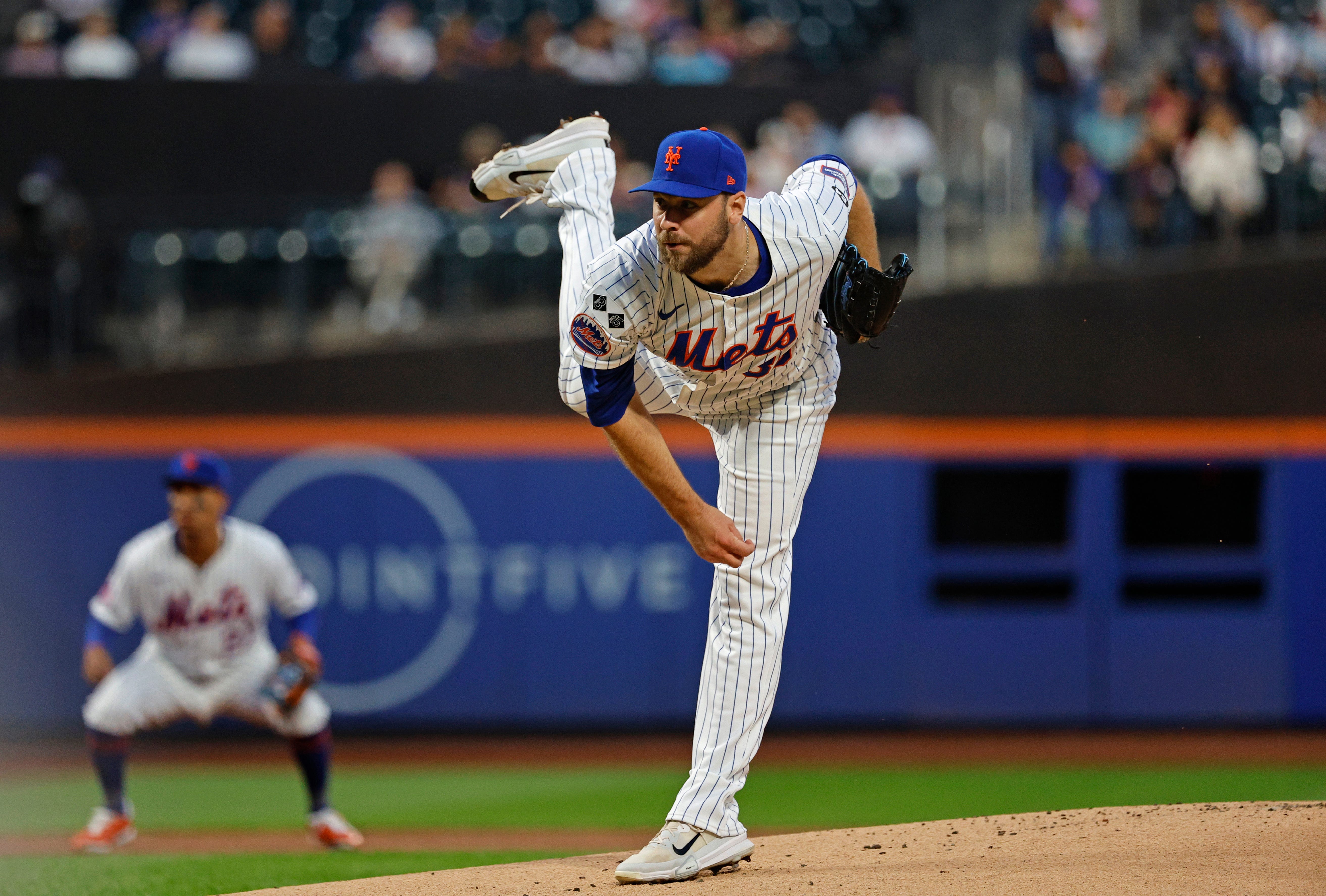
There is, of course, Manaea, but needless to say, he is probably in a position where he is going to be competing for a spot in the rotation in camp as well. And, if he doesn’t make it, I truly wonder if he will fit on the roster at all. He’s making some serious coin, so DFA’ing him is a tough pill to swallow. But, in the end, if the Mets are going to be a better ball club, they need better players than what they have now. It’s as simple as that.
The same can be said about Senga, who probably has less of a role on this team than Manaea does going forward. He was lost as a starter, showed signs he could be an effective reliever at times down the stretch of the 2026 season, but then would barf up some appearances which just made everyone scratch their heads about him. He wants to start—he has been clear about that—but there’s just no runway for him to do that here. However, Stearns did indicate Senga will be in camp with the Mets in February, but it’s fair to wonder if he could be at the end of his line with the team, especially after they retool this roster this coming winter.
Among the minor league hopefuls at the top of the organization, there’s Jonathan Santucci, the club’s top pitching prospect currently, Jack Wenninger, and recently acquired area-native Gary Gill Hill, who the Mets got from the Rays for Peralta.
So yes, I do agree the Mets have more in their pool than they normally do, but there are no slam dunks here to make the rotation. If I were the Mets, and they do end up having an open spot in the rotation, I’d be more inclined to lean into Santucci, Wenninger, or Gill Hill than any of the veterans, but that all depends on where they are five and six months ago with respect to the rest of the rotation.
This is going to be a big test for Stearns and his willingness to balance risk with more predictable performances. And with one pitcher that’s available who is particularly unique, it may be time for him to cast aside his reservations, take a chance, and see how he fares.
Sean is done except for spot bullpen appearances. HE tosses lollipops for pitches and can NOT even get thru 5 innings without surrendering 2 homers.....an 8.0 ERA is not what a championship team has on its starting 5.