


What’s up with the Mets? 🍎
Carlos Beltrán will wear a Mets cap on his Hall of Fame plaque (official)
Rumor Mill 💨
The Blue Jays are now showing interest in LHP Framber Valdez (NY Post)
The Cardinals would like to acquire an outfielder (Belleville News-Democrat)

🌴 7 days until the first official work out for Mets pitchers and catchers in Port St. Lucie… 🌴
SUBSCRIBE TO THE JUST METS PODCAST: YouTube | Apple Podcasts | Spotify
The Austin Barnes signing can be sneaky good for the Mets ✍️
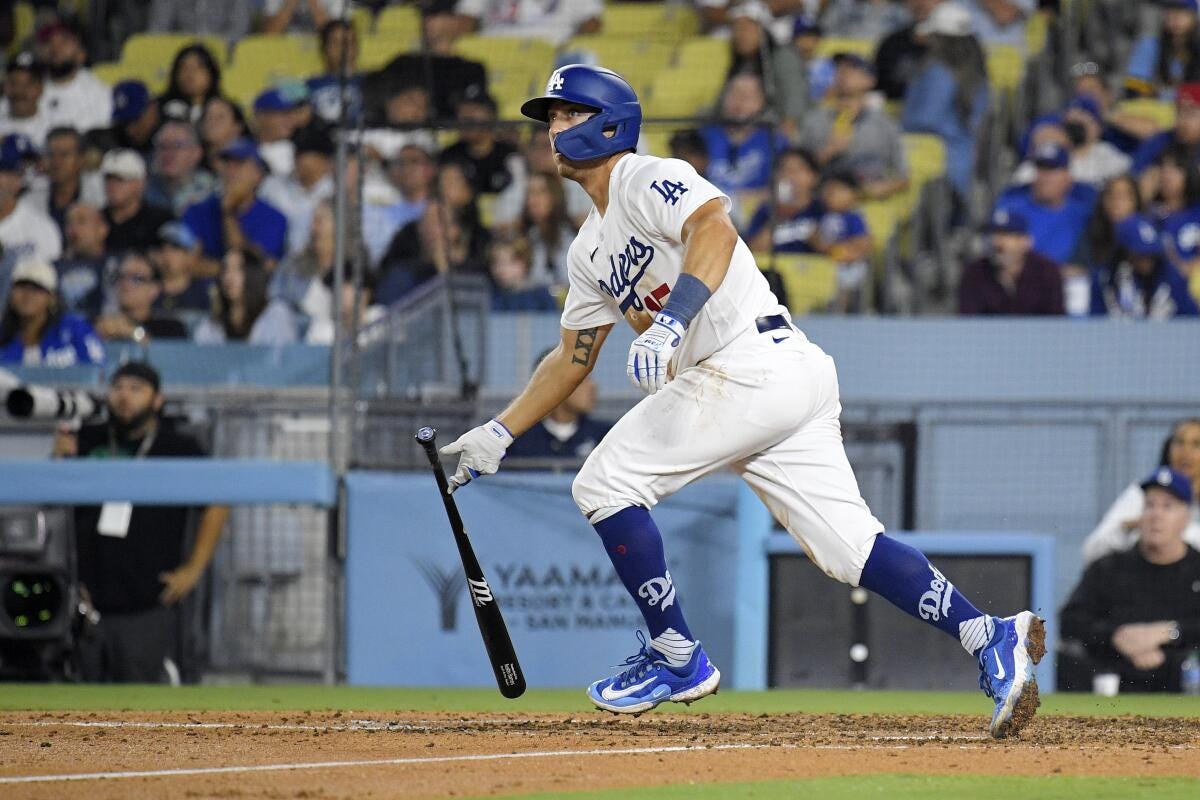
Everything happens for a reason (allegedly) — that includes free agent signings. The Mets’ signing veteran backstop Austin Barnes to a minor league deal is no exception to that rule.
The announcement that the Mets were bringing in Barnes didn’t generate much reaction, from what I saw, and the response I did see ranged from tepid to disinterested. To an extent, I get that sentiment: he’s an aging backup catcher with a weak bat that’s being brought in on a minor league deal — definitely not the splashiest move of any offseason. If your first reaction to the news was to shrug and move on, I don’t blame you.
But I’d challenge the signing naysayers and agnostics to look at this move through a different lens, specifically that of how the Mets are tending to their young pitching group. Barnes isn’t a flashy player, but he’s someone who has spent a decade catching meaningful innings, managing elite pitchers (including an all-time great), and gleaning valuable information from one of the most well-structured, analytics-forward organizations in baseball.
In short, he’s here to provide intel.
Barnes has been in MLB since 2015, spending almost the entirety of his career with the Dodgers. Cutting right to the chase, his value has never been found in his lumber. Offensively, I won’t try to oversell anything here: this guy owns a career .223/.322/.338 slash line, and has generally been well below league average with the bat for most of his career.
That’s not great, at all…but it becomes less of a concern when you remember Barnes is likely being brought in mostly as a teacher, not a hitter.
Though Barnes has caught many a big-league catcher over the years, his most famous battery partner is one Clayton Kershaw. Over the past decade, Barnes became Kershaw’s preferred target, and the tandem posted a roughly 2.67 ERA in games started together, alongside a 53–27 record. Kershaw has gone on record about how close the two are on and off the field, so it’s easy to imagine Barnes has no shortage of inspiration and information to pass along to the Christian Scotts and Jonah Tongs of the world, from pre-start preparation to in-game management and everything in between.
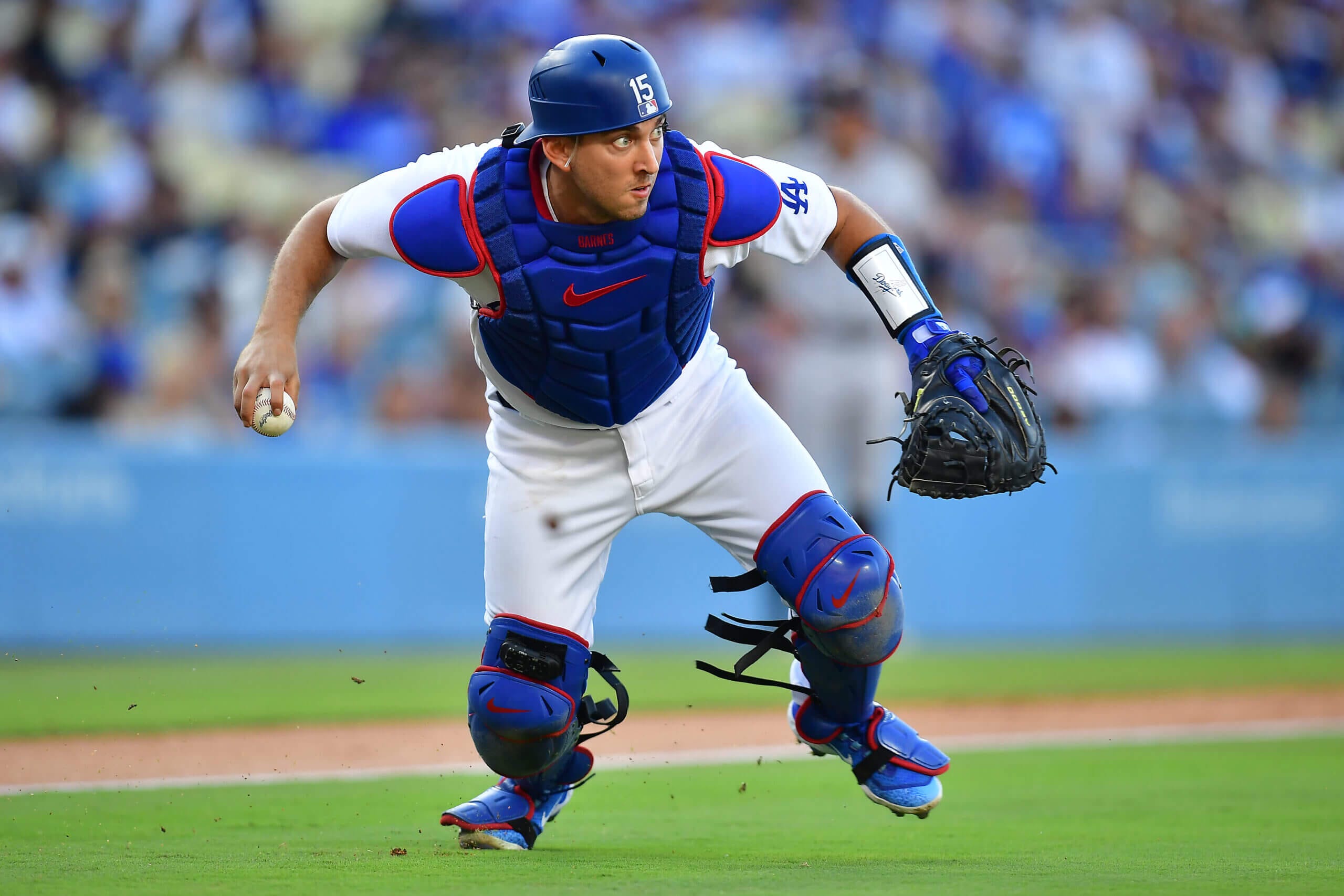
In addition to Kershaw, Barnes caught a wide mix of Dodgers arms over the years, including Walker Buehler and a rotating cast of bullpen contributors. Team-wide, Dodgers pitchers generally performed around or slightly better than baseline with Barnes catching, suggesting stability more than volatility. And for the Mets, that’s the point — they need someone who can help young pitchers figure themselves out and establish routines that, alongside revamped instruction, may help boost some respective floors.
In addition to wisdom, Barnes offers serious defensive upside behind that plate that should provide just as much practical value.
First, there’s the issue of framing, something Barnes has historically been elite at. With the arrival of the ABS system looming, this seems to be a skill whose value is disappearing before our eyes…I wouldn’t go that far.
Barnes has consistently graded out well as a strike-stealer behind the plate, particularly in the bottom of the zone. For a team full of sinker ballers and breaking-ball repertoires, that’s a perfect complement to their development. And even though ABS will undoubtedly take away some of the impact a well-framed pitch can have, I think we’ll see that downward slope happen more gradually. Not every edge-case pitch will be challenged, and I have a feeling that we’ll see a less severe drop in overall framing value over time than we might in the first few years of ABS adoption.
Beyond the batter’s box, Barnes has also historically ranked well above average as a blocker, finishing in the 82nd percentile. For a team whose primary pair of catches have historically suffered from issues with passed balls, that’s just another level of insurance being added in the background. And for young pitchers especially, having a sure-handed glove to throw to while they’re developing their repertoire makes their process that much easier — they can focus on developing stability in their mechanics and pitch shapes while throwing to a neutral target. Over time, that confidence compounds.
But beyond the counsel Barnes will be able to give the up-and-comers on a baseball level, Barnes should be able to provide Mets officials with a wealth of organizational insight. Known and lauded for his diligence, Barnes’s preparedness trait will assuredly be called upon as the new Mets pitching factory takes shape. After being fully immersed in the Dodgers’ analytical world for a decade, Barnes will be able to provide both players and instructors with a wealth of invaluable information on how the Los Angeles Death Star’s development system works. In that sense, he’s more an extension of the pitching infrastructure than he is a depth move.
So no, the Mets didn’t sign Barnes to bring any sort of offensive firepower or start a preseason roster battle with Francisco Álvarez or Luis Torrens. Barnes is a Met because his off-field value is through the roof.
Barnes is here to be a mentor, a consultant, and a backup catcher, in that order. For where this team is right now, he’s the perfect guy for the job.
Around the League 🚩
The Diamondbacks and 1B Carlos Santana are in agreement on a one-year, $2 million contract (NY Post | AZ Sports)
The Astros and INF Isaac Paredes agreed to a one-year, $9.35 million contract with a club option for 2027 for $13.35 million, avoiding arbitration (MLB.com)
He's our Crash Davis. The question is, who is our Nuke LaLoosh?
Great article, Drew! Totally agree that signing Barnes will pay dividends throughout the system.
And it's almost a given that Alvarez and/or Torrens will get hurt, so Barnes and Senger should be enough support.